Cities Theatre
Affordable and Sustainable Housing at Speed
10 Sep (Thur) Day 1 : 13:00 – 13:50
Hong Kong’s housing challenge is not just about high prices. It is also about whether people can find homes that are affordable, well located and suitable for everyday life. With apartment prices at around 23 times median household income and rents taking up a significant share of earnings, improving housing attainability will require action across land and planning, finance, construction, housing quality, transport, public services and the wider cost to government and society.
Drawing on the Urban Land Institute’s latest research, Asia Pacific Home Attainability Index 2026, this session places Hong Kong within the context of more than 40 Asia Pacific cities and examines housing affordability across the full continuum of housing development. Bringing together perspectives from policy, research, non-profit organisations, academia and the public sector, the discussion will explore how decisions made at each stage—from planning, financing, delivery, to management, maintenance and supporting services—affect the attainability of housing and the quality of lives in them.
The panel will consider how the housing affordability conversation can move beyond a narrow focus on unit prices and delivery volumes to assess the broader value and cost of housing. This includes the relationship between housing and household finances, the role of public and private investment, the impact of planning and infrastructure decisions, the cost of delayed or inadequate housing, and the potential benefits of better housing for health, productivity, social mobility and public expenditure.
The audience will gain practical insights into how Hong Kong can improve housing attainability, learn from regional markets, and strengthen collaboration across the full development and occupancy cycle.
Session Learnings:
- Benchmark Hong Kong against Asia Pacific housing markets
- Understand the multiple layers and levels of housing affordability
- Examine the full housing continuum, from planning and investment to delivery, management and long-term use
- Explore how housing affects healthcare, productivity, social outcomes and public costs
- Identify opportunities to improve coordination across government, industry and communities
- Draw practical lessons for delivering more attainable, higher-quality and sustainable housing
Post-Event Actions:
- Identify one concrete commitment — in design, procurement, construction methods, or green financing — that your organisation can make toward faster and more sustainable housing delivery in Hong Kong
- Explore adoption of MiC, DfMA, or low-carbon construction materials in your next project, procurement round, or investment decision
- Assess the role of green finance in your organisation’s housing-related activities and identify one opportunity to deploy green bonds, impact lending, or sustainability-linked instruments
- Share the ULI HAI 2026 benchmarks and panel insights internally to advance alignment on affordable and sustainable housing as a shared organisational priority
Speakers

Moderator
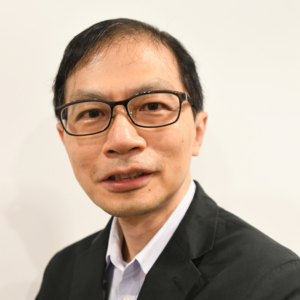
Rose Hung
Director, Programmes and Thought Leadership, Asia Pacific
Urban Land Institute
Rose Hung
Urban Land Institute
Director, Programmes and Thought Leadership, Asia Pacific
Rose is a multidisciplinary strategist with over 15 years of experience shaping real estate and urban development narratives across the United States and Asia Pacific. As part of the Thought Leadership and Programmes team at ULI Asia Pacific, she leads industry dialogue on sustainability, resilience, and placemaking.
Rose is a co-author of ULI Emerging Trends in Real Estate® Asia Pacific and the ULI Asia Pacific Home Attainability Report, delivering data-driven insights and best-practice recommendations for developers, policymakers, and community stakeholders.
A registered architect in both Victoria and California, and a LEED AP BD+C, she combines technical expertise with a strong strategic lens.
Speaking at 2026 sessions:
Day 1
Affordable and Sustainable Housing at SpeedFrom Data to Action: Affordable Housing at Speed

Jo Hayes
CEO
Habitat for Humanity Hong Kong

Jo Hayes
Habitat for Humanity Hong Kong
CEO
Jo Hayes is Chief Executive Officer of Habitat for Humanity Hong Kong, part of the global housing organisation working to ensure everyone has a safe, decent, and affordable place to live. She leads the organisation’s strategy, partnerships, and impact in Hong Kong, advancing housing solutions that improve living conditions and strengthen communities.
With nearly 30 years of international experience across the public, private, and nonprofit sectors, including roles with the British Council, BBC Worldwide, and The Women’s Foundation, Jo brings extensive expertise in strategy, governance, organisational leadership, and stakeholder engagement.
As CEO of Habitat for Humanity Hong Kong, Jo is a strong advocate for the role of housing as a foundation for health, economic opportunity, and social mobility. She works with community organisations, corporate partners, and policy makers to address housing vulnerability and promote housing as a critical component of sustainable and inclusive urban development.
A Hong Kong Jockey Club Chicago Booth Executive MBA Scholar, Jo brings analytical rigour, financial discipline, and systems thinking to complex social and organisational challenges. She is known for applying evidence-based decision-making to strategy, governance, and organisational growth. Originally from the UK, she has lived and worked across Asia and Europe and has been based in Hong Kong since 2013.
My Sustainability Goals for 2026:
1. Improve housing quality and living conditions for vulnerable households
Housing should be recognised as a sustainability issue, not just a social issue. I would like to see tangible progress in reducing the number of Hong Kong residents living in inadequate housing conditions and greater investment in healthy, safe, and climate resilient homes.
2. Accelerate low-carbon housing development and retrofitting
Hong Kong needs to increase the speed and scale of low-carbon construction and building upgrades. This includes reducing embodied carbon in new developments and improving the energy efficiency of existing housing stock.
3. Strengthen cross-sector collaboration to address housing attainability
No single sector can solve Hong Kong’s housing challenges alone. I would like to see stronger partnerships between government, developers, financiers, construction firms, and nonprofits to deliver affordable and sustainable housing solutions at scale.
Dr. Mckey Ho
Senior Structural Engineer (Technical Support)
Hong Kong Housing Authority
Dr. Mckey Ho
Hong Kong Housing Authority
Senior Structural Engineer (Technical Support)
Dr Mckey Ho is a structural engineer with over 30 years of experience in building structural design, construction supervision, and quality management. He currently serves as Senior Structural Engineer at the Hong Kong Housing Authority. Over the past 3 years, he has been responsible for research and development in sustainable construction, carbon footprint reduction, and ceiling price batch procurement of Modular Integrated Construction (MiC) modules. Prior to this, he served for 8 years as the Head of the Materials & Components Team, where he oversaw surveillance testing of materials and contributed to the development of product certification schemes.
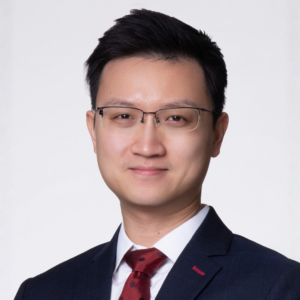
Ryan Ip
Vice President & Executive Director of Public Policy Institute
Our Hong Kong Foundation

Ryan Ip
Our Hong Kong Foundation
Vice President & Executive Director of Public Policy Institute
Ryan is the Vice President and Executive Director of Public Policy Institute at Our Hong Kong Foundation. He leads the Foundation’s think tank to advise the government and private sector organisations on public policy and strategic development. Before joining OHKF, he was an economist at JLL and the Hong Kong Monetary Authority. He holds a Master of Science degree in Economics from the London School of Economics and is a Chartered Surveyor. He is also an Independent Non-Executive Director at China Merchants Land Limited.
Ryan is active in public service and is a member of the Advisory Committee on the Northern Metropolis, the Land and Development Advisory Committee, the Town Planning Board, the Tourism Strategy Committee, the Estate Agents Authority, and the Hong Kong Maritime and Port Development Board. He is also a Vice President of the China Real Estate Chamber of Commerce Hong Kong and International Chapter, and a board member of the Hong Kong Proptech Association.
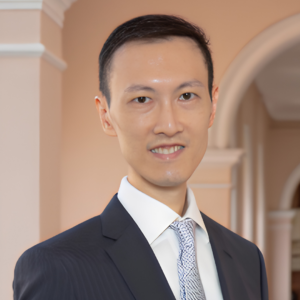
Prof. Kelvin Wong
Executive Associate Dean
The University of Hong Kong
Prof. Kelvin Wong
The University of Hong Kong
Executive Associate Dean
Kelvin S.K. Wong is a Professor of Real Estate at the University of Hong Kong, where he leads the Real Estate Lab and serves as Executive Associate Dean of the Faculty of Architecture. As a real estate economist, Kelvin focuses on analyzing the behaviors of developers, investors, occupiers, and agents in markets characterized by inefficiencies. He is renowned for co-inventing Hong Kong’s repeat-sales property price index—the first tradable housing derivative in Asia. Ranked globally for his leadership in real estate academia, he has received numerous awards such as the Senior Fulbright Scholar, Homer Hoyt Institute’s Post-Doctoral Honoree, and the University of Cambridge’s Doris-Zimmern Award. He also serves on the Engineering Panel of the Hong Kong Research Grants Council, helping to shape the direction of research funding across Hong Kong’s universities. Kelvin’s ongoing efforts strive to improve market understanding and inform policy development in real estate, ultimately benefiting both the industry and society.
Supported by
Urban Land Institute
The Urban Land Institute is an international, membership-based nonprofit research and education organisation. Founded in 1936, the Institute now has over 48,000 members worldwide representing the entire spectrum of land use and real estate development disciplines, working in private enterprise and public service.
Our sustainability goals for 2026:
- ULI’s sustainability initiatives in the Asia Pacific are designed for driven real estate leaders committed to shaping the industry’s future.
- Our comprehensive programmes and initiatives empower you to actively drive positive change.
- Joining our community provides connections with global industry leaders, access to the latest resources and toolkits, and exposure to transformative real estate projects
General Enquiry Email Address: asiapacific@uli.org
General Enquiry Phone Number: 2886 1620
