Resources Theatre
From Compliance Hurdle to Competitive Advantage: Navigating a New Regulatory Era
11 Sep (Fri) Day 2 : 15:40 – 16:30
As sustainability regulations reshape global trade, companies across Asia face growing pressure to understand and respond to new European Union requirements. Laws such as the Carbon Border Adjustment Mechanism (CBAM), the Ecodesign for Sustainable Products Regulation (ESPR) including the Digital Product Passport (DPP), the Battery and Battery Waste Regulation (EUBR) and the Packaging and Packaging Waste Regulation (PPWR) are introducing new obligations. They cover a wide range of topics, amongst other things carbon transparency, product traceability, due diligence, and circularity which demand new business processes and make data management crucial.
This session will explore the practical implications of these regulations for manufacturers, exporters, sourcing offices, and supply chain partners operating in Hong Kong, Mainland China, and across Asia. Industry experts will examine key compliance challenges, reporting duties, common implementation pitfalls, and emerging best practices from companies already preparing for these requirements.
Participants will gain insights into how regulatory developments are influencing procurement decisions, supplier engagement, product design, data governance, and market access. The discussion will focus on actionable strategies that help businesses move beyond compliance and strengthen their long-term competitiveness in an increasingly regulated global marketplace.
Session Learnings:
- Understand the latest developments and business implications of CBAM, ESPR, DPP, EUBR, and PPWR.
- Identify common compliance challenges facing Asian supply chains.
- Learn about practical approaches for data collection, traceability, and stakeholder engagement.
- Explore how leading companies are turning regulatory requirements into opportunities for innovation and resilience.
Post-Event Actions:
- Assess regulatory exposure by identifying which products, markets, and business activities may be affected by CBAM, ESPR, DPP, EUBR, and PPWR requirements.
- Strengthen supply chain data readiness by reviewing current capabilities for carbon accounting, supply chain transparency, circularity, due diligence and sustainability reporting.
- Engage business partners and customers proactively to address information gaps and ensure compliance across the value chain.
- Develop a practical compliance roadmap that ensures regulatory compliance while reflecting operational realities and available resources.
- Identify strategic opportunities to improve competitiveness, market access, and customer trust through greater transparency and sustainability performance.
Speakers
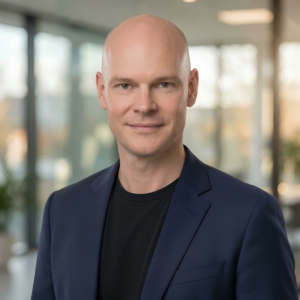
Moderator
Michael Keppe
Co-Founder & CEO
Impala Services and Pergamon Labs
Michael Keppe
Impala Services and Pergamon Labs
Co-Founder & CEO
Michael is Co-Founder and CEO of Impala Services and Pergamon Labs, specialising in AI-driven compliance documentation for the retail and consumer goods industries. He is not a technologist by background but a documentation and compliance expert who built an AI platform, a distinction that shapes how he approaches regulatory change: as an operational problem to be solved with structure and data, not a reporting exercise.
As a Board Member of the German Chamber of Commerce in Hong Kong, Michael co-chairs both the Sustainability Committee and the AI Committee. He co-developed the Chamber’s AI Transformation Blueprint, a seven-pillar readiness framework now applied across member companies, and contributed to the Committee’s “Green Future — Empowering Sustainable Compliance” guide for member companies and their suppliers. He continues to work with the Sustainability Committee on practical tools that help Asian suppliers understand which EU requirements apply to them. He is also Vice Chairman of the Hong Kong Artificial Intelligence and Industry Association.
He holds a Master’s in Technical Documentation, is a Certified AI Transformation Leader, and brings over 20 years of leadership in retail and consumer goods across Europe and Asia.
My Sustainability Goals for 2026:
Making EU regulation navigable for Asian suppliers. CBAM, the Digital Product Passport and PPWR are landing on factories that often learn about them from a buyer’s email. I want the gap between European legislation and Asian shop-floor reality to narrow, through practical tools, not more guidance documents.
Treating compliance data as an asset, not a cost. Companies collecting carbon, material and traceability data for regulators are sitting on the same data that improves sourcing decisions. The businesses that build this properly once will have an advantage over those that rebuild it for every new regulation. The industry should stop solving identical problems in parallel behind closed doors.
Speaking at 2026 sessions:
Day 2
From Compliance Hurdle to Competitive Advantage: Navigating a New Regulatory Era
Karl Borgschulze
Managing Director
CSI Ltd.

Karl Borgschulze
CSI Ltd.
Managing Director
Karl Borgschulze, a seasoned professional with over 30 years of experience, is the Managing Director at Consulting Service International Ltd., which he founded in Hong Kong in 2005. With a strong foundation in Germany, Karl brings extensive expertise in sales, procurement, and sustainable product development across diverse international markets. His career is marked by a focus on value chain optimization, sustainable marketing strategies, and innovative business solutions.
My Sustainability Goals for 2026:
My sustainability goals for Hong Kong focus on better energy management and significant waste reduction. The city should use digital technologies, real-time data, and smarter infrastructure to reduce energy consumption, improve efficiency, minimise waste generation, increase recycling, and make better use of resources across buildings, businesses, and public infrastructure.
Speaking at 2026 sessions:
Day 2
From Compliance Hurdle to Competitive Advantage: Navigating a New Regulatory Era
Jill Valentina Dessel
Project Manager Compliance & Regulatory Processes
REWE Far East Ltd.
Jill Valentina Dessel
REWE Far East Ltd.
Project Manager Compliance & Regulatory Processes
Jill Valentina Dessel is a Project Manager for Compliance & Regulatory Processes at REWE Far East Ltd. (RFE). It is the sourcing organisation for the REWE Group in Asia, one of the largest food retailers in Europe with a strong non-food business base. Jill leads cross-functional projects for the implementation of emerging sustainability and product-related EU laws across international supply chains, such as CBAM, EUBR, ESPR & DPP. Based in Hong Kong, she works closely with internal sourcing teams, suppliers, and stakeholders in Asia and Europe to translate complex regulatory requirements into practical business solutions. Her work focuses on compliance while strengthening transparency, resilience, and long-term competitiveness across value chains.
My Sustainability Goals for 2026:
My goal is to help colleagues and business partners see the sustainability legislation as more than just a compliance obligation. I want to show how greater transparency, better supplier engagement, and stronger data management can also create business value. Through my work with sourcing teams and suppliers across Asia, I hope to support practical and workable solutions for new EU requirements and encourage companies to use regulatory readiness as an opportunity to strengthen competitiveness, market access, and trust.
Speaking at 2026 sessions:
Day 2
From Compliance Hurdle to Competitive Advantage: Navigating a New Regulatory Era
Martin Fan
Solar Procurement & Quality Expert
EU Renewable Energy Firm
Martin Fan
EU Renewable Energy Firm
Solar Procurement & Quality Expert
A Procurement & Quality Expert with over two decades of international experience in supply chain governance, quality assurance, and regulatory compliance. Currently leading solar supply chain strategic procurement and quality strategies for a major renewable energy firm, Martin specializes in turning complex regulatory demands into strategic operational advantages. Prior to entering the solar sector, Martin spent 17 years in the Testing, Inspection, and Certification (TIC) industry, designing and executing global ESG, QA/QC, and compliance programs for multinational retailers and their supply networks.
Speaking at 2026 sessions:
Day 2
From Compliance Hurdle to Competitive Advantage: Navigating a New Regulatory Era
Arianna Ji
Senior Sustainability Manager
STARTEAM GLOBAL
Arianna Ji
STARTEAM GLOBAL
Senior Sustainability Manager
Arianna Ji is the Senior Sustainability Manager at STARTEAM GLOBAL, a German PCB manufacturer with over 35 years of expertise and operations across Asia, Europe, and North America. She leads transformative initiatives across ESG strategy, sustainability reporting, climate action, and supply chain sustainability. With a background in finance and economic statistics, Arianna brings a data-driven approach to sustainable procurement, decarbonization, and circular product innovation.
She has been an instrumental driving force in advancing STARTEAM GLOBAL’s sustainability agenda, successfully leading the company to achieve the EcoVadis Silver Medal and ensuring alignment with leading international frameworks, including the EU European Sustainability Reporting Standards (ESRS) and the Global Reporting Initiative (GRI). As an SBTi expert, Arianna successfully guided the development and validation of STARTEAM GLOBAL’s Science Based Targets initiative (SBTi) targets, reinforcing the company’s commitment to science-based climate action and long-term emissions reduction.
Fluent in four languages, she champions inclusive, resilient, and globally connected supply chains while driving measurable sustainability outcomes across international operations.
My Sustainability Goals for 2026:
My Wishes for Hong Kong
I hope the Hong Kong Government can expand the availability of public recycling facilities across the city, making recycling more accessible and convenient for residents. A more effective and transparent recycling system, supported by clear and consistent guidance on how and where to recycle different types of waste, would help encourage greater public participation and improve overall recycling rates.
I would like to see regular public updates on recycling performance and outcomes, so residents can better understand the impact of their participation and stay engaged in sustainability efforts.
More convenient collection and recycling stations should be provided for small electronic devices and accessories, including:
Cables and wires
Headphones and earphones
SIM cards
Computer mice
Batteries
Chargers and adapters
Power banks
Other small electronic components and accessories
A more accessible and well-communicated recycling infrastructure would encourage greater public participation, reduce electronic waste, and help Hong Kong move towards a more circular and sustainable economy.
Speaking at 2026 sessions:
Day 2
From Compliance Hurdle to Competitive Advantage: Navigating a New Regulatory EraSupported by
German Chamber of Commerce, Hong Kong
Founded in 1983, the German Chamber of Commerce, Hong Kong (GCC) today is one of the largest membership organisations among the European national chambers in Hong Kong with over 400 corporate members. GCC serves as a catalyst, promoter and facilitator of members’ interests in Hong Kong and the region. Members comprise of German, Hong Kong and international companies with an interest in doing business in Germany or in cooperation with German business partners.
GCC together with the Delegation of German Industry and Commerce (GIC) offers a wide range of services and activities for its member companies, including regular business and networking events, as well as exclusive Committees (Sourcing, Logistics, Mittelstand, CFO, Women in Business) and Working Groups (AI, HR, Sustainability) to meet peers, exchange views, and work on joint publications and projects.
Furthermore, GCC is a member chamber of the European Chamber of Commerce in Hong Kong and represents the interests of the German business community in Hong Kong on the International Business Committee (IBC).
Our company’s sustainability goals for 2026:
- 400+ Corporate Members
- 8 Committees and Working Groups
- 50+ Events Per Year
Solutions Showcase:
- Education/Training/Certification
- Sourcing & Supply Chain
Legal Name: German Chamber of Commerce, Hong Kong
General Enquiry Email Address: gcc-sustainability@hongkong.ahk.de
General Enquiry Phone Number: 25265481
General Business Address: 2302, COFCO Tower, 262 Gloucester Road, Causeway Bay, Hong Kong