Innovation Stage
The Double-Edged Sword of AI: Balancing Innovation with Environmental Responsibility
10 Sep (Thur) Day 1 : 11:00 – 11:50
Artificial Intelligence is accelerating sustainability efforts — from optimizing energy grids to enhancing ESG data analytics — yet its own environmental footprint is growing at an alarming rate. Global data centre electricity consumption is projected to double by 2030, driven largely by AI workloads. This panel brings together industry leaders to examine how organisations can harness AI as a powerful enabler of their sustainability agendas while responsibly managing the technology’s energy demands, carbon emissions, and e-waste implications. Panellists will explore practical governance frameworks, emerging regulatory expectations, and collaborative approaches that ensure AI deployment advances — rather than undermines — corporate Net Zero commitments. The session offers actionable insights for business leaders seeking to align digital transformation with credible environmental stewardship.
Session Learnings:
- Recognise the sustainability paradox of AI — understanding both its capacity to drive ESG improvements (e.g., predictive analytics, supply chain optimisation, climate modelling) and its significant environmental costs, including surging energy consumption and water usage from data centres.
- Identify governance and disclosure expectations — gaining awareness of emerging regulatory trends requiring companies to measure and report the environmental impact of their digital infrastructure, and how these intersect with existing ESG reporting frameworks (ISSB, HKEX climate rules).
- Evaluate practical strategies for responsible AI adoption — learning how leading organisations are procuring renewable energy for data centres, selecting energy-efficient AI models, and embedding sustainability criteria into technology procurement decisions.
- Engage cross-functional stakeholders effectively — understanding how to build internal alignment between IT, sustainability, finance, and board-level leadership to ensure AI investments are assessed through an ESG lens from inception.
- Leverage collaborative industry action — discovering how sector-wide initiatives, green fintech solutions, and public-private partnerships can accelerate the development of sustainable AI infrastructure across Asia.
Post-Event Actions:
After attending this session, delegates are encouraged to:
- Conduct an AI-Energy Baseline Assessment — Map your organisation’s current and projected AI and data centre energy consumption to understand its contribution to your overall carbon footprint (Scope 2 and Scope 3).
- Integrate Digital Carbon into ESG Reporting — Work with your sustainability and IT teams to incorporate AI-related environmental metrics into your next ESG disclosure cycle, aligning with HKEX and ISSB requirements.
- Establish an AI Sustainability Governance Framework — Propose or strengthen internal policies that require environmental impact assessments before deploying new AI systems or scaling existing ones, ensuring board-level oversight.
- Engage Your Technology Vendors — Initiate conversations with cloud providers, AI platform vendors, and data centre operators about their renewable energy commitments, Power Usage Effectiveness (PUE) metrics, and sustainability roadmaps.
- Join or Form Industry Working Groups — Connect with FTAHK, peer organisations, or green fintech networks to share best practices, benchmark performance, and collectively advocate for sustainable AI standards in the region.
Speakers

Moderator
Michelle Mak
Co-Chair, Sustainability and Green Fintech Committee of Fintech Association of Hong Kong
FinTech Association of Hong Kong
Michelle Mak
FinTech Association of Hong Kong
Co-Chair, Sustainability and Green Fintech Committee of Fintech Association of Hong Kong
Michelle Mak is the Head of Public Affairs and Business Development of Dun & Bradstreet in Hong Kong. In addition to her dedication to establishing an ecosystem of partners with government agencies, enterprises and start-ups for a greener and sustainable future.
In 2025 Michelle graduated with Northwestern Kellogg-HKUST EMBA, enhancing her expertise in business strategy and leadership.
Michelle co-founded an award-winning social enterprise, Make The Change (MTC) back in 2013 in Singapore. She was selected as the ESG Person of the Year (2020), 40 under 40 (2025) and Women to Watch (2021) by Campaign Asia. She has also won GBA Outstanding Women Entrepreneur Award (2021).
Michelle has been appointed as Co-Chair, Sustainability and Green Fintech Committee of Fintech Association of Hong Kong and Subject Advisory Panel by Hong Kong Institute of Bankers in 2025. She is also holding positions of Board Member of Sensational Foundation, a registered charity in Hong Kong and Vice President of Lions Club of Hong Kong IFC.
Speaking at 2026 sessions:
Day 1
The Double-Edged Sword of AI: Balancing Innovation with Environmental Responsibility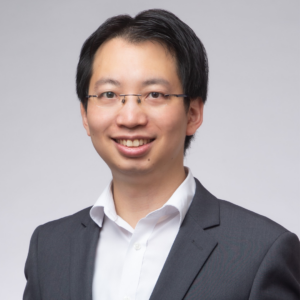
Prof. Jack Cheng
Professor and Associate Head
The Hong Kong University of Science and Technology

Prof. Jack Cheng
The Hong Kong University of Science and Technology
Professor and Associate Head
Prof. Jack Cheng is a Professor and Associate Head in the Department of Civil and Environmental Engineering, Associate Director of GREAT Smart Cities Institute, Director of Center for Digital Twin on the Built Environment, Director of BIM Lab, and a Member of Low Altitude Economy Research Center at the Hong Kong University of Science and Technology (HKUST). His research interests include BIM, digital twin, artificial intelligence, construction robotics, blockchain, construction and facility management, smart and low-carbon buildings, and construction digitalization. He has led several R&D projects in smart buildings and construction. He is an author of over 400 international journal and conference publications, with over 20,000 citations.
Prof. Cheng is currently the Chairperson of Committee on BIM and Construction Digitalisation, Chairperson of Task Force on AI, and a Council Member at Hong Kong Construction Industry Council (CIC), Chairperson of CITF BIM Vetting Subcommittee, a Director of the BEAM Society Limited, a Council Member of Hong Kong Innovative Technology Development Association (HKITDA), a Council Member of the GS1 Hong Kong IOT Industry Advisory Council, and Editorial Board Member of several international journals. He is a Past Chairperson of the CIC Task Force on BIM Standards, Past President of the American Society of Civil Engineers (ASCE) Greater China Section, Past Honorary Treasurer of the Hong Kong Institute of Building Information Modeling (HKIBIM), and Past Director of the Hong Kong Green Building Council. He is a Fellow Member of the Hong Kong Institute of Civil and Building Information Management (HKICBIM), Professional Member of the HKIBIM, CIC Certified BIM Manager (CCBM), and Certified Carbon Auditor Professional (CAP). He has received the Construction Industry Outstanding Person Award in 2019 from CIC, Gold Medal at the 48th and 49th International Exhibition of Inventions Geneva, and several research and paper awards in international conferences.
Speaking at 2026 sessions:
Day 1
The Double-Edged Sword of AI: Balancing Innovation with Environmental Responsibility
Prof. Andy Chow
Head of Customer Solution Architects
Google Cloud

Prof. Andy Chow
Google Cloud
Head of Customer Solution Architects
Andy Chow is Head of Customer Solution Architects for Hong Kong in Google Cloud. In his current capacity, Mr. Chow is responsible for advising customers with their digital and AI transformation journey and to improve business outcomes by leveraging the latest innovations from Google. He is currently an adjunct professor at City University, teaching Generative AI in business courses.
Prior to his tenure in Google Cloud, he was Senior Director at Symantec focusing on strategic accounts and solutions. He was also the Head of Sales Consulting for Oracle Asia Pacific Middleware division. He also worked at Deloitte Consulting focusing on the communication industry and led several large scale projects from start to conclusion.
Mr. Chow has more than 25 years of experience in the IT industry. He has an MBA degree from Hong Kong University of Science and Technology and a Bachelor of Math from University of Waterloo in Canada.
Speaking at 2026 sessions:
Day 1
The Double-Edged Sword of AI: Balancing Innovation with Environmental Responsibility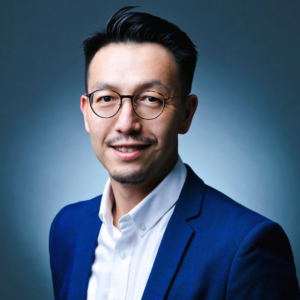
Keith Ip
Chief Technology Officer
Li & Fung Trading

Keith Ip
Li & Fung Trading
Chief Technology Officer
Keith is the Chief Technology Officer of Li & Fung Trading leading the company’s various technology and AI initiatives which help drive value delivery through innovation, use case identification and AI adoption. Prior to Li & Fung, he held different executive roles at S.F. Express, including Chief Technology Officer of S.F. Technology, CEO of S.F. international overseas region based out of Shenzhen as well as CMO of S.F. Express HK. His vast experience cuts across Technology and Digital in Asia Pacific for both established and start-up businesses. Before joining S.F. Express, Keith led solution consulting and sales teams of Enterprise Business and Supply Chain Cloud for Oracle Asia Pacific and for SAP Greater China.
Keith, being an early adopter of GenAI in the enterprise world, is a founding member and advisory board member of Artificial Intelligence Association of Hong Kong (AIHK). He is also a CIO Board Member of Hong Kong Computer Society. Keith holds an Executive MBA degree from both Northwestern University’s Kellogg School of Management and HKUST, a Master of Science in Mechanical Engineering from Stanford University and a Bachelor of Science in Mechanical Engineering from the University of California, Berkeley.
Speaking at 2026 sessions:
Day 1
The Double-Edged Sword of AI: Balancing Innovation with Environmental Responsibility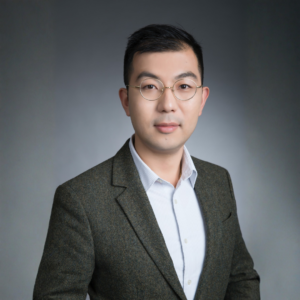
Dr. Martin Qiao
Head of Data Science Solutions, Retail Business & Wealth
HSBC HK

Dr. Martin Qiao
HSBC HK
Head of Data Science Solutions, Retail Business & Wealth
Martin holds a PhD degree in Mathematics and has 15+ years of experience in delivering enterprise-scale Data Science platforms and AI solutions in financial industries across banking and insurance. He is now the Head of Data Science Solutions in HSBC HK.
Speaking at 2026 sessions:
Day 1
The Double-Edged Sword of AI: Balancing Innovation with Environmental ResponsibilitySupported by
FinTech Association of Hong Kong
Asia’s Leading Independent FinTech Association
The FTAHK combines expertise, reach, influence and diversity thus enabling it to fully represent Hong Kong’s FinTech ecosystem in the city and internationally.
Its independence and organisation as not-for-profit ensure an unbiased approach to all activities, as well as a laser focus on what is relevant to the members and the community.
General Enquiry Email Address: events@ftahk.org