A quiet but significant reality is reshaping Hong Kong’s workforce. According to the Hong Kong Public Opinion Research Institute, an estimated 1.5 million people in the city are employed while caring for an aging parent or relative. Most receive little to no support.
The impact on business is measurable. Research by HKCSS and Sau Po Centre on Ageing shows that many working caregivers regularly arrive late, leave early, or take unplanned leave. Over half report depressive symptoms. Nearly a third have considered resigning altogether.
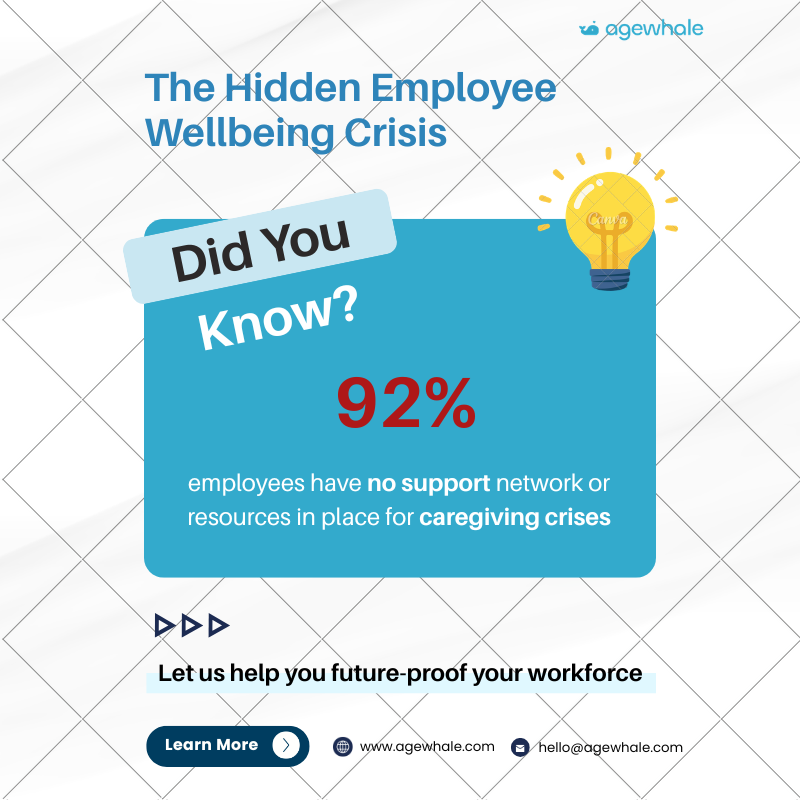
Despite these figures, external support remains critically low. Findings from Agewhale’s Caregiving Readiness Assessment reveal that 92% of employed caregivers lack access to resources or networks that could ease the burden. Employee Assistance Programs, while common, are rarely designed to navigate eldercare systems or support long-term care planning.
This is not only a personal issue. When employees go unsupported, organizations face real consequences, including talent loss, reduced productivity, and lower engagement. The business case for action is clear.
Progressive organizations are recognizing caregiver support as a strategic priority. It strengthens workforce resilience and positions companies for long-term sustainability.
To learn more about building a caregiver-friendly workplace, visit agewhale.com.