Net Zero Innovation (Keynote) Theatre
Bridging Equity & Accountability: Advancing Just Transition
11 Sep (Thur) Day 1 : 13:00 – 13:50
As businesses align their ambitions with global climate goals, the concept of a Just Transition becomes paramount. This session will focus on the critical intersection of corporate sustainability due diligence, labour risk and social sustainability in driving a Just Transition.
The discussion will explore how supply chain due diligence can ensure that companies not only reduce their environmental impact but also address social risks and promote worker welfare. Delegates will gain insights into how businesses can proactively engage with key stakeholders, including workers, communities, and policymakers, to create inclusive and sustainable transition plans that prioritise fairness, safeguard livelihoods, and enhance long-term resilience. The session will emphasise the importance of supporting vulnerable workers, ensuring decent work opportunities, and fostering inclusivity as industries shift towards achieving net zero ambitions.
Learnings
- How can businesses ensure that their transition plans are socially sustainable, promote worker welfare, and enhance inclusivity alongside environmental goals?
- What role does supply chain due diligence play in embedding accountability, remedy, and the support of vulnerable workers into corporate strategies?
- How can companies effectively engage with workers, communities, and other stakeholders to co-create transition plans that address workforce needs and advance social sustainability?
Post-event Actions
- Conduct social impact assessment across your company’s operations and supply chains to identify potential risks to worker welfare, livelihoods, and social sustainability during the transition.
- Develop a Just Transition framework that integrates principles of social sustainability, labour protections, and decent work into your sustainability strategy, ensuring meaningful engagement with workers and communities in decision-making and risk analysis.
- Collaborate with stakeholders, including workers, communities, and industry partners, to establish mechanisms for accountability, grievance resolution, and the promotion of decent work opportunities for all.
Speakers

Moderator
Clemence Aron
Director, Membership & Advisory
The Mekong Club
Clemence Aron
Director, Membership & Advisory
Clemence currently leads Membership and Advisory services at The Mekong Club. Her career is dedicated to helping businesses adopt sustainable practices in their operations and supply chains. Clemence has a strong background in managing cross-functional projects, developing advisory services and guiding businesses on supply chain due diligence, developing frameworks and tools, leading research initiatives, and providing training to diverse stakeholders. Before joining The Mekong Club, she worked as a consultant at the International Labour Organization (ILO) and has experience in the private sector, both in-house and in consulting.
My Sustainability Goals for 2025:
- Advance sustainability in supply chains: I hope to see more Hong Kong companies embed sustainability and effective due diligence practices across their supply chains, with a focus on transparency, accountability, and long-term partnerships.
- Empower SMEs: I aim to support Hong Kong’s SMEs in adopting practical, scalable social sustainability solutions that align with global expectations while having an impact locally.
- Enhance cross-sector collaboration: I would like to see stronger partnerships between businesses, industry associations, and non-profit organisations, to address sustainability challenges and scale collective action.

Archana Kotecha
Founder & CEO
The Remedy Project
Archana Kotecha
The Remedy Project
Founder & CEO
Archana Kotecha is a UK-qualified barrister, CEDR-accredited mediator, and leading voice in business and human rights, specialising in forced labour, human trafficking, and responsible business conduct. With over 15 years of experience advising UN agencies, governments, businesses, and civil society across Asia, she develops solutions that centre on the rights-holder perspective, ensuring human rights are upheld in business operations.
As Founder and CEO of The Remedy Project and ReAct Asia, Archana leads initiatives in human rights due diligence, grievance mechanisms, and remedy frameworks, setting new standards for responsible business. Her leadership has been recognised by the Financial Times, the Emilie Ashurst Anti-Slavery Award, and Industry Era Women Leaders, among others. She also contributes to global initiatives through advisory roles with the Responsible Business Alliance, the Forest Stewardship Council, and the UN OHCHR.

Michelle Mak
Co-Chair, Sustainability and Green Fintech Committee of Fintech Association of Hong Kong
FinTech Association of Hong Kong
Michelle Mak
FinTech Association of Hong Kong
Co-Chair, Sustainability and Green Fintech Committee of Fintech Association of Hong Kong
Michelle Mak is the Head of Public Affairs and Business Development of Dun & Bradstreet in Hong Kong. In addition to her dedication to establishing an ecosystem of partners with government agencies, enterprises and start-ups for a greener and sustainable future.
In 2025 Michelle graduated with Northwestern Kellogg-HKUST EMBA, enhancing her expertise in business strategy and leadership.
Michelle co-founded an award-winning social enterprise, Make The Change (MTC) back in 2013 in Singapore. She was selected as the ESG Person of the Year (2020), 40 under 40 (2025) and Women to Watch (2021) by Campaign Asia. She has also won GBA Outstanding Women Entrepreneur Award (2021).
Michelle has been appointed as Co-Chair, Sustainability and Green Fintech Committee of Fintech Association of Hong Kong and Subject Advisory Panel by Hong Kong Institute of Bankers in 2025. She is also holding positions of Board Member of Sensational Foundation, a registered charity in Hong Kong and Vice President of Lions Club of Hong Kong IFC.
Speaking at 2026 sessions:
Day 1
The Double-Edged Sword of AI: Balancing Innovation with Environmental Responsibility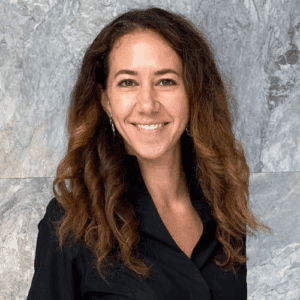
Sarah Obser
Senior Sustainability & Regulatory Supply Chain Manager
Lidl & Kaufland Asia Pte. Limited
Sarah Obser
Lidl & Kaufland Asia Pte. Limited
Senior Sustainability & Regulatory Supply Chain Manager
Sarah Obser is the Senior Manager for Sustainability & Regulatory Supply Chain Management at Lidl & Kaufland Asia. In her role, she leads a team of experts on topics such as social and environmental compliance in our factories, traceability, climate change, sustainable assortment and corporate sustainability.
Prior to this, she was Associate Director for Sustainability Consulting – Supply Chain at LRQA (former ELEVATE). She worked with international brands on their responsible sourcing strategy, risk assessments and traceability projects.
Sarah’s experience also includes the position as Head of Sustainability at a testing laboratory looking after environmental audits as well as a previous role with focus on development aid funded projects across Asia.
Sarah is a Textile Engineer (M.Sc.) who has been working in the supply chain in Asia for 14 years with prior project work in Bangladesh and Indonesia.
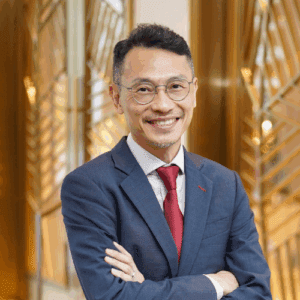
Alan To
Chief Executive Officer
Climate Finance Asia
Alan To
Climate Finance Asia
Chief Executive Officer
Alan To is a seasoned sustainability and ESG strategic marketing leader with nearly two decades of experience across the full spectrum of the sustainability ecosystem—from carbon-intensive industries and global sustainability consultancies to ESG data solutions for financial institutions and sustainable finance management. He has driven strategic growth at leading organizations including S&P Global, ERM, Lloyd’s Register, and Bayer.
As Regional ESG Marketing Director at S&P Global, he spearheaded award-winning initiatives across Asia, Pacific, Middle East & Africa, earning the company’s first-ever ESG accolades in the region. At Bayer, he led US$100M sustainability investment projects in China, advancing eco-commercial plant development.
Recognized as a Sustainability A-List Leader 2025 by Eco-Business, Alan is also a passionate social innovator. He co-founded two social enterprises—Yum Cha Together (得閒去飲茶) and Aromafunpy, and has spent over 15 years mentoring youth and promoting social enterprise education in Hong Kong. He serves on the vetting panel of the HKSAR Government’s SIE Fund and is a frequent university speaker on sustainability and social innovation.
My Sustainability Goals for 2025:
- Scaling Just Transition initiatives across the APAC region and beyond;
- Advance sustainable investment and mobilise green and transition finance
Supported by
The Mekong Club
The Mekong Club is a non-profit partnering with private sector members to embed sustainable labour practices in global value chains. Through tools, consultations, training, and collaboration, we drive responsible sourcing, economic development and social impact in Asia, inspiring corporate action to prevent modern slavery. We support SDG 8: Decent Work and Economic Growth.
Our sustainability goals for 2025:
Our 2025 ambitions focus on 1. equipping member companies with the tools, resources and guidance to identify and address social risk within their value chain; 2. providing consultations on responsible sourcing practices; 3. fostering industry capacity through collaborative workshops and webinars; and 4. collaborating with stakeholders to integrate anti-trafficking measures into procurement and sourcing policies.
Solutions Showcase:
- Charity/NGO
- Education/Training/Certification
- ESG Reporting/Consultancy
- Sourcing & Supply Chain
- Strategic/Corporate Consultancy
- Sustainability Services
General Enquiry Email Address: info@themekongclub.org
With thanks to
Dun & Bradstreet (HK) Limited
Booth F10
Dun & Bradstreet, a leading global provider of business decisioning data and analytics, enables companies around the world to improve their business performance. Dun & Bradstreet’s Data Cloud fuels solutions and delivers insights that empower customers to accelerate revenue, lower cost, mitigate risk, and transform their businesses. Since 1841, companies of every size have relied on Dun & Bradstreet to help them manage risk and reveal opportunity. We combine global data with local insights to help our clients to make smarter decisions.
Solutions Showcase:
- Education/Training/Certification
- ESG Reporting/Consultancy
- ICT & Data Solutions
- Sourcing & Supply Chain
- Sustainability Services
Legal Name: Dun & Bradstreet (HK) Limited
General Enquiry Email Address: marketing.hk@dnb.com
General Enquiry Phone Number: 2516 1111
General Business Address: 23/F, Six Pacific Place, 50 Queen’s Road East, Wan Chai, Hong Kong