Workshop A
Beyond the Bin: Rethinking Waste in Hong Kong
10 Sep (Thur) Day 1 : 14:00 – 15:15
Recycling and food waste sound like solved problems, until you see the gap between what we think happens and what actually does. Hosted by the HKU Jockey Club Enterprise Sustainability Global Research Institute, this 75-minute workshop brings leading organisations across two focused conversations to make the chain visible from the inside.
Rethinking Recycling: Reward and Recover, explores what it actually takes for a bottle in a recycling bin to come back as a new bottle — from the consumer-facing incentives that get it there to the industrial processing that makes bottle-to-bottle recycling possible.
Rethinking Food Waste: Prevent and Reshape, examines where food surplus forms across the food system — from retail operations to the shifting patterns of how Hong Kong orders, prepares, and consumes food.
Expect to walk away knowing things most people in Hong Kong don’t — straight from the operators making it happen.
Session Learnings:
- Understand how Hong Kong’s recycling chain actually functions, and where the friction lies between consumer behaviour, collection, and industrial-scale processing.
- Learn what food-grade PET recycling specifically demands of every upstream player, and what ordinary residents don’t realise about how their own recycling habits decide whether a bottle becomes a new bottle or fails.
- Have a clearer picture of where consumer-facing schemes meet the operational realities of the recycling industry, what each side enables, what each side requires, and where the trade-offs sit.
- Gain a practical view of where food surplus forms in retail operations, and how shifting demand patterns, including the rise of food delivery, reshape preparation and packaging across the food chain.
Post-Event Actions:
- Apply immediately actionable changes to their own household, organisational, or supply chain recycling practices.
- Explore potential partnerships or commercial engagement with the featured organisations across the recycling and food waste reduction value chains.
- Continue the cross-sector dialogue through follow-on engagement with the host organization and the wider research community working at the intersection of NGO practice, social enterprise, and corporate sustainability.
- Share session insights within their own networks to support the shift from sustainability ambition toward coordinated, on-the-ground action.
Speakers
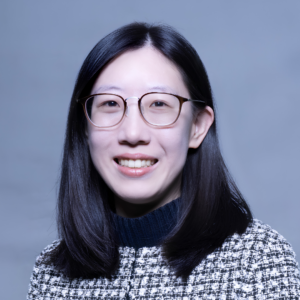
Wendy Cui
Senior Manager (Business Development and Strategy)
HKU Jockey Club Enterprise Sustainability Global Research Institute
Wendy Cui
HKU Jockey Club Enterprise Sustainability Global Research Institute
Senior Manager (Business Development and Strategy)
Ms. Wendy Cui is the Senior Manager, Business Development and Strategy, at the HKU Jockey Club Enterprise Sustainability Global Research Institute, where she builds the University’s partnerships with business, government, and the wider sustainability community. She also serves as Programme Manager of the Institute’s Impact Assessment Lab, which helps business leaders and policymakers make evidence-based decisions through rigorous, real-world experiments. Before joining HKU, she worked at Boston Consulting Group as a management consultant.
My Sustainability Goals for 2026:
1. Evidence over instinct — more sustainability decisions in HK grounded in research and rigorous evidence, not just good intentions.
2. Universities at the table — deeper collaboration between academia and industry, so world-class research actually reaches the frontline.
3. From paper to practice — fewer pilots that stall, more proven ideas scaled into real-world impact.
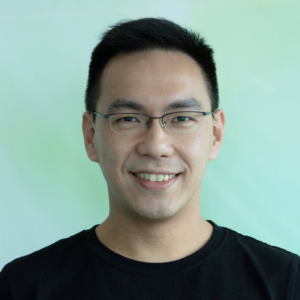
Raymond Mak
Co-founder & CEO
Farmacy Group
Raymond Mak
Farmacy Group
Co-founder & CEO
Raymond Mak is an AgriTech pioneer dedicated to transforming urban food systems. As Co-founder and CEO of Farmacy Group, he spearheaded the development of decentralized Smart Mobile Farms that bring zero-mile agriculture directly into cities — significantly reducing carbon footprints and food waste to deliver high-value ESG impact.
His commitment to sustainable growth earned international acclaim when he won the APEC Bio-Circular-Green (BCG) Award (MSME category) for Farmacy’s replicable green business model.
To build localized resilience, Raymond and his team established Farmunity, an innovative business-in-community initiative. By converting underutilized urban spaces into smart indoor farms, Farmunity blends STEM education, ESG values, and social entrepreneurship. This self-sustainable model empowers local communities and students to grow fresh produce for low-income families, driving long-term environmental and social impact.
My Sustainability Goals for 2026:
1) Develop a resilient, self-sustainable business model for lasting social impact
2) Build an ecosystem where every stakeholder in the community, across sectors and backgrounds, has a role to play to make a difference, and eventually get benefited from it.
3) Public and private sector leaders to create a more enabling environment for robust social innovation for sustainability
Eric Swinton
Co-founder & Chief Empowerment Officer
V Cycle Company Ltd
Eric Swinton
V Cycle Company Ltd
Co-founder & Chief Empowerment Officer
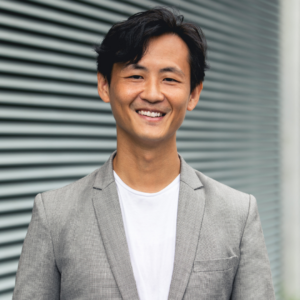
Mr. Eric Swinton founded V Cycle with the belief that environmental solutions should create both ecological and social value. Through V Cycle, he works with schools, businesses, and the wider community to promote plastic reduction and responsible recycling. The team also collects plastic waste locally and transforms them into high value products, creating job opportunities and supporting elderly waste pickers along the way. With more than 15 years of experience in recycling, sustainable product development, offshore manufacturing, and business development, Eric combines practical industry knowledge with a passion for community impact. He is also a frequent speaker and educator on environmental and circular economy topics.
My Sustainability Goals for 2026:
- Scalable Local Plastic Recycling Infrastructure
Hong Kong currently exports much of its recyclables. By 2026, I hope to see:
- Expanded local plastic sorting and processing facilities
- Investment in advanced recycling technologies
- Stronger integration between municipal collection systems and private recyclers
Building local capacity reduces leakage into landfills and strengthens resource security.
Market Demand for Recycled & Reusable Plastics
A circular economy only works when there is demand for recycled materials. By 2026, I hope to see:
- Public procurement policies favoring recycled-content products
- Corporate commitments to minimum recycled plastic content
- Wider adoption of refill and reuse systems in retail and F&B sectors
This would create economic incentives that make circular plastics financially viable and sustainable long-term
Alfred Weston
General Manager
New Life Plastics Ltd
Alfred Weston
New Life Plastics Ltd
General Manager
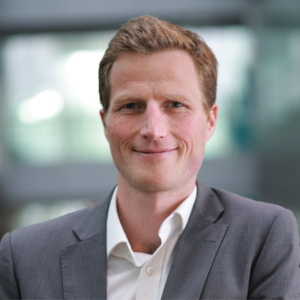
Mr. Alfred Weston is the General Manager at New Life Plastics. He has been with the Swire Group since 2011 and joined New Life Plastics (‘NLP’) in 2022. NLP is Hong Kong’s first recycling facility dedicated to processing PET beverage bottles into a standard that allows them to go back into beverage production. NLP enables a circular economy within Hong Kong – all 500ml Coca-Cola bottles and Bonaqua bottles under 1.5L are now made with 100% recycled PET from bottles collected in Hong Kong and processed at NLP. The company also actively promotes recycling and hosts around 2,000 visitors per year to its facility in the EcoPark.
My Sustainability Goals for 2026:
- A genuine commitment to eco-design from more beverage manufacturers – starting with the phase out of colour PET bottles
- The passing of the PCPRS by LegCo for implementation at the start of 2028
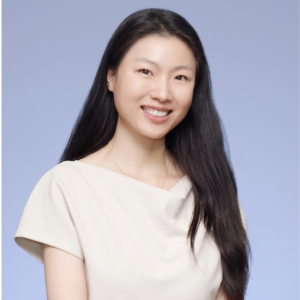
Qidan Wang
Senior Manager (Research)
HKU Jockey Club Enterprise Sustainability Global Research Institute
Qidan Wang
HKU Jockey Club Enterprise Sustainability Global Research Institute
Senior Manager (Research)
Ms. Qidan Wang is the Senior Manager (Research) at the HKU Jockey Club Enterprise Sustainability Global Research Institute, leading industry-focused research on pressing sustainability challenges. At the Institute, she is in charge of two flagship programs, including the NGO Empowerment Program, which examines how NGOs address environmental priorities such as decarbonization, biodiversity conservation, and waste reduction, as well as governance dimensions including transparency, accountability, and social responsiveness. Drawing on her consulting background and extensive cross-sector experience with corporates, regulators, financial institutions, and NGOs, she translates academic insights into actionable strategies and transforms sustainability concepts into measurable, real-world impact.
My Sustainability Goals for 2026:
1. Hong Kong’s scale and connectivity make it a prime environment for testing fresh ideas and new solutions in sustainability. Hope to see more locally-grown success stories that can travel across the region.
2. Waste reduction becomes a daily reality in Hong Kong, not just a conference conversation, and that local success here can pave the way for broader change.
Speaking at 2026 sessions:
Day 1
Translating Circularity: From Material Innovation to Community ImpactBeyond the Bin: Rethinking Waste in Hong Kong
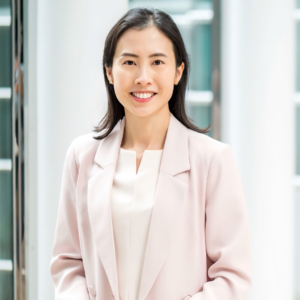
Landico Wong
Senior Sustainability Manager
DFI Retail Group
Landico Wong
DFI Retail Group
Senior Sustainability Manager
Landico Wong is the Senior Sustainability Manager at DFI Retail Group. She is a member of the HKICPA, and a Certified ESG Planner of the International Chamber of Sustainable Development. She holds the GRI Professional Certification and GARP Sustainability and Climate Risk (SCR®) qualification. She has over 16 years of experience spanning ESG and strategic planning, corporate communications, operational excellence, and business development.
At DFI, Landico manages the Group’s sustainability reporting and implementation of its sustainability strategy. Her key focus areas include waste reduction and recycling, climate change, community support, and sustainable products and packaging. She works across formats and functions to drive sustainability initiatives, foster external partnerships, and support the Sustainability Committee in setting long-term and annual targets while monitoring the progress.
Prior to joining DFI, Landico led the change management team of a chemical company, partnering with business units to deliver sustainability-driven improvement projects, including reducing production waste, optimising supply chain planning, and redesigning packaging and products to improve operational efficiency. With a strong understanding of diverse stakeholder needs—from customers and investors to frontline teams and senior leadership—she is skilled at aligning sustainability with business value, engaging stakeholders, and driving collaboration that leads to meaningful organisational change.
My Sustainability Goals for 2026:
- Unlock the value of sustainability by improving resource efficiency, identifying sustainable growth opportunities, and strengthening climate resilience.
- Make sustainable choices more accessible and affordable, empowering customers, businesses and communities to contribute to positive environmental and social impact.
With thanks to
HKU Jockey Club Enterprise Sustainability Global Research Institute
Booth D30
Established by HKU Business School and funded by The Hong Kong Jockey Club, the Institute is a world-class hub for sustainability. We unite global scholars to integrate knowledge, inspire innovation, and conduct impactful research. Partnering with government and corporate sectors, we harness transformative power to create a sustainable, equitable future.
Legal Name: HKU Jockey Club Enterprise Sustainability Global Research Institute
General Enquiry Email Address: esgri@hku.hk
General Enquiry Phone Number: 39177760
General Business Address: 6/F., T.T. Tsui Building, The University of Hong Kong, Hong Kong
Meet our 2026 speakers:
Wendy Cui
Senior Manager (Business Development and Strategy)
HKU Jockey Club Enterprise Sustainability Global Research Institute
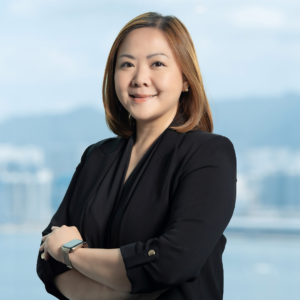
Bernice Yu
Head of Operations
HKU Jockey Club Enterprise Sustainability Global Research Institute
Qidan Wang
Senior Manager (Research)
HKU Jockey Club Enterprise Sustainability Global Research Institute