Resources Theatre
Translating Circularity: From Material Innovation to Community Impact
10 Sep (Thur) Day 1 : 12:55 – 13:45
Achieving a systematic transition to lower carbon emissions – by extending product lifecycles, recovering waste, and optimizing resources – demands more than technological advancement. It requires design thinking, behavioral incentives, and active community engagement to connect every actor directly to climate goals.
This session brings together designers, tech innovators, corporate ESG leaders, and community practitioners to address a central challenge: how to transform “carbon circularity” from an abstract concept into tangible, scalable action through innovative design, accessible technology, and behavioral change.
Session learnings:
A new language for climate conversations. Learn to explain the real connection between carbon capture and the circular economy in terms that resonate – not in the language of IPCC reports, but in narratives that move people, whether you are speaking to colleagues, clients, or students.
- On-the-ground practices already happening. Gain insight into innovations across the design end (building products that inherently support circularity), the production end (translating ESG commitments into tangible products and services), and the consumption end (how low-cost behavioral nudges are reshaping habits).
- A clearer map of where the real opportunities lie. Identify genuine pain points and unmet needs in circular economy innovation – including where technology costs have already dropped low enough to act, and where the barriers to behavioral change can actually be designed away.
- The connection you are missing. Whether you bring technology, capital, distribution channels, or user insight, you will have the opportunity to meet a complementary partner and make an initial connection before leaving the room.
Post-event Actions:
This is not a conversation about what the future should look like – it is a conversation about what is already happening and what is still missing. Different participants will leave with different entry points:
- Corporate ESG / Sustainability leaders: Integrate circular design principles into the evaluation framework for the next product development or procurement cycle.
- Designers / Innovation teams: Re-examine a current project’s material or process decisions through the lens of carbon circularity.
- Community practitioners / NGOs: Draw on behavioral incentive tools shared in the session to design or strengthen community-level climate action programs.
- Investors / Financial institutions: Identify potential investment targets or partners with a compelling circular economy narrative, and establish initial contact with innovators on the ground.
Speakers
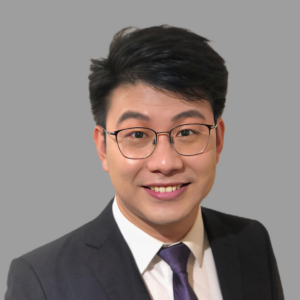
Moderator
Dr. Patrick Yeung
Program Manager, East Asia
Plastic Solutions Fund
Dr. Patrick Yeung
Plastic Solutions Fund
Program Manager, East Asia
Patrick Yeung is the East Asia Program Manager at Plastic Solutions Fund, connecting the power of philanthropy to the grassroots and uniting organizations from small, local groups to international legal experts to end plastic pollution in the region. He is also supporting the Asia Environmental Innovation Forum as an expert advisor on sustainable development topics.
He obtained his PhD in marine biology from the Chinese University of Hong Kong in 2017, with professional field in ecological conservation. He joined the marine conservation team of WWF Hong Kong in 2014, to study on marine litter problems as well as coastal biodiversity through citizen science activities. He also led on identifying marine ecological hotspots as the basis for conservation and research works by facilitating expert groups. In 2019, he started working in Mainland China on marine and wetland habitat conservation, sustainable fisheries and ocean plastic.
Besides, he actively built partnerships with NGOs, government authorities, research institutes, industry associations, and managed funding programs, to provide more innovative and in-depth sustainability solutions. He also supported international cooperation and policy advocacy on nature conservation and sustainable blue economy development.
In his last job at AVPN, he leveraged the social investor network to support climate actions and promote sustainable development.
My Sustainability Goals for 2026:
- SDG 8, 11, 12, 13, 14, 15, 17
Speaking at 2026 sessions:
Day 1
Translating Circularity: From Material Innovation to Community Impact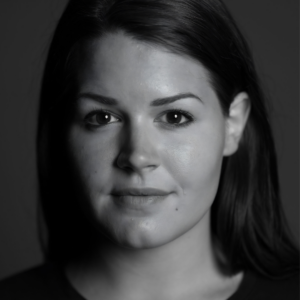
Dr. Emma Fromberg
Research Fellow
King’s College London Centre for Sustainable Business
Dr. Emma Fromberg
King’s College London Centre for Sustainable Business
Research Fellow
Dr. Emma H. E. Fromberg is a Research Fellow at King’s College London’s Centre for Sustainable Business, where she leads academic–industry partnerships focused on circular economy innovation and sustainable value chains.
Trained as an Industrial Design Engineer and Strategic Product Designer, her work explores how business-led activities can contribute to system-level change towards more regenerative and inclusive economic models.
Her doctoral research investigated how insights from ecology can inform a rethinking of economic systems. This work led to the development of Nature’s Playbook, a research-based circular economy innovation tool that supports organisations in applying ecological design thinking in practice. The project has been awarded innovation funding through the SPARK scheme at King’s College London and is currently being developed for international application, including a Mandarin translation.
Alongside this, she develops and delivers applied research projects with industry partners, including work on circular economy systems and the collection of low-value products with BIC, as well as a Knowledge Transfer Partnership with Circularise on Digital Product Passports for EV batteries, focusing on value creation beyond compliance and recycling.
Previously, she was Course Director in Sustainable Business at the University of Cambridge Institute for Sustainability Leadership (CISL), where she led the Postgraduate Certificate in Sustainable Business. She continues to contribute to CISL as an academic supervisor on the Postgraduate Diploma in Sustainable Business.
Earlier in her career, she led open education programmes at the Ellen MacArthur Foundation and contributed to the design and development of a circular economy MOOC for the Leiden-Delft-Erasmus Centre for Sustainability.
Speaking at 2026 sessions:
Day 1
Translating Circularity: From Material Innovation to Community Impact
Yuxi Lei
Founder/CEO
NANOxARCH® (材料乘以设计)
Yuxi Lei
NANOxARCH® (材料乘以设计)
Founder/CEO
Yuxi LEI is the Founder&CEO of NANOxARCH® (Materials × Design), a pioneering Sustainable Material Design(SMD) focused consulting venture based in Shenzhen, China.
Trained in Materials Chemistry and cross-disciplinary design, her work investigates how material innovation and circular design can catalyze systemic transition towards regenerative industrial value chains across built environment, manufacturing and consumer sectors, with a vision set in 2011 to turn materials into a medium to mitigate climate change and reshape the relationship between people and the planet to be healthier and more intimate.
Founded in 2018, NANOxARCH® pioneered and defined Sustainable Material Design(SMD). It is a systematic, full-lifecycle methodology centered on two core pillars: sustainable material development innovation and material application innovation. The complete industrial system spans waste recycling, material research, performance tuning, product and spatial deployment, supply chain rollout, IP cultivation and material storytelling. With this structured system, Yuxi and her team help enterprises cut carbon emissions, lower costs, upgrade products and elevate brand value. She also built the decade-long China Sustainable Materials System(CSMS) and created an exclusive MCF+B framework, compressing waste-to-material circular development cycles down to 2–6 weeks.
Alongside material innovation development, she leads her team to deliver strategic sustainability and ESG advisory for manufacturing enterprises preparing for capital markets from the niche perspective of materials, supporting organizations to embed circularity beyond compliance and build long-term regenerative business models. During the past 8 years, her research-led practice bridges lab-scale material technology, industrial scaling and market adoption, and provide tailored solutions for global partners such as Airbus, BMW and Covestro, and deliver official SMD courses at leading universities across China.
My Sustainability Goals for 2026:
- SDG3
- SDG9
- SDG11
- SDG12
- SDG13
Speaking at 2026 sessions:
Day 1
Translating Circularity: From Material Innovation to Community Impact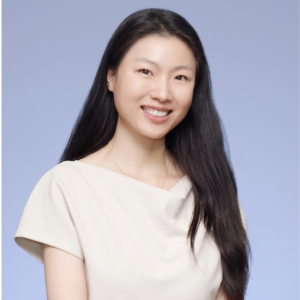
Qidan Wang
Senior Manager (Research)
HKU Jockey Club Enterprise Sustainability Global Research Institute
Qidan Wang
HKU Jockey Club Enterprise Sustainability Global Research Institute
Senior Manager (Research)
Ms. Qidan Wang is the Senior Manager (Research) at the HKU Jockey Club Enterprise Sustainability Global Research Institute, leading industry-focused research on pressing sustainability challenges. At the Institute, she is in charge of two flagship programs, including the NGO Empowerment Program, which examines how NGOs address environmental priorities such as decarbonization, biodiversity conservation, and waste reduction, as well as governance dimensions including transparency, accountability, and social responsiveness. Drawing on her consulting background and extensive cross-sector experience with corporates, regulators, financial institutions, and NGOs, she translates academic insights into actionable strategies and transforms sustainability concepts into measurable, real-world impact.
My Sustainability Goals for 2026:
1. Hong Kong’s scale and connectivity make it a prime environment for testing fresh ideas and new solutions in sustainability. Hope to see more locally-grown success stories that can travel across the region.
2. Waste reduction becomes a daily reality in Hong Kong, not just a conference conversation, and that local success here can pave the way for broader change.
Speaking at 2026 sessions:
Day 1
Translating Circularity: From Material Innovation to Community ImpactBeyond the Bin: Rethinking Waste in Hong Kong
Miao Zhang
Director
Shanghai Ecocycle Circular Economy Center
Miao Zhang
Shanghai Ecocycle Circular Economy Center
Director
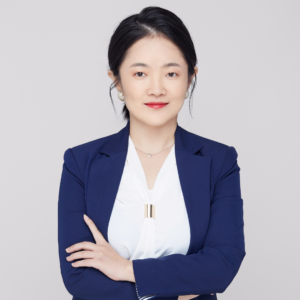
Zhang Miao is the founder and director of Shanghai Ecocycle Circular Economy Center, which is a think tank focusing on the research, communication and solutions exploration in the circular economy field. She is also the founder of R Cubic, a consulting company providing zero-waste solutions for hotels, office buildings and etc.
In the field of circular economy, Ecocycle has published 9 reports on specific sub-topics such as waste sorting, plastic pollution, textile recycling, and the recycling of retired “new Trio” products (lithium batteries, photovoltaic modules and wind power equipment ). These reports provide a detailed investigation and systematic review of the effectiveness of relevant solutions, the current state of recycling system development, and the evolution of domestic and international policies.
In recent years, Zhang Miao focus on the recycling of textile and lithium batteries, did research on the development of relative industries and followed up policies in China.
My Sustainability Goals for 2026:
- SDG11
- SDG12
Speaking at 2026 sessions:
Day 1
Translating Circularity: From Material Innovation to Community ImpactSupported by
Asia Environmental Innovation Forum
Asia Environmental Innovation Forum (AEIF) aims to encourage and support innovative ideas and solutions proposed in response to the key environmental challenges facing the world. Every year, it holds an annual conference and a series of activities that bring together environmental innovators, investors, governments, enterprises, civil society and individuals.
Our sustainability goals for 2026:
- SDG11
- SDG12
- SDG13
- SDG14
- SDG15
Products, Services & Solutions:
- Circular Solutions
- New Materials/Chemicals
- Sustainable Products
- Technology & Innovation
- Waste Reduction & Recycling Management
General Enquiry Email Address: info@aeif.asia
General Enquiry Phone Number: +86 755 82762819