Innovation Stage
From Innovation to Impact: Leveraging Partnerships for Scope 3 Decarbonisation
11 Sep (Fri) Day 2 : 14:25 – 14:50
Turning promising innovations into practical, scalable solutions is critical to accelerating the transition to more sustainable food systems. This session brings together a retailer and its ecosystem partners to explore how collaboration can drive food-system transformation. Recognising the complexity of decarbonising key commodities such as beef and dairy, DFI Retail Group launched the Sustainability Innovation Challenge, supported by The Mills Fabrica, to connect business needs with emerging solutions and identify opportunities for real-world application.
Through the lens of the Challenge, DFI and The Mills Fabrica will share lessons from identifying, evaluating and advancing solutions that address some of the food sector’s most pressing sustainability challenges. The Challenge winner, Number 8 bio, will also share its experience to illustrate how businesses and innovators can work together to bridge the gap between innovation and implementation, supporting more resilient, resource-efficient and lower-carbon food systems.
Session Learnings:
- How organisations can identify and prioritise innovation opportunities with the greatest potential for environmental and business impact.
- What distinguishes scalable solutions from promising concepts, including the importance of commercial viability, value-chain integration and stakeholder adoption.
- Key considerations for accelerating the adoption of emerging solutions in complex and emissions-intensive value chains.
Post-Event Actions:
- Explore opportunities to integrate external innovation into existing sustainability, procurement or value-chain transformation strategies.
- Strengthen collaboration with suppliers, innovators, investors, academia or other stakeholders to address shared sustainability challenges.
- Consider how pilot projects and partnerships can be structured to accelerate learning, reduce implementation barriers and support scaling.
Speakers
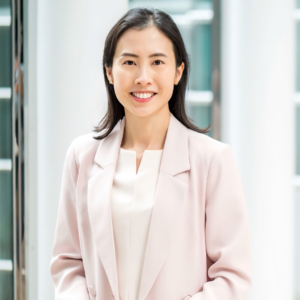
Moderator
Bernice Yu
Head of Operations
HKU Jockey Club Enterprise Sustainability Global Research Institute
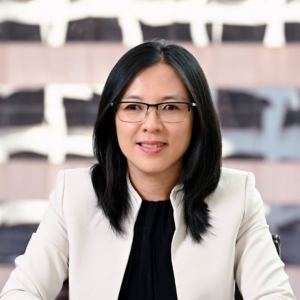
Bernice Yu
HKU Jockey Club Enterprise Sustainability Global Research Institute
Head of Operations
Bernice Yu is the Head of Operations at the HKU Jockey Club Enterprise Sustainability Global Research Institute, where she leads cross-functional collaborations that bridge academia, industry, and public policy to advance sustainability outcomes. In this role, she works closely with HKU faculties, global scholars, corporate leaders, and government stakeholders to generate research-driven insights on sustainability and enterprise transformation. She also oversees the design and delivery of high-profile forums, roundtables, and public lectures that convene international thought leaders and decision-makers, creating platforms for dialogue and action on critical sustainability challenges.
Prior to HKU, Bernice built more than 20 years of experience in human capital consulting and corporate HR leadership across Asia-Pacific, holding senior roles at Mercer, PCCW & HKT, Equinix, Aon Hewitt, and Deloitte. She has advised boards, C-suite executives, and HR leaders on organizational transformation, talent strategy, leadership development, workforce analytics, HR technology, and change management. Throughout her career, she has led large-scale transformation initiatives, developed leadership and talent ecosystems, implemented enterprise-wide HR platforms, and helped organizations strengthen workforce effectiveness and agility. Her unique combination of consulting expertise, operational leadership, and deep understanding of people and organizational dynamics enables her to drive sustainable organizational performance through thoughtful talent and workforce strategies.
My Sustainability Goals for 2026:
1.) Decarbonization:
Driving academic research into actionable, science-based corporate decarbonization and transition strategies across the GBA.
2.) Recycling:
Bridging academic research and real-world industry practice to execute circular economy frameworks and zero-waste operation.
3.) Biodiversity:
Translating nature-positive risk frameworks into practical ESG governance and operational standards for sustainable enterprises.
Speaking at 2026 sessions:
Day 2
From Innovation to Impact: Leveraging Partnerships for Scope 3 Decarbonisation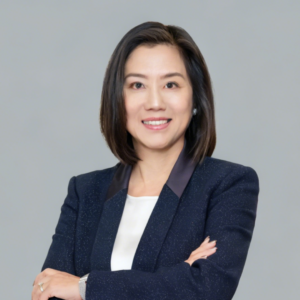
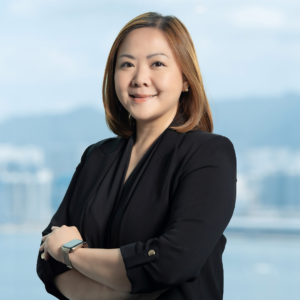
Erica Chan
Group Chief Legal, Sustainability and Corporate Affairs Officer
DFI Retail Group
Erica Chan
DFI Retail Group
Group Chief Legal, Sustainability and Corporate Affairs Officer
Erica Chan was appointed Group Chief Legal, Sustainability and Corporate Affairs Officer in December 2023. She is one of the directors and/or the company secretary for a number of DFI Retail Group subsidiaries. In her role, Erica oversees the Legal, Sustainability, Communications and Corporate Affairs, Group Technical, Risk management, Ethics and Compliance and Loss Prevention functions for DFI Group.
With more than 28 years of experience in retail, e-commerce, media, governance, ethics and operational and regulatory compliance in the Asia Pacific region, Erica brings a wealth of knowledge to her role. Prior to joining DFI, she spent 12 years at Walmart, most recently as SVP, General Counsel and Chief Administrative Officer, Asia, where she oversaw all legal matters in Asia and managed the human resources and administrative functions for the Asia office. She was also a member of Walmart’s Global President’s Diversity and Inclusion Council. Before Walmart, Erica spent 13 years at Star TV Group as the General Counsel for Greater China and General Manager for Hong Kong.
Erica is a Hong Kong-qualified solicitor. She holds a Postgraduate Certificate in Laws from the University of Hong Kong, a Common Professional Examination certificate from the University of Sussex and Bachelor of Social Science in Government and Public Administration degree from the Chinese University of Hong Kong. She also obtained the Certification on Championing Sustainability from the Boardroom from the Stanford University.
Speaking at 2026 sessions:
Day 2
From Innovation to Impact: Leveraging Partnerships for Scope 3 Decarbonisation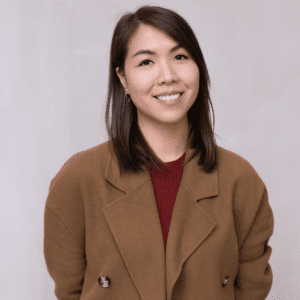
Cintia Nunes
General Manager, Head of Asia
The Mills Fabrica
Cintia Nunes
The Mills Fabrica
General Manager, Head of Asia
Cintia Nunes is the General Manager and Head of Asia of The Mills Fabrica. As the innovation engine to sustainability and impact of Hong Kong conglomerate Nan Fung Group, Cintia leads the team to connect innovators in the techstyle and agrifood tech space with capital, connections, and expertise — to bring sustainability tech innovations from concept to market.
Drawing inspiration from social business principles that prioritize both profitability and purpose, she is committed to facilitating collaboration among stakeholders across the ecosystem to advance positive environmental and social impact at scale.
Before joining The Mills Fabrica, Cintia served as Chief of Strategy and Growth at Hong Kong’s largest network of social enterprises and impact ventures. She also held leadership roles at a multinational FMCG company where she formalized business strategies for over 10 brands.
My Sustainability Goals for 2026:
- More industry level cross-sectors collaborations
- Open dialogues across stakeholder groups on what works/what doesn’t
- Accessibility/transparency to capital across asset classes for impact
Speaking at 2026 sessions:
Day 1
Asia’s Materials Revolution: Building Circular Textiles Through PartnershipsThe Mills Fabrica Start-up Pitching Series : Agrifood Track
Day 2
The Mills Fabrica Start-up Pitching Series : Techstyle TrackFrom Innovation to Impact: Leveraging Partnerships for Scope 3 Decarbonisation
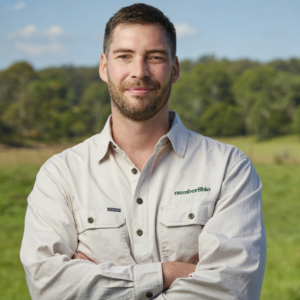
Dr. Tom Williams
CEO
Number 8 Bio

Dr. Tom Williams
Number 8 Bio
CEO
Dr Thomas Williams is a scientist‑entrepreneur and CEO of Number 8 Bio, an Australian climate biotechnology company tackling one of the most difficult and important challenges in global food systems: methane emissions from grazing livestock. Grass‑fed beef and dairy represents the largest single source of emissions for many food companies and are among the hardest to abate due to the realities of extensive farming systems.
Under his leadership, Number 8 Bio has raised $20 million in venture capital and built a multidisciplinary team transforming microbiome science into practical solutions for real‑world agriculture. The company’s technology reduces methane emissions while improving animal productivity, enabling farmers to adopt climate solutions that strengthen—not compromise—their economics.
Prior to founding Number 8 Bio, Dr Williams was an internationally recognised leader in synthetic biology at Macquarie University, where he led teams of up to 17 scientists, secured over AU$10 million in funding, and helped establish the Australian Genome Foundry.
Raised in rural New Zealand, his work is driven by a focus on aligning climate impact with the realities of global food production.
My Sustainability Goals for 2026:
- Food systems account for roughly one-third of global emissions, and Hong Kong, while highly exposed to climate risks, also has a globally respected culinary culture and influence over regional supply chains. This creates a clear opportunity for the city to lead in sustainable food.
- One priority is strengthening connections between technology providers and supply chains, for example linking climate-focused companies in Australia with retailers and food distributors in Hong Kong. Southeast Asia already imports significant agricultural products from Australia, where innovations such as low-emissions livestock solutions are emerging.
- Hong Kong is uniquely positioned to showcase these more sustainable products to consumers and restaurants, helping drive demand while shaping upstream production practices. By leveraging its role as a regional food hub, Hong Kong can become a leader in aligning culinary excellence with climate-responsible sourcing.
Speaking at 2026 sessions:
Day 2
From Innovation to Impact: Leveraging Partnerships for Scope 3 DecarbonisationWith thanks to
DFI Retail Group
Booth E40
DFI Retail Group is a leading Asian retailer, driven by its purpose to “Sustainably Serve Asia for Generations with Everyday Moments”. DFI and its associates operate over 7,500 outlets across 12 markets, with a portfolio of well-known brands across five formats: health and beauty, convenience, food, home furnishings, and restaurants.
Our sustainability goals for 2026:
- Accelerate decarbonisation across our operations and value chain to support the transition to a low-carbon future.
- Expand access to affordable, healthier and more sustainable choices that empower customers to live more sustainably.
- Advance circularity by reducing waste, improving diversion, and increasing resource efficiency.
- Strengthen sustainability awareness and capabilities across DFI and our ecosystem of partners and stakeholders.
- Create lasting positive impacts in the communities we serve through responsible business practices and community support.
Solutions Showcase:
- Brand Owner
- Circular Solutions
- F&B Products/Food Supply
- Sustainable Products
- Technology & Innovation
Legal Name: The Dairy Farm Company, Limited