Innovation Stage
Advancing Smart Mobility: Transforming Tech into Real Impact
11 Sep (Fri) Day 2 : 14:00 – 14:25
As the backbone of Hong Kong’s public transport network, MTR plays a pivotal role in shaping the future of smart mobility. By integrating digital innovations into transport infrastructure and operations, smart mobility initiatives can enhance sustainability, improve operational efficiency, strengthen network resilience, and elevate customer experience. Realising these benefits, however, requires innovative technologies to move beyond proof-of-concept and pilot stages into full-scale operational deployment – a journey that often involves both technical and organisational challenges.
This panel brings together technology providers, ecosystem partners, and industry practitioners to explore how emerging technologies, including Artificial Intelligence (AI), are transformed from innovative concepts into practical solutions that deliver measurable impact. Through real-world examples, speakers will share insights into the deployment of smart mobility technologies within complex operating environments, highlighting both the opportunities and challenges encountered along the way. The discussion will also examine how collaboration between corporates and technology partners enables the testing, refinement, and scaling of innovative solutions. Ultimately, the session will demonstrate how a collaborative innovation ecosystem can accelerate the adoption of smart mobility solutions, driving operational excellence while delivering tangible sustainability outcomes, enhanced accessibility, greater resilience, and long-term business value.
Session Learnings:
- Explore how smart mobility innovations can bring tangible sustainability outcomes and business value to public transport networks.
- Understand the opportunities and practical challenges of integrating emerging technologies into complex, safety-critical operating environments.
- Gain insights into the key success factors for transforming innovative concepts and pilot projects into scalable, real-world applications.
- Learn how collaboration among corporates, technology providers, and ecosystem partners can accelerate innovation adoption and maximise impact.
- Discover how smart technologies can drive operational efficiency, enhance network resilience, improve accessibility, and elevate customer experience while supporting sustainability goals.
Post-Event Actions:
- Identify high-impact use cases where innovation technologies can enhance sustainability performance while delivering measurable operational and business value.
- Develop a structured approach to evaluating, piloting, and scaling technology solutions across different organisation contexts.
- Strengthen collaboration with technology providers, startups, incubators, and ecosystem partners to accelerate the development and deployment of innovative solutions.
- Apply practical lessons learned and best practices to overcome implementation challenges and successfully scale innovation initiatives.
- Explore opportunities to integrate sustainability considerations into technology and innovation strategies across the organisations.
Speakers

Moderator
Gene Soo
Head of Ecosystem – Global Innovation
MTR Corporation
Gene Soo
MTR Corporation
Head of Ecosystem – Global Innovation
Gene Soo is Head of Ecosystem at MTR Corporation’s Global Innovation Department, where he supports innovation initiatives across Hong Kong and MTR’s international operations. His work focuses on turning ideas into practical pilots, with a growing emphasis on applying AI and automation to support MTR’s people in their everyday work, improve urban mobility, and enhance the commuter experience.
Much of Gene’s recent work centres on driving AI adoption and everyday use at MTR. He builds AI agents and tools for real operational challenges, from smarter staff canteen menus to sharing knowledge across business units. He also champions ShiftChat, a platform that connects and coordinates frontline and shift-based workers. Gene favours working pilots over presentations, testing where AI genuinely adds value before scaling it, and helping colleagues get comfortable using the tools themselves.
Gene is personally committed to environmental sustainability and is an active recycler. He regularly uses MTR’s Carbon Wallet and Hong Kong’s Green@Community network to reduce waste and support circular practices in daily life.
Prior to joining MTR, Gene brought Citymapper to Hong Kong and co-founded StartupsHK, contributing to the city’s growing tech and startup community. He holds a BS and MS in Electrical and Computer Engineering from Carnegie Mellon University and an MBA from Columbia University.
My Sustainability Goals for 2026:
Make sustainability the invisible default
I hope to see smart technology and AI woven so deeply into everyday life that the low-carbon, low-waste option quietly becomes the default in how we move, work, and consume, rather than something people have to actively choose.
Make the greener choice the easier choice
I want people gently nudged toward sustainable habits through good design, digital incentives, and rewards, so recycling, low-carbon travel, and circular consumption feel effortless and even a little rewarding, rather than a chore.
Make sustainability inclusive, not just corporate
I hope to see innovation break down silos and open opportunity across the public, private, and civic sectors, so progress on sustainability is community-driven and inclusive, leaving no one behind.
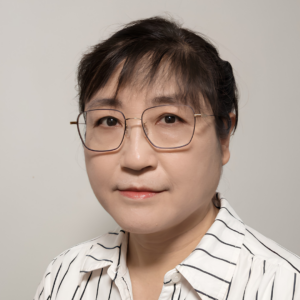
Vince Chow
Head of Development
Charter Glory Corporation Limited

Vince Chow
Charter Glory Corporation Limited
Head of Development
Vince Chow is the Head of Development at Charter Glory Corporation Limited, where she leads the delivery of AI-powered solutions for enterprise clients. She currently supports several innovation initiatives for MTR, including the deployment of AI-powered customer service solutions that enhance customer experience across the railway network. Building on the success of the initial implementation, she is currently supporting the expansion of the Virtual Service Ambassador Solution across additional stations. In parallel, Vince serves as Director of AI Solutions at iTrend Force Company Limited, where she works on AI, advanced analytics and data-driven solutions for enterprise applications.
With 25 years of experience in technology and project management, Vince has delivered numerous large-scale, safety-critical infrastructure projects. Her portfolio spans smart technology, digital innovation, building systems, renewable energy platforms for CLPe Solutions, as well as railway communications and digital transformation projects. Over more than a decade supporting MTR’s railway communications systems, she has contributed to multiple major technology and infrastructure programmes.
Vince holds a Bachelor’s Degree in Computer Science and is a Member of the Institution of Engineering and Technology (MIET).
My Sustainability Goals for 2026:
I hope to see Hong Kong’s public transport system continue to evolve as a model of inclusivity, resilience and customer-centric innovation. Achieving this vision requires close collaboration among transport operators, technology partners and the wider community to harness innovation responsibly and deliver tangible benefits for passengers, enhancing mobility, accessibility and the overall travel experience.
Enhancing Accessibility and Inclusion
One of my key aspirations is to make everyday travel more accessible for all passengers, particularly elderly passengers and those with special needs. Through initiatives such as the Virtual Service Ambassador (AI Tracy), AI-powered technologies can help provide timely travel information, wayfinding support and passenger assistance, enabling more seamless and independent journeys. Such innovations also allow frontline colleagues to focus on situations that require empathy, judgement and personal interaction, demonstrating how technology can complement and enhance the human touch.
Driving Smarter and More Resilient Services
Another goal is to explore how AI and data-driven technologies can contribute to more reliable, efficient and customer-centric transport services. By translating insights into practical service improvements, technology can help enhance operational efficiency, support frontline teams and improve the overall passenger experience. Through responsible innovation, we can build more resilient transport systems that better anticipate and respond to the evolving needs of passengers.
Strengthening Passenger Engagement
Looking ahead, I hope technology can facilitate more direct and continuous engagement with passengers, helping transport operators better understand evolving passenger needs and continuously enhance services. By fostering closer connections between passengers and service providers, we can create more responsive and inclusive transport experiences that evolve alongside the communities they serve.
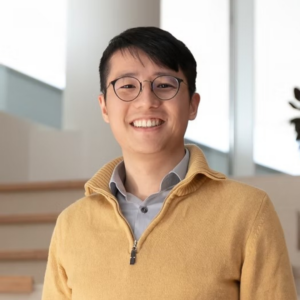
Jacob C.Y. Lo
DISCO Team Manager
GREAT Smart Cities Institute, Hong Kong University of Science and Technology
Jacob C.Y. Lo
GREAT Smart Cities Institute, Hong Kong University of Science and Technology
DISCO Team Manager
Jacob C.Y. Lo is currently a manager of the DISCO team under the GREAT Smart Cities Institute, The Hong Kong University of Science and Technology. He has over 8 years of experience in transportation modelling and optimization, his repertoire comprises macro to micro simulation models, including VISSIM, MATSim, DISCO and others. His research interests are urban mobility modelling and adaptive signal control optimization. His recent focus has been on the application of innovation and system integration for traffic and transportation systems to enhance efficiency and streamlining processes.
With thanks to
MTR Corporation
Booth L30
As a recognised world-class operator of sustainable rail transport services, MTR is a leader in safety, reliability, customer service and efficiency.
MTR has extensive end-to-end railway expertise with over 45 years of railway projects experience from design to planning and construction through to commissioning, maintenance and operations. Going beyond railway delivery and operation, MTR also creates and manages dynamic communities around its network through seamless integration of rail, commercial and property development.
Our sustainability goals for 2026:
- Social inclusion;
- Advancement & Opportunities; and
- Greenhouse Gas Emissions Reduction
Solutions Showcase:
- Technology & Innovation
- Transport/Mobility
Legal Name: MTR Corporation Limited
General Enquiry Phone Number: 2881 8888
Meet our 2026 speakers:
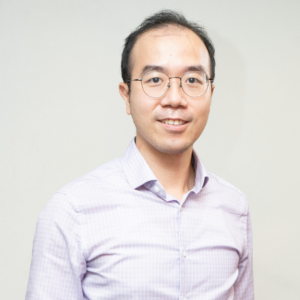
Andy Pang
Chief Data & Software Control Manager (Operations)
MTR Corporation
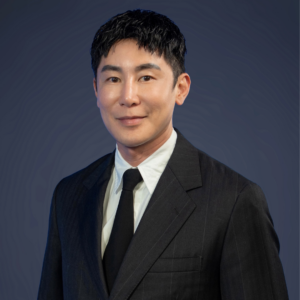
Ellis Ku
Chief Learning & Development Manager
MTR Corporation
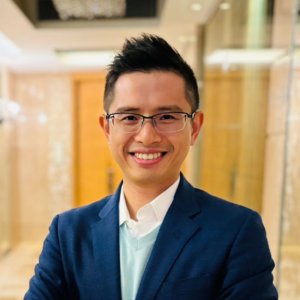
Bosco Leung
Social Responsibility Lead
MTR Corporation
Gene Soo
Head of Ecosystem – Global Innovation
MTR Corporation

Olivia Wong
General Manager Environmental & Social Responsibility
MTR Corporation
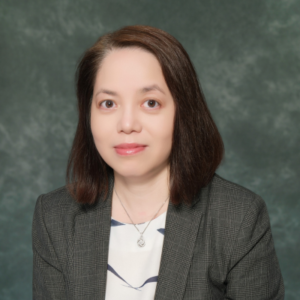
Jessica Chan
Head of Sustainability
MTR Corporation

Gillian E Meller
Legal and Governance Director
MTR Corporation