Energy Theatre
Progressing to Net-Zero Through Carbon Capture & Energy Storage
10 Sep (Thur) Day 1 : 11:55 – 12:45
As organisations accelerate decarbonisation strategies, carbon capture and energy storage are emerging as critical enablers in the transition to net-zero. From hard-to-abate sectors to grid stability challenges, these technologies offer scalable pathways to reduce emissions while maintaining operational resilience.
This panel brings together industry leaders, technology providers, and policy experts to explore the latest developments in carbon capture, utilisation and storage (CCUS), alongside advances in energy storage solutions. Discussion will focus on real-world applications, investment and infrastructure requirements, and the role these technologies play within Hong Kong and the wider Asia-Pacific region’s net-zero roadmap. Attendees will gain insights into the opportunities, limitations, and collaborative actions needed to accelerate deployment at scale.
Speakers
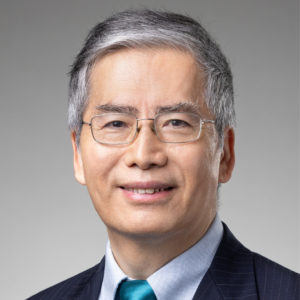
Moderator
Prof. Chunshan Song
Dean of Science, Wei Lun Professor of Chemistry
The Chinese University of Hong Kong
Prof. Chunshan Song
The Chinese University of Hong Kong
Dean of Science, Wei Lun Professor of Chemistry
Chunshan SONG is the Dean of the Faculty of Science and Wei Lun Professor of Chemistry at the Chinese University of Hong Kong and Distinguished Professor Emeritus at the Pennsylvania State University in the US where he was Director of Energy Institute, Distinguished Professor of Fuel Science and Chemical Engineering, and the founding Director of the University Coalition for Fossil Energy Research consisting of 15 US universities funded by the US Department of Energy. He received PhD and MS in Applied Chemistry under the supervision of Prof. Masakatsu Nomura at Osaka University, Japan, and BS in Chemical Engineering from Dalian University of Technology, China. He began CO2 research in the 1990s, and is widely recognized as one of the world leaders in CO2 capture and utilization research. His work focuses on the catalysis and chemistry of energy and fuels including CO2 capture, catalytic/plasma-catalytic CO2 conversion to chemicals and fuels; adsorptive desulfurization and catalytic processing of fuels; shape-selective catalysis; synthesis and application of nano-porous materials. He has 560 refereed journal articles, 9 patents, 15 edited books, and 35 book chapters (with 60,000 citations and H-index of 118 in Google Scholar, Jul 2026). He has received George A. Olah Award in Hydrocarbon or Petroleum Chemistry and Henry H. Storch Award in Energy Chemistry from American Chemical Society (ACS), Fulbright Distinguished Scholar from US-UK; ACS Fellow; ACS Energy & Fuels Distinguished Researcher Award; Outstanding Achievement Award from the Chinese American Chemical Society; Chang Jiang Scholar Award from Ministry of Education of China; Fellow of RSC; and Distinguished Fellow of International Association for Carbon Capture. Within Penn State, he was recognized by the Faculty Scholar Medal, Distinguished Professor, Faculty Mentoring Award, and Matthew and Anne Wilson Award for Excellence in Research. Most recently he received the Michele Aresta Prize in CO2 Utilization Research at ICCDU in Lisbon, Portugal in 2025, and the 2025 Pioneer in Energy Research (PIER) by the ACS journal “Energy and Fuels” in the field of carbon capture, utilization and storage (CCUS). He was elected as 2025 Fellow of Hong Kong Academy of Engineering (HKAE).
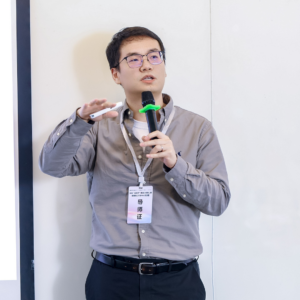
Dr. Leo Liao
Co-Founder & VP
DeCarbon Technology (Shenzhen) Co., Ltd
Dr. Leo Liao
DeCarbon Technology (Shenzhen) Co., Ltd
Co-Founder & VP
Dr. Xiao “Leo” LIAO is Co-founder and VP of DeCarbon Tech (Shenzhen) Co., Ltd. and an internationally certified Registered Technology Transfer Professional (RTTP). He previously served as Deputy General Manager of China Resources Intellectual Property Management Co., Ltd. and Deputy Director of the Technology Transfer Center at the Southern University of Science and Technology.
Dr. LIAO obtained his PhD from The Hong Kong Polytechnic University and has more than ten years of study and professional experience in Hong Kong. He has extensive experience in technology commercialization, technology start-up incubation and the industrial application of advanced technologies, having supported the commercialization of nearly 40 frontier technology projects.
As an inventor, he has been granted 15 Chinese invention patents and seven US patents. His honours include a Gold Medal with the Congratulations of the Jury at the International Exhibition of Inventions Geneva and the Hong Kong Awards for Industries: Equipment and Machinery Design Award. He also serves on the ATTP Global Technology Transfer Standards Committee and the AUTM East Asia Strategy Committee.
My Sustainability Goals for 2026:
- Develop Hong Kong into a regional hub for high-integrity carbon markets and carbon removal;
- Accelerate the deployment of trial sites in Hong Kong, or partner with HK companies.
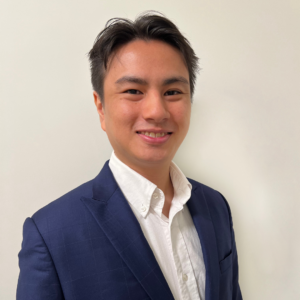
Howard Pang
Principal Manager – Strategic Planning and Innovation
CLP Power Hong Kong Limited
Howard Pang
CLP Power Hong Kong Limited
Principal Manager – Strategic Planning and Innovation
Howard Pang is Principal Manager, Strategic Planning and Innovation at CLP Power Hong Kong. A chartered professional with an MBA from Warwick Business School, he brings over 15 years of experience in decarbonisation strategy and renewable energy development across Asia-Pacific. His expertise spans a range of energy transition technologies, including energy storage, carbon capture and utilisation, hydrogen and distributed energy resources. At CLP, he leads strategy and planning initiatives that support Hong Kong’s net-zero goal while balancing decarbonisation with reliability, affordability, and customer value.
My Sustainability Goals for 2026:
- Integrate zero carbon energy and demand side flexibility into the network.
- Maintaining reliability and make the net-zero transition affordable for customers.
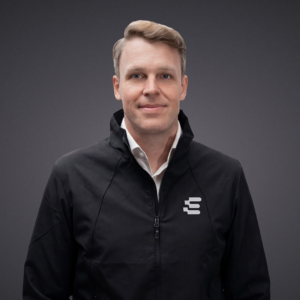
Henning Rath
Chief Executive Officer
EnerVenue

Henning Rath
EnerVenue
Chief Executive Officer
Henning Rath is Chief Executive Officer of EnerVenue Holdings Ltd, the energy storage company behind the Aqueous Metal Cell (AMC): a water-based metal battery platform for long-duration storage, built on nickel-hydrogen chemistry. He was appointed CEO on 31 March 2026 alongside a $300M Series B extension led by Full Vision Capital. Henning leads EnerVenue’s published economic thesis that long-duration storage is governed by throughput-over-life and the elimination of augmentation cycles, not by discharge length, a framing carried in his three March 2026 Insights articles. German national; Young Global Leader, World Economic Forum Class of 2026. Continues as a Board Member at Enpal.
My Sustainability Goals in 2026:
- Make replacement the exception, not the plan
- Put storage where the energy is used
- Build the recycling factor back into energy storage
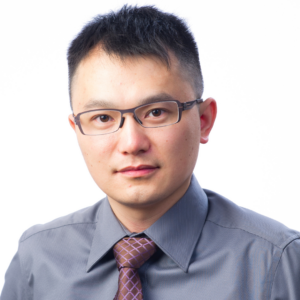
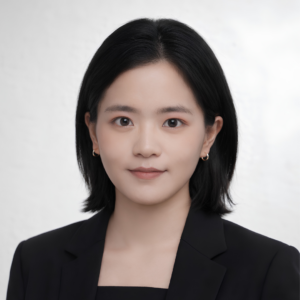
Prof. Jin Shang
Professor
School of Energy and Environment – City University of Hong Kong
Prof. Jin Shang
School of Energy and Environment – City University of Hong Kong
Professor
Prof. Jin Shang is a Professor in the School of Energy and Environment at City University of Hong Kong, where he leads the Adsorption Separation Laboratory. He earned his PhD in Chemical Engineering from the University of Melbourne and subsequently undertook postdoctoral research at the Cooperative Research Centre for Greenhouse Gas Technologies (CO2CRC), the University of Melbourne, and the Georgia Institute of Technology. His research advances adsorption-based gas separation for carbon capture and removal, natural gas purification, air separation, and toxic gas abatement. He discovered the molecular trapdoor mechanism, now recognized as the fourth major adsorption-based separation mechanism, which enables non-size-based molecular sieving. His honors include the 2024 Carbon Capture Award for Excellent Research and the 2022 ISTP-Bogen Young Scientist Award. He has published more than 150 papers, received over 9,900 citations, achieved an h-index of 57, and has been listed among Stanford’s top 2% most-cited scientists.
My Sustainability Goals for 2026:
1. Accelerate real-world deployment of carbon-management technologies.
I hope Hong Kong will establish more large-scale demonstration projects that move carbon capture, utilisation and removal technologies beyond the laboratory, particularly in buildings, data centres, transport infrastructure and other hard-to-abate sectors.
2. Promote integrated, energy-efficient net-zero solutions.
Hong Kong should better connect carbon capture with renewable energy, energy storage, waste-heat recovery and advanced cooling systems, enabling emissions reduction without imposing excessive energy or economic costs.
3. Strengthen Hong Kong’s climate-technology ecosystem.
I hope to see closer collaboration among universities, government, industry and investors, supported by shared pilot facilities, innovation-friendly procurement and funding mechanisms that help locally developed technologies progress from research to commercial implementation.
With thanks to
DeCarbon Technology (Shenzhen) Co., Ltd
Booth H34
DeCarbon Tech is a carbon removal technology company dedicated to global net-zero goals. We provide full-loop solutions from direct air capture and mineralization storage to high-integrity international carbon asset development, helping industrial parks, energy companies, manufacturers and carbon market participants deploy verifiable carbon removal capacity and generate trusted climate value at scale.
Solutions Showcase:
- Carbon Management/Carbon Offset
- Engineering & Infrastructure
- New Materials/Chemicals
- Sustainability Services
- Technology & Innovation
Legal Name: DeCarbon Technology (Shenzhen) Co., Ltd
General Enquiry Email Address:contact@de-carbon.com.cn
General Enquiry Phone Number: 4006603223
Meet our 2026 speakers:
The Hong Kong and China Gas Company Limited (Towngas)
Booth J35
Founded in 1862, The Hong Kong and China Gas Company Limited (Towngas) is Hong Kong’s first public utility. With over 160 years of heritage, Towngas has evolved into a leading clean and smart energy provider.
Aligned with the national “dual carbon” goals,Towngas is accelerating green energy for land, sea, and air transport through hydrogen, green methanol, and Sustainable Aviation Fuel, for a sustainable future.
Our sustainability goals in 2026:
Towngas championed green energy transition across sea, land and air transport:
- Green methanol for sea transport: Through technological upgrades, the Inner Mongolia plant has increased its production capacity, and the additional production lines in Foshan are expected to commence operations in 2028.
- Sustainable Aviation Fuel (SAF) for air transport: New SAF plant in Malaysia commenced operations, doubling annual production capacity of renewable fuels.
- Hydrogen for land transport: Towngas has initiated Hong Kong’s first green hydrogen project at SENTX, which will target to launch this year.
- We are advancing multiple hydrogen innovation pilot projects, including support initiatives for the 15th National Games, Hong Kong Science and Technology Parks Corporation, a Sai Kung recreational facility, to deliver efficient and low-carbon solutions across the city.
- Carbon reduction: Total Scope 1 and Scope 2 greenhouse gas (GHG) emissions decreased by 20% from 2020 baseline (Target in 2025: Achieved).
Solutions Showcase:
- Corporate Office/HQ
- Efficient Energy & Utilities
- Green Finance & Investments
- Renewable Energy
- Waste Reduction & Recycling Management
Legal Name: The Hong Kong & China Gas Company Limited
General Enquiry Email Address: esg@towngas.com
General Enquiry Phone Number: 28806988
General Business Address: 363 Java Road, North Point, Hong Kong
Meet our 2026 speakers:
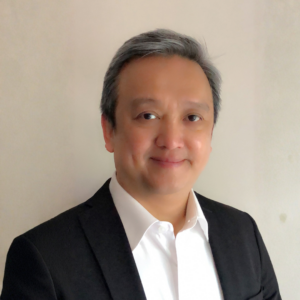
Chester Lee
Deputy Chief Operating Officer – Commercial, Green Fuels and Chemicals
The Hong Kong and China Gas Company Limited (Towngas)
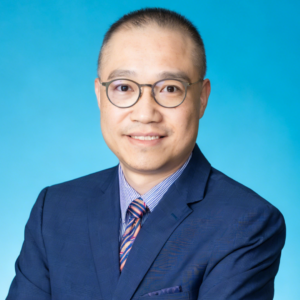
Ir Trevor Tang
General Manager – Corporate Supplies and Administration
The Hong Kong and China Gas Company Limited (Towngas)
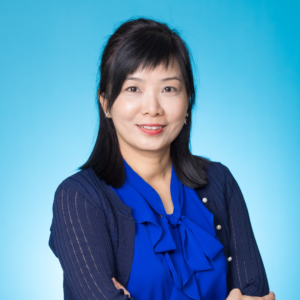
Ir Queenie Chan
General Manager – Business Transformation and Enquiry
The Hong Kong and China Gas Company Limited (Towngas)
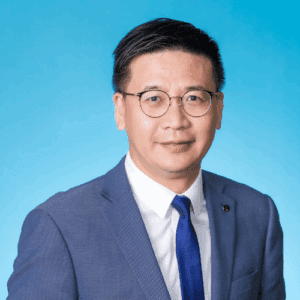
Ir Sammy Kong
General Manager, Commercial & Industrial Marketing & Sales
The Hong Kong and China Gas Company Limited (Towngas)
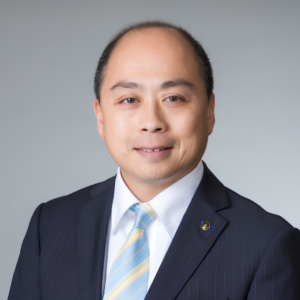
Ir Don Cheng
Chief Operating Officer – Hong Kong Business
The Hong Kong and China Gas Company Limited (Towngas)

Bien Wong
Assistant General Manager – Group ESG cum Executive – Group Knowledge Management Office
The Hong Kong and China Gas Company Limited (Towngas)