Energy Theatre
Designing SAF Demand: What Global Policies and Experiments Teach Hong Kong
10 Sep (Thur) Day 1 : 12:45 – 13:35
As jurisdictions around the world move from planning to implementing Sustainable Aviation Fuel (SAF) policies, a wide range of demand side mechanisms are emerging — from passenger levies and fuel mandates to voluntary corporate procurement and hybrid models. While these approaches are often cited as “best practice”, early experiences show that design choices matter greatly in determining cost impacts, competitiveness, and real emissions outcomes.
This panel brings together aviation, fuel, corporate and policy perspectives to reflect on what different jurisdictions have learned so far from SAF demand mechanisms, including unintended consequences and trade offs. The discussion will focus on which approaches may be suitable — or unsuitable — for Hong Kong’s role as an international aviation hub, and how Hong Kong can design SAF demand signals that are credible, competitive and investment ready.
Session Learnings:
- How different SAF demand mechanisms (levies, mandates, voluntary and hybrid models) are being implemented across key jurisdictions
- What early lessons and unintended consequences are emerging from these approaches
- How SAF demand design affects airline costs, hub competitiveness and passenger affordability
- The role of corporate demand and voluntary mechanisms in complementing government policy
- Key considerations when translating global SAF policy experiences to Hong Kong’s context
- The role of corporate-led SAF demand and book-and-claim models
- How voluntary initiatives can help de-risk early SAF markets
- The interplay between policy frameworks and corporate procurement in accelerating SAF adoption
Post-Event Actions:
- Re evaluate whether overseas SAF policy models are directly transferable to Hong Kong
- Identify demand side SAF approaches that align with their organisation’s role in the aviation value chain
- Engage more critically with industry discussions on SAF policy design
- Explore how corporate SAF demand or partnerships could complement emerging policies
- Incorporate competitiveness and cost impact considerations into SAF strategy
Speakers
Moderator
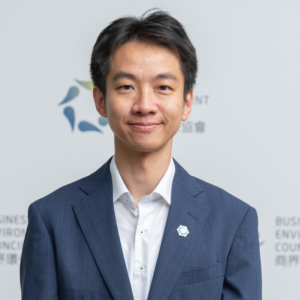
Merlin Lao
Head – Policy and Research
Business Environment Council
Merlin Lao
Business Environment Council
Head – Policy and Research
Mr. Merlin Lao is the Head – Policy & Research at Building Environment Council Limited (BEC). He is leading a team to share clear policy positions on pressing climate and environmental topics in Hong Kong, through research on latest domestic and international trends, engaging with the Hong Kong SAR Government and connecting insights of the local business sector. He is keen on net-zero transition that not only looks at decarbonisation, but also a more equal and liveable built environment.
Mr. Lao is a programme management professional with 15 years of climate change and environment career experience across private, public and non-profit sectors in East Asia, with major exposure in Mainland China, Hong Kong, Macao and South Korea. Prior to joining BEC, he was the senior programme manager at an international non-governmental organisation driving sustainable cities agenda in China, Japan, Mongolia and South Korea, covering topics of air quality, low-emission development, urban resilience, circular economy and nature-based solutions. He also led the environmental protection planning at the Macao Environmental Protection Bureau and worked in a technical consultancy dedicated in carbon accounting and management in his earlier career.
My Sustainability Goal for 2026:
Hoping to see deeper work for various business sectors to look into decarbonisation roadmaps, in connection with abatement curves, economic transition and opportunities.

Grace Cheung
General Manager Sustainability
Cathay
Grace Cheung
Cathay
General Manager Sustainability
Grace Cheung is General Manager Sustainability at Cathay Pacific. Leading the Group Sustainability Department, Grace oversees sustainability strategy and ESG performance of the whole Cathay Group. Under Grace’s leadership, sustainability has changed from a standalone specialist function to an integrated strategic and operational imperative in the airline group.
During Grace’s tenure, Cathay Pacific has committed for its net zero carbon emissions goal by 2050, supported by its mid-term target for using 10% sustainable aviation fuel and 12% carbon intensity improvement by 2030. The airline has also launched the first major Corporate Sustainable Aviation Fuel Programme in Asia in 2022.
Grace has also led Cathay’s effort in circular economy, reducing its environmental footprint on materials and waste. The airline has reduced its customer-facing single-use plastic items from an average of 7.7 pieces per passenger in 2019 down to 3.1 in 2023. A new target is set to bring it down further to 1.5 pieces per passenger by 2025, supported by additional targets on recycled plastics usage and recycling rate.
Grace represents Cathay in a number of industry working groups advocating for supportive policies and best practices sharing for further development of sustainability in the airline industry. Grace is the Chair of the Environment & Sustainability Board at the Oneworld alliance and the Vice Chair of the Sustainability & Environment Advisory Council at the International Air Transport Association (IATA).
Speaking at 2026 sessions:
Day 1
Designing SAF Demand: What Global Policies and Experiments Teach Hong Kong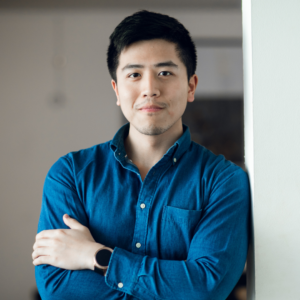
Shutong Liu
Director of Partnership
Asia SAF Association ASAFA
Shutong Liu
Asia SAF Association ASAFA
Director of Partnership
Shutong is the Director of partnership of ASAFA Asia SAF Association. Asia SAF Association (ASAFA) is Asia’s first independent non-profit dedicated to advancing the adoption and integration of sustainable aviation fuel (SAF) across Asia. We are dedicated to accelerating aviation decarbonization in Asia by promoting SAF adoption, advancing robust policies and market integration, ensuring a diverse SAF supply chain, enhancing technical expertise through collaboration, and mobilizing investments for infrastructure and innovation to drive economic growth and sustainability in aviation.
Shutong is also the founder and CEO of MotionECO, a company promoting sustainable fuel industry in China, and providing industry strategic consultancy, brokerage, and advisory on EU-RED, CORSIA, ISCC/RSB certification services etc. MotionECO covers sustainable fuels applicable to all transportation sectors, including SAF, biodiesel, , green methanol/ethanol as well as developing E-fuels project.
Speaking at 2026 sessions:
Day 1
Designing SAF Demand: What Global Policies and Experiments Teach Hong Kong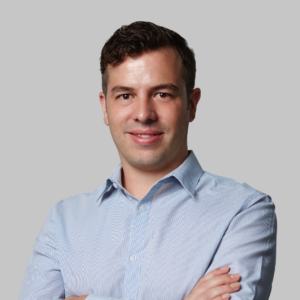
Huw Slater
Climate & Energy Specialist
ClientEarth
Huw Slater
ClientEarth
Climate & Energy Specialist
Based in China since 2011, Huw is a Climate and Energy Specialist at ClientEarth. His areas of expertise include carbon markets, low-carbon development and China’s energy transition. He has published a range of widely read papers and reports dealing with carbon market design and implementation. He recently served as a member of the Continuous Improvement Work Programme on Transition Credits for the Integrity Council for the Voluntary Carbon Market, focussed on establishing standards for high integrity carbon credits. He has previously worked on EU-funded projects supporting bilateral engagement and cooperation with China on emissions trading, and on environment and green economy. He was also responsible for establishing the grant facility under the UK Prosperity Fund China Energy and Low Carbon Economy Programme. Huw served as Chair of the European Chamber of Commerce in China’s Carbon Market Working Group in 2021-22, and is the lead author of the annual China Carbon Pricing Survey reports, the most in-depth and extensive summaries of stakeholder views on China’s carbon market development.
Speaking at 2026 sessions:
Day 1
Designing SAF Demand: What Global Policies and Experiments Teach Hong KongSupported by
Hong Kong Sustainable Aviation Fuel Coalition
The Hong Kong Sustainable Aviation Fuel Coalition (“HKSAFC”) is a programme launched by Business Environment Council, that engages stakeholders in developing Hong Kong’s position as a regional and global hub for SAF; and promotes the introduction of SAF industry-related support policies to the HKSAR Government. The HKSAFC works collectively with all relevant stakeholders across the value chain.
Our sustainability goals for 2026:
- Supporting the Government to introduce industry-related policies of SAF
- Striving to accelerate the deployment of credible SAF in Hong Kong
- Contributing to the low-carbon economy transition of Hong Kong and the national goal of carbon neutrality
- Strengthening the position of Hong Kong as a leading aviation hub and sustainable finance centre
- Encouraging airline uptake of SAF across flight portfolios to reduce carbon emissions
- Supporting cutting-edge research and development on SAF production, technology and
certification with regional cooperation - Mainstreaming sustainable finance initiatives to support SAF development
- Establishing a platform for stakeholders to share expertise and best practices to enable
mainstream usage of SAF
Products, Services & Solutions:
- Circular Solutions
- Efficient Energy & Utilities
- Sustainability Products
- Technology & Innovation
- Transport/Mobility
General Enquiry Email Address: pradmin@bec.org.hk
With thanks to
Cathay
At Cathay, we fully recognise our responsibility to sustainable development through actively managing areas where we exert the most impacts, and where our stakeholders expect us to work on, which include climate change and circular economy. At the heart of this journey is our drive for sustainability leadership. Through deep collaboration across the value chain and investments in our priority areas – from Sustainable Aviation Fuel (“SAF”) and Single-use Plastics (“SUP”) to our community and workforce, we are committed to moving people forward in life in a more sustainable and responsible manner.
Our sustainability goals for 2026:
- Continue to focus on quality, compliance and operational excellence to ensure our customers and our people are as safe as possible
- Devise short, mid and long term work plans to meet net zero carbon goals by 2050
- Engage in innovative projects related to single-use plastics and food waste reduction
- Prioritise employee safety and wellbeing while adapting to the changing business circumstance
- Support local communities where we serve
Legal Name: Cathay Pacific Airways Ltd
General Enquiry Email Address: sustainability@cathaypacific.com