The Case for Energy Efficiency in Hotel Development explores how energy-efficiency measures incorporated during development may influence hotel financial performance over time. Developed by JLL with input from Marriott International, the research is intended to help hotel owners evaluate design decisions through the lens of asset value, operating performance, occupancy resilience and long-term risk management.
KEY TAKEAWAY
Development-stage decisions may have long-term implications for asset value, operating performance, occupancy resilience and future risk exposure
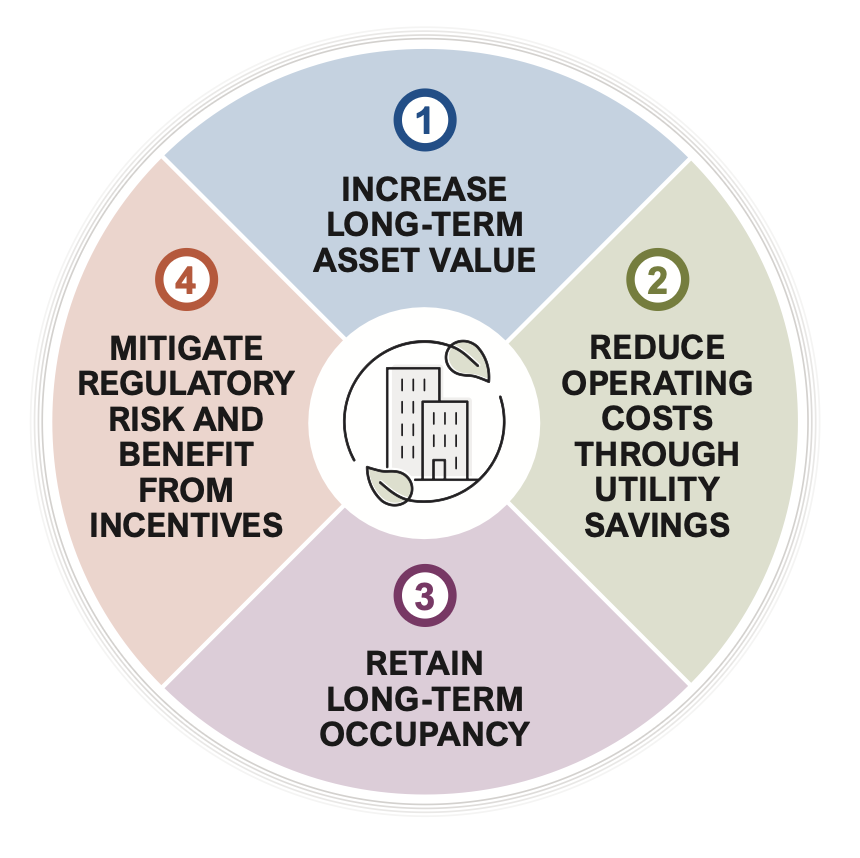
1. Increase Long-Term Asset Value
Modeled outcomes suggest that energy-efficient hotels may benefit from stronger asset valuations due to anticipated operating savings, lower future retrofit requirements and changing investor expectations.
2. Reduce Operating Costs through Utility Savings
By reducing energy consumption, efficiency measures may lower utility expenses and support long-term operating performance. JLL’s research suggests that incorporating these measures during development can be 2-5x more cost effective than implementation during a future retrofit.
3. Retain Long-Term Occupancy
Corporate and group customers are increasingly incorporating sustainability considerations into sourcing and procurement processes. Hotels that can demonstrate measurable energy and carbon performance may be better positioned to compete for demand as customer expectations continue to change.
4. Mitigate Regulatory Risk and Benefit from Incentives
Building performance regulations, disclosure requirements and sustainability-related financing considerations continue to change across global markets. Integrating energy-efficiency measures during development may help reduce future compliance costs while positioning some projects to pursue available financing opportunities and incentives.
Why it matters:
JLL’s research suggests that incorporating energy-efficiency measures during development can be more cost-effective than implementing similar improvements after a hotel is operating. Modeling results indicate that key energy efficiency measures may help owners capture operating savings and reduce the need for future retrofit investments.
How were the reports created?
JLL’s Hotel Valuations, Sustainability Consulting, Risk Advisory and Hotel Research teams combined market analysis, hotel operating data, energy modeling and financial scenario analysis to assess potential impacts on hotel performance. The research is focused on hotel developments across luxury, premium, upper upscale, upscale, and upper midscale, and midscale brand segments in the U.S., Canada, Europe, and China.