Innovation Stage
Swedish Innovation: Beyond Electrification
10 Sep (Thur) Day 1 : 14:20 – 14:50
Electrification is transforming transport, but the future of mobility depends on much more than vehicles alone. This session brings together leading Swedish innovators to explore how transport, energy, infrastructure, and design must work together to create mobility systems that are efficient, accessible, and sustainable.
From (Candela) electric hydrofoil ferries and next-generation public transport (Volvo Busses) to the infrastructure needed to support them, the discussion will focus on practical solutions that are already shaping how people move through cities and regions.
Through real-world examples and lessons learned, the session will explore what becomes possible when mobility is designed around people rather than vehicles, and how innovation can create cleaner, smarter, and more connected communities.
Session Learnings:
- Gain insights into how transport, energy, and infrastructure must work together to enable sustainable mobility at scale.
- Learn how Swedish companies are developing innovative mobility solutions across land and water transportation.
- Understand the opportunities and challenges involved in scaling electrified and low-emission transport systems.
- Explore how people-centred mobility can improve connectivity, accessibility, and quality of life in cities and communities.
- Discover practical examples of collaboration between industry, infrastructure providers, and other stakeholders driving the mobility transition.
Post-Event Actions:
- Re-evaluate mobility challenges through a systems perspective, considering the connections between transport, energy, infrastructure, and user needs.
- Identify opportunities to accelerate sustainable mobility initiatives within their own organisations, cities, or projects.
- Explore new partnerships and collaborations that can support the development of integrated mobility solutions.
- Consider how mobility investments can deliver broader benefits, including improved accessibility, efficiency, and quality of life.
- Apply lessons from Swedish innovation and real-world case studies to future mobility and infrastructure planning
Speakers
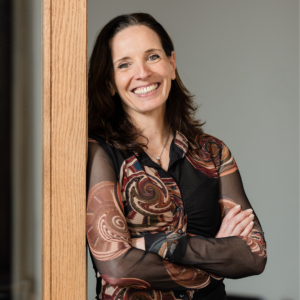
Moderator
Karine Hirn
Co-founder
East Capital Group
Karine Hirn
East Capital Group
Co-founder
Karine Hirn is Co-Founder of East Capital Group and Chairperson of East Capitaal Asia Ltd. She has been based in Hong Kong since 2013. She has held various roles, including Chief Sustainability Officer, Head of Asia, China Chief Representative and served as CEO of East Capital in Sweden prior to 2010.
Karine is also a French Trade Advisor and an honorary member of the Swedish Chamber of Commerce in Hong Kong. She serves as an independent non-executive director (INED) at Lion Finance Group, a FTSE 100 company, and as an advisor to the Center for Emerging Markets at Northeastern University in Boston. Karine is frequently invited to comment on topics related to emerging markets and sustainable investing at international conferences and in the media.
Prior to joining East Capital, she worked in Russia, in the banking industry and as a financial consultant in Nizhny-Novgorod and Moscow.
Karine holds an MSc in Management from EM Lyon and a postgraduate degree in Eastern European studies from Sciences Po Paris. She has also studied at the Moscow Academy of Finance and the Hanken School of Economics in Helsinki. A French national, Karine speaks French, English, Swedish and Russian, and is conversational in Mandarin Chinese and Spanish.
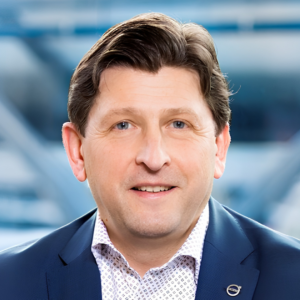
Dan Pettersson
Senior Vice President of Business Unit Chassis
Volvo Buses

Dan Pettersson
Volvo Buses
Senior Vice President of Business Unit Chassis
Mr. Dan Pettersson is the Senior Vice President of Business Unit Chassis, Volvo Bus Corporation and is a member of the Volvo Buses Executive Management Team.
Volvo Bus Corporation is a global leader in the development of sustainable public transport solutions and one of the world’s largest manufacturers of buses, coaches and bus chassis. With ~5 500 co-workers the company has sales in 85 countries and a global service network with more than 1,500 dealerships and workshops. Engineering and production facilities are found in Europe, North America, South America and Asia. Pioneering the development of future public transport and electromobility, Volvo Bus Corporation has to date delivered more than 4,000 electrified Volvo buses worldwide.
Business Unit Chassis is responsible for Volvo Buses business in the chassis markets (defined as: Latin America, United Kingdom and Ireland, Europe, Asia Pacific, Middle East and Africa) and the entire supply chain of chassis to external body builders and to the sister Business Units in Volvo Buses.
Prior to joining Volvo Buses, Mr. Pettersson has held senior management positions with Kalmar Mobile Equipment, part of Cargotec Corporation, operating in the field of solutions for container-, heavy materials- and trailer handling on a global basis.
My Sustainability Goals for 2026:
- Achieve a resilient, reliable and zero-emission transit system: The transition must go beyond just zero tailpipe emissions to ensure that Hong Kong’s mobility and infrastructure solutions remain completely dependable while moving people and goods sustainably.
- Deploy specialized zero-emission bus solutions: Successfully integrate high-capacity electric platforms (like the Volvo BZL & BZR) tailored to handle Hong Kong’s distinct operational demands, such as steep gradients, heavy passenger loads, and high air-conditioning usage.
- Implement full value chain and circular battery management: Ensure comprehensive lifecycle sustainability by prioritizing 90% vehicle recyclability, securing battery second-life applications (such as Battery Energy Storage Systems via Volvo Energy), and managing end-of-life recycling responsibly.
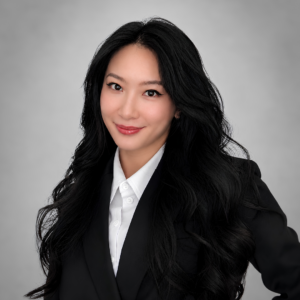
Vicky Qiu
Sales and Business Development Manager
Candela Technology AB

Vicky Qiu
Candela Technology AB
Sales and Business Development Manager
Vicky Qiu is the Sales & Business Development Manager for APAC at Candela, leading the company’s commercial expansion across Asia-Pacific. She works closely with governments, transport operators, ports, and hospitality groups to introduce electric hydrofoil technology and accelerate the transition to sustainable waterborne mobility.
My Sustainability Goals for 2026:
- Accelerate the adoption of zero-emission water transport to make Hong Kong a global leader in sustainable maritime mobility.
- Unlock greater connectivity through the harbour, making water transport a faster, more attractive option for both commuters and visitors.
- Strengthen collaboration between government and industry to pilot innovative technologies and build a smarter, greener maritime ecosystem.
With thanks to
Team Sweden
Booth F45
The Consulate General of Sweden is the official representation of Sweden and the Swedish Government in Hong Kong and Macau.
The Consulate engages with exchanges between Sweden and Hong Kong, as well as with promoting the Swedish image abroad. The Consulate also prioritise the contribution to Hong Kong’s green and digital transition.
Solutions Showcase:
Government Agency
Legal Name: Consulate General of Sweden in Hong Kong
General Enquiry Email Address: generalkonsulat.hongkong@gov.se
General Enquiry Phone Number: 2512 1212
General Business Address: Room 2501, 25/F, BEA Harbour View Centre, 56 Gloucester Road, Wan Chai, Hong Kong