Resources Theatre
Built to Last: Maximising Efficiency and Minimising Embodied Carbon
10 Sep (Thur) Day 1 : 11:15 – 12:05
Materials are the fundamental DNA of architecture; they define its visible identity, and as such, its true value for people and the planet. Different material choices profoundly affect the overall construction carbon footprint, the sustainability of the supply chain associated with the construction industry, the sense of place and belonging that our cities provide for their inhabitants, and the ethical practices associated with sourcing and manufacturing them. By carefully choosing best practices and sustainable materials rooted in a place’s culture and identity, we ensure our buildings contribute to society and improve our environmental impact.
Session Learnings:
- How material choices contribute to the carbon impact of the construction industry (material type, origin, weight, efficiency)
- How materiality has a story of the place to tell, and links to people’s spaces and their identities
- How can we design and engineer buildings for maximum efficiency, ensuring they’re used to benefit from their best properties (for example, in structural engineering), and in the right quantities, avoiding unnecessary carbon budgets
Post-Event Actions:
- More conscious, embodied carbon-informed procurement process for delegates responsible for making decisions on construction projects.
- By understanding how materials link to a place’s heritage, delegates will be able to select, propose and prioritise the regeneration and adaptive reuse projects in the city.
- Spearheading low-carbon and biogenic materials in innovative, demonstrative projects that pave the way for code changes and the introduction of new structural and architectural materials.
Speakers
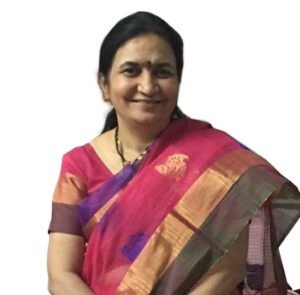
Moderator
Dr. Sujata Govada
Chairlady, Programs and Events Committee
Hong Kong Institute of Urban Design
Dr. Sujata Govada
Hong Kong Institute of Urban Design
Chairlady, Programs and Events Committee
Dr. Sujata S. Govada is an award-winning, qualified urban designer, certified urban planner and registered architect in India with over 35 years of experience having worked on a diverse range of projects in Hong Kong, US, Philippines, India and the region. She is the CEO and Managing Director of UDP International, an award winning global boutique practice based in Hong Kong since 1994, with representative offices in San Francisco, and Hyderabad, India. UDP International has won 16 major planning and design awards including Central Harbourfront Master Plan, Graham Street Urban Regeneration Alternate Proposal, Harbourfront Connectivity Study in Hong Kong, the Clark Green City Master Plan in the Philippines, Naya Dharavi Master Plan and IT Master Plan in India. UDP International is Innovative by Design leveraging award- winning smart and sustainable design and planning with a collaborative place-making approach with a focus on People, Place and Planet. Some of her recent and current projects include Kai Tak Sports Park and Smart Cultural Precinct @ Central in Hong Kong; large waterfront master planning projects in the Philippines and Balanced land use plan for a Marina District in the US; and the ADB Metro Rail TOD Project in Bengaluru and Urban Design and Architectural Guidelines for Amaravati in India.
Dr. Govada is the Founding Director of the Institute for Sustainable Urbanisation (ISU) which she set up in 2014 in Hong Kong. She has undertaken Smart City Research leading to the Hong Kong sections in Springer publications “Smart City Smart Economy” (2016), “E- Democracy” (2017), “Smart Metropolitan Region” (2018), “Smart Environment for Smart Cities” (2019), “Smart Living for Smart Cities (2020) and Smart Mega Cities” (2021) edited by Prof. T.M.V Kumar. ISU has also undertaken local initiatives such as the Smart Cultural Precinct (SCP) engaging the local community with a vision to develop a walkable Cultural Precinct in Central, Hong Kong. Over the last two years Dr. Govada has been involved with Ar. Sergeijs and his team in the Rebuilding Cities Workshop and was instrumental in making it an international workshop getting universities in Hong Kong, India and the US to participate as well. She has gained a reputation as a thought leader in shaping smart, sustainable, resilient, liveable and walkable communities and cities around the world.
In 2025, Dr. Govada was teaching as Part-time Lecturer in the Department of Architecture and Civil Engineering, Urban Design & Regional Planning Program of City University of Hong Kong. Prior to this, as an Adjunct Associate Professor, at the School of Architecture, The Chinese University of Hong Kong, Dr. Govada taught courses and studios as part of the master’s program in Urban Design that she also helped to start. She also was Assistant Professor at Urban Planning at the Department of Urban Planning and Design, the Faculty of Architecture, The University of Hong Kong, teaching part time in the master’s programs in Urban Design and Planning. She was also a Global Trustee of the Urban Land Institute (ULI) and was an Exco Member as well as the 2015 President of the Hong Kong Chapter of the American Institute of Architects (AIA Hong Kong). She was also the Founding Vice President of the Hong Kong Institute of Urban Design (HKIUD), which she was primarily responsible in setting up. Dr. Govada was also a former representative of the Harbourfront Commission in Hong Kong instrumental in the enhancing the Hong Kong harboufront. Dr. Govada was also an advisor for World Bank on their Transit Oriented Development (TOD) Study focused on design, planning, development, implementation and scaling up of TOD based developments around the world.
Speaking at 2026 sessions:
Day 1
Built to Last: Maximising Efficiency and Minimising Embodied Carbon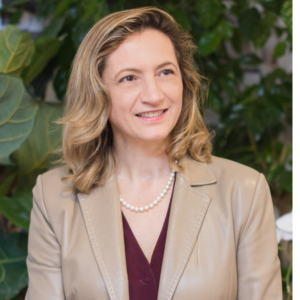
Dr. Christine Bruckner
Global Director
M Moser Associates

Dr. Christine Bruckner
M Moser Associates
Global Director
For over thirty years, Dr. Christine Bruckner has demonstrated that the spaces we build shape the lives we live, a conviction she brings to every stage she stands on. An architect, PhD (University of Tokyo), and graduate of Yale and Rice, she is one of the most credentialed voices in sustainable and wellness design working today. As leader of M Moser’s global integrative sustainable and wellness design initiatives, she has embedded WELL engineered design and urban integration strategies into projects spanning individual workplaces to citywide developments, shaping the built environment at every scale. What distinguishes her as a speaker isn’t the résumé; it’s what audiences walk away with.
Christine translates decades of global, practical experience into insight people can put to immediate use: how to design healthier buildings and cities, weave biophilic and WELL engineered principles into the spaces we occupy every day, and bring more intentional, people centered design thinking to the built environment. Audiences leave with real direction and the clarity to act on it. Whether addressing architects, executives, or entire communities, Christine delivers the opportunity to design and think beyond the expected, equipping audiences to understand the true value behind every priority and to fully realize these ideas in partnership.
Dr. Bruckner’s sustainability goals transverse places, people, projects and time periods. They are interwoven with every decision I make for myself, family, colleagues, clients and for people I may never meet and many who have not yet been born. For Christine, the stewardship of our shared world for present and future generations is a daily guide.
My Sustainability Goals for 2026:
- Deliver measurable positive impact, starting now. Every environment she designs or builds in 2026 and beyond is held to a single standard: leave it better than she found it — for the people who use it and the planet that supports it.
- Design in partnership with nature. Through her Design Essentials™ framework, she weaves biophilia and the natural world’s own laws into every project — creating architecture that works with nature rather than against it.
- Put human health first, without exception. From the boldest concept to the smallest specification, human health and wellbeing sit at the center of every design decision she makes.
Speaking at 2026 sessions:
Day 1
Built to Last: Maximising Efficiency and Minimising Embodied Carbon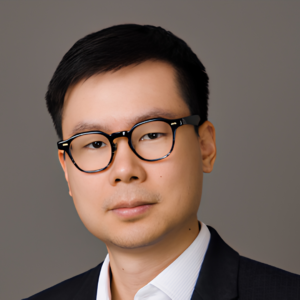
Ian Chan
Joint Managing Director
ASTD (Allied Success Technology Development)

Ian Chan
ASTD (Allied Success Technology Development)
Joint Managing Director
Ian P.H. Chan is joint managing director of ASTD (滙興 Allied Success Technology Development). ASTD is a leading plastic recycler, with a 20-year contract in EcoPark to recycle mixed waste plastics at scale from the entirety of Hong Kong.
ASTD stands apart from others by addressing the gap in this area and by finally introducing transparency and accountability to recycling with its revolutionary Green Hoop® system.
By proving that our most complex problems can be solved, we are now capable of systematically raising the standards of recycling and sustainability in Hong Kong.
My Sustainability Goal for 2026:
I hope to see Hong Kong jump at opportunities to adopt higher standards for recycling and sustainability overall for the sake of ourselves and the future generations.
Speaking at 2026 sessions:
Day 1
Built to Last: Maximising Efficiency and Minimising Embodied Carbon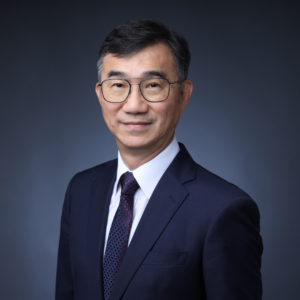
Ir Tai On Lee
Section Head (Applied R&D)
Building Technology Research Institute
Ir Tai On Lee
Building Technology Research Institute
Section Head (Applied R&D)
Ir LEE Tai-on is the Section Head (Applied R&D) at the BTRi, with over 40 years of experience in engineering and public service. He previously held senior roles in the Water Supplies Department (WSD), including Assistant Director (Mechanical & Electrical) and Chief Electrical & Mechanical Engineer, leading infrastructure operations and project development.
Ir LEE began his career in 1983 after earning a BSc in Electrical Engineering from the University of Hong Kong, completed Scheme A training at Hongkong Electric, and joined WSD in 1987. He became a Chartered Electrical Engineer in 1990 and after retirement, continued serving as Team Leader for M&E Projects of WSD from 2023 to 2025.
Ir LEE has extensive expertise in M&E system management, project delivery, innovation and technology applications, and departmental administration. He remains committed to advancing public infrastructure through engineering excellence and applied research.
My Sustainability Goals for 2026:
(1) achieving a low-carbon construction industry through wider adoption of green materials and carbon-conscious project delivery;
(2) advancing a circular economy by reducing construction waste through reuse, recycling, MiC and MiMEP; and
(3) creating a smarter and more climate-resilient built environment through smart technologies such as AI, digital twins, and predictive maintenance.
Speaking at 2026 sessions:
Day 1
Built to Last: Maximising Efficiency and Minimising Embodied Carbon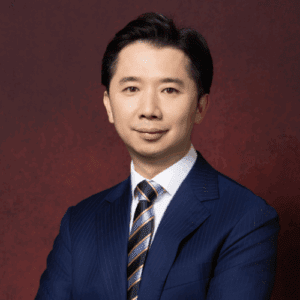
Rex Wong, JP
CEO
Kum Shing (K.F.) Construction Company Limited
Rex Wong, JP
Kum Shing (K.F.) Construction Company Limited
CEO
Mr Rex Wong Siu-han, JP is the CEO of Kum Shing Group, which actively participates in decarbonization-related projects. He is currently a member of Hong Kong Housing Authority, Construction Industry Council (“CIC”), Occupational Safety and Health Council, Steering Committee of New Energy Transport Fund and the Council of the City University of Hong Kong. He also serves as a Board member of CIC-Zero Carbon Park, member of CIC’s Committee on Environment and Sustainability, Chairperson of CIC’s Committee on Construction Safety, as well as the First Vice-President of Hong Kong Construction Association. Mr. Wong is a qualified BEAM Pro, LEED AP and a registered architect in the USA.
王紹恆先生, JP是金城營造集團行政總裁。該集團積極參與重大減碳相關項目。王先生現為香港房屋委員會、香港建造業議會、職業安全健康局、新能源運輸基金督導委員會和城市大學校董會的成員。他亦是零碳天地董事會成員、建造業議會環境及可持續發展專責委員會成員、建造業議會建造安全專責委員會主席,以及香港建造商會第一副會長。王先生是獲認可的綠建專才、LEED AP,亦是美國註冊建築師
Speaking at 2026 sessions:
Day 1
Built to Last: Maximising Efficiency and Minimising Embodied CarbonSupported by
Hong Kong Institute of Urban Design
Established in 2010, the Hong Kong Institute of Urban Design (HKIUD) brings together urban designers and related professionals in practice and academia to champion good future ready urban design and placemaking strategies that deliver innovative, vibrant, sustainable, and resilient communities and cities with a commitment to professional ethics.
Our sustainability goals for 2026:
HKIUD strives to raise awareness of the impacts of urban design by influencing policy and decision making to enhance inclusive liveability, health and well-being for a better quality of life.
Products, Services & Solutions
- Charity/NGO
General Enquiry Email Address: inq@hkiud.org
General Enquiry Phone Number: 22359057