Energy Theatre
Connecting the Dots: How Capital Moves Through the Energy Transition Finance Chain
11 Sep (Fri) Day 2 : 10:45 – 11:35
This panel traces the complete journey of capital for the net zero energy transition—from project origination to institutional deployment. Five experts representing each link in the chain (project development, investment banking, institutional investment, professional assurance, and policy/blended finance) will unpack the bottlenecks, handoffs, and solutions at every stage. The discussion follows a three-round format: brief self-introductions, targeted questions on each link’s specific challenges, and one-sentence takeaways on the most critical actions needed. Attendees will gain a holistic, practical understanding of how renewable energy projects get financed, why gaps persist, and what each stakeholder must do to accelerate capital flow. Designed for financiers, developers, policymakers, and advisors, this session bridges silos across the energy transition finance ecosystem.
Session Learnings:
- How a renewable energy project moves from origination to bankability and eventual institutional ownership.
- The distinct roles and pain points of investment banks (capital raising & securities) vs. institutional investors (long-term equity).
- Why professional bodies (SPO providers, auditors, lawyers) are critical for market credibility and unlocking mainstream capital.
- The real-world bottlenecks at each stage—and how policy, blended finance, and assurance mechanisms address them.
- A clear, end-to-end mental model of the climate finance value chain specific to the energy transition.
Post-Event Actions:
- Map your organization’s current position onto the energy transition finance chain and identify the most critical upstream/downstream partner you need to engage.
- Apply a “chain review” to your next energy project: document the financing handoffs and verify that each link (including assurance and policy enablers) has been addressed.
- Initiate a cross-stakeholder conversation (e.g., with your bank, investor, or SPO provider) to pre-identify bottlenecks before structuring a deal.
- Use the one-sentence takeaways from speakers as internal briefing points for your team’s next investment or policy memo on energy transition finance.
- Advocate for stronger integration of professional assurance (taxonomy verification, legal reviews) early in project development to avoid downstream delays.
Speakers
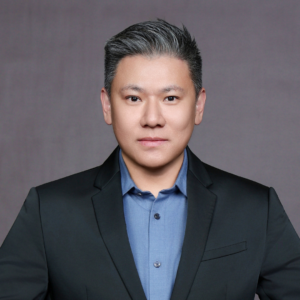
Moderator
Dr. Ivan Li
Hon Secretary of the Hong Kong Association of Energy Service Companies Limited
Hong Kong Association of Energy Service Companies
Dr. Ivan Li
Hong Kong Association of Energy Service Companies
Hon Secretary of the Hong Kong Association of Energy Service Companies Limited
Dr. Ivan LI is an Executive Director in China Galaxy International Holding limited and found the first carbon business department among all Chinese Financial Institutions in Hong Kong. He managed a team to develop innovative carbon business, green & sustainable finance products and promoting cross-border carbon trading. He led the team to create the first cross-border carbon futures product and the first domestic “Insurance + carbon futures” product, providing domestic enterprises with financial tools to hedging the CBAM risk. Among them, the “EU Carbon Emission Futures Contract Cross-Border Return Swap (TRS)” received the Pioneer Award in the Annual Green Finance Excellence Cases of the Greater Bay Area of Guangdong, Hong Kong, and Macau, the Best Solution Award in the Hong Kong China Finance Association’s “Excellence in Cross-Border Financial Services Awards.”, as well as 2023 The IFF Global Green Finance Award- Innovation Award. He took lead to issue the world’s first green bond using “drone + carbon satellite” certification. He successfully facilitated the first cross-border sale of “one-Yuan carbon offset project” and was awarded the Special Excellence Award in the Hong Kong China Finance Association’s “Excellence in Cross-Border Financial Services Awards.” He designed the first QFLP cross-border carbon fund, which is the first northbound fund to participate in serving the development of the domestic carbon market; and participated in the launch of the Asia Pacific Low Carbon Index ETF, which is the world’s first low carbon ETF covering the Asia Pacific region and the largest equity ETF listed on the SGX. He is one of the members of the first session of the Emission Peak and Carbon Neutrality Professional Committee of the China Society for Environmental Sciences. In the China Society for Environmental Sciences Carbon Emission Trading Professional Committee Establishment Conference and China Carbon Market Development Seminar, he was elected as a member of the Carbon Trading Professional Committee. He is also the Secretary General of the Hong Kong Energy Services Association and has been invited to join the Hong Kong Finance Development Council’s Carbon Market Opportunities Task Force as an expert.
My Sustainability Goals for 2026:
- Connect carbon markets and climate financing – a goal aligned with Article 6 of the 2015 Paris Agreement -with a view to facilitate Chinese investment;
- Move a small step forward for Hong Kong’s goals of becoming a major green and climate finance hub, amid growing concerns about the effects of climate change across the Asia-Pacific
Speaking at 2026 sessions:
Day 2
Connecting the Dots: How Capital Moves Through the Energy Transition Finance Chain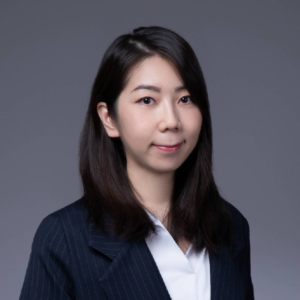
Wivinia Luk
Senior Manager (Policy Research)
Financial Services Development Council
Wivinia Luk
Financial Services Development Council
Senior Manager (Policy Research)
Ms Wivinia Luk holds the position of Senior Manager of Policy Research at the Financial Services Development
Council (FSDC). She steers the Council’s research agenda, covering policy development across several key financial sectors. Her areas of focus include green and sustainability, FinTech, asset and wealth management, insurance, and connectivity with the Mainland and international markets.
Prior to joining the FSDC, Ms Luk worked in the field of corporate strategic planning and development, with a series of commercial roles in the banking and financial services sectors.Ms Luk graduated with a Bachelor of Social Science in Economics and a Master of Social Science in Global Political Economy from the Chinese University of Hong Kong.
Speaking at 2026 sessions:
Day 2
Connecting the Dots: How Capital Moves Through the Energy Transition Finance Chain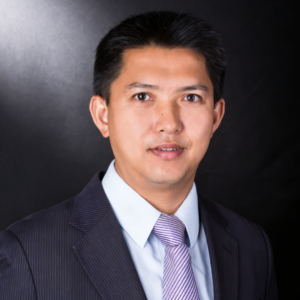
Prof. Dragon Tang
Professor of Finance
University of Hong Kong
Prof. Dragon Tang
University of Hong Kong
Professor of Finance
Dragon Tang is Professor of Finance at the University of Hong Kong. He is also a Changjiang Scholar Chair Professor by Ministry of Education of China and Managing Editor of International Review of Finance. He was the former head of finance area in HKU Business School. His research specialties are green finance, ESG, credit derivatives, and China markets. He served as consultant expert on green finance and ESG issues for Asian Development Bank, World Bank and Hong Kong Centre for Green and Sustainable Finance. He provided training lectures for People’s Bank of China and China Banking and Insurance Regulatory Commission. He received research grants from many organizations including ClimateWorks Foundation. His research findings are published in, among others, Journal of Finance, Journal of Financial Economics, Review of Financial Studies, Journal of Accounting and Economics, Journal of Accounting Research, Management Science and featured in Bloomberg, Financial Times, Wall Street Journal and so on. He received several best research paper awards from journals, conferences, and international organizations including the Global Research Alliance for Sustainable Finance and Investment. He was an inaugural recipient of the Best Doctoral Dissertation Supervisor Award by National Economics Foundation of China. He launched the Master of Sustainable Accounting and Finance (MSAF) program at the University of Hong Kong in 2025.
Speaking at 2026 sessions:
Day 2
Connecting the Dots: How Capital Moves Through the Energy Transition Finance Chain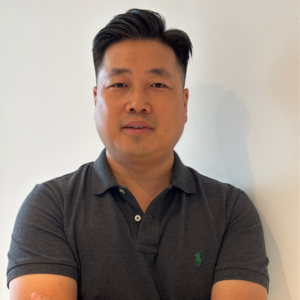
Lei Xie
Co-CEO
Cyan Peak Climate Tech co,.limited
Lei Xie
Cyan Peak Climate Tech co,.limited
Co-CEO
With dual educational backgrounds in business and engineering in Sweden, he pursued his academic journey across two institutions, bachelor at Stockholm University Business School and master at KTH Royal Institute of Technology.
Starting back in 2006, he took up the position of Commercial Director for China at Swedish enterprise TRICORONA. Over many years, he immersed himself in front‑line carbon asset management work, and successfully developed over 300 carbon projects both in china and globally. In 2019, TRICORONA was granted certification by the United Nations Environment Programme, securing its position as the world’s second‑largest carbon trader.
He possesses insights into how global carbon markets function, alongside end‑to‑end professional capabilities spanning carbon credit project development as well as cross‑border transactions. At present, he manages Treasure Carbon’s(parent company of Cyan Peak) domestic and international commercial departments, and is responsible for steering the company’s globallization startegy layout and driving continuous cross-border business expansion.
My Sustainability Goals for 2026:
more participants joining the industry and greater capital inflowing
Speaking at 2026 sessions:
Day 2
Connecting the Dots: How Capital Moves Through the Energy Transition Finance Chain
Regan Yang
Managing Director (Investment Banking)
CGS International Holdings Limited

Regan Yang
CGS International Holdings Limited
Managing Director (Investment Banking)
Regan Yang serves as Managing Director and Head of Industrial & Energy Sectors at the Investment Banking Department of China Galaxy International. Boasting 30 years of seasoned investment banking experience, he has supported a wide array of corporations in executing IPOs and cross‑border financing transactions across Hong Kong and U.S. capital markets, with robust on‑the‑ground IB capabilities and comprehensive industrial expertise. Mr. Yang holds a Master of Finance from Fudan University and an FMBA from China Europe International Business School (CEIBS).
Speaking at 2026 sessions:
Day 2
Connecting the Dots: How Capital Moves Through the Energy Transition Finance ChainSupported by
Hong Kong Association of Energy Service Companies
Vision
Supports companies, government, and organizations in Hong Kong and the nearby regions in their energy transition for future sustainable development.
Mission
Serves as an influential platform for international co-operation, thought leadership, and knowledge exchange. Centre on energy efficiency and climate change-related issues; promotes the widespread adoption of renewable energy.
General Enquiry Email Address: peter.ho@enerwaste.green
General Enquiry Phone Number: 91889812