ReThink Forum
Mobilising Hong Kong’s Climate Talent to Deliver: Our Role in Asia’s Climate Transition
10 Sep (Thur) Day 1 : 17:00 – 17:50
Hong Kong has developed a deep and well-rounded pool of climate capability, spanning finance, engineering, infrastructure delivery, energy systems, carbon management and professional services. Through its own transition journey, the city has built practical experience in planning, financing and delivering low carbon solutions in a dense, complex urban environment.
The question now is how to better mobilise that talent and experience to support climate delivery beyond its own boundaries. This session will explore how Hong Kong can build on its existing achievements to play a more influential role in climate delivery across East Asia and the Global South, where the scale and urgency of transition demand not just ambition, but execution.
The discussion will also highlight one of Hong Kong’s core advantages: its ability to bridge Eastern and Western standards, systems and market expectations. For business leaders, this creates both commercial opportunity and a wider strategic role in supporting Asia’s low-carbon transition.
Session Learnings:
- Understand how Hong Kong’s existing achievements across engineering, infrastructure, finance and professional services provide a strong foundation for contributing to climate delivery beyond the city.
- Recognise that Hong Kong’s value lies not only in its own transition progress, but also in its ability to connect talent, capital and expertise to wider regional needs.
- Explore how integrating technical, infrastructure and financial capabilities can accelerate practical, on-the-ground climate implementation.
- Examine how Hong Kong’s role in bridging Eastern and Western standards, systems and market expectations can create practical advantages for business and implementation.
- Gain a clearer view of how business leaders can step up Hong Kong’s role from successful local transition to regional and global climate impact.
Post Event Actions:
- Reflect on how their organisation can build on Hong Kong’s existing climate strengths to capture new opportunities across Asia.
- Identify ways to connect their expertise in engineering, infrastructure, energy, carbon management or finance to regional climate delivery needs.
- Explore new partnerships that position Hong Kong-based businesses and professionals as enablers of climate implementation and scaling.
- Consider how Hong Kong’s established strengths and East–West bridging role can support business growth, collaboration and market access.
- Take forward practical conversations within their organisation on how to position Hong Kong-based talent and platforms as contributors to regional and global climate action.
Speakers
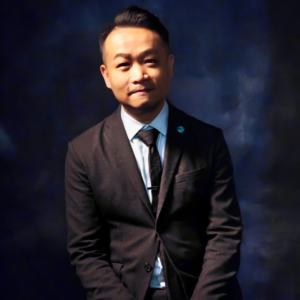
Moderator
Ir Tim Wong
ESG & Sustainability Hub Lead
AECOM

Ir Tim Wong
AECOM
ESG & Sustainability Hub Lead
Tim Wong is the ESG & Sustainability Hub Lead at AECOM Hong Kong, driving innovation in sustainable infrastructure and carbon management. With over 18 years of experience in both civil engineering and ESG, Tim has worked on major climate-resilient transport and water projects across the Greater Bay Area and Southeast Asia.
Starting his career in 2008, Tim applied ESG principles to infrastructure projects even before the concept was widely recognized – most notably on a drainage tunnel project in northwest Hong Kong Island. He is a certified carbon auditor, ESG planner, and analyst, and has been a member of the Institution of Civil Engineers (ICE) since 2013.
A strong advocate for sustainable practices, Tim serves on the Hong Kong Green Building Council’s infrastructure rating system committee. He was named Young Engineer of the Year by the Hong Kong Institution of Engineers in 2020 and represented Hong Kong at the UN’s COP28 climate conference in 2023. He is an Adjunct Professor at Academy of Innovations in City University of Hong Kong since 2025.
My Sustainability Goal for 2026:
- Enhancing social outcomes
- Deploy Nature based solutions for tracking and disclosure
- Carbon management for built environment and corporate operation
Speaking at 2026 sessions:
Day 1
Mobilising Hong Kong’s Climate Talent to Deliver: Our Role in Asia’s Climate Transition
Winnie Lai
Vice Chairperson
Institution of Civil Engineers, Hong Kong Association
Winnie Lai
Institution of Civil Engineers, Hong Kong Association
Vice Chairperson
Winnie Lai is Vice Chairperson of the Institution of Civil Engineers Hong Kong Association (ICE HKA) and Business Manager at AtkinsRéalis. She is a Chartered Civil Engineer who works across industry, professional institutions and the wider community, bringing together diverse stakeholders to support the advancement of the engineering profession. Through her work with ICE HKA, she champions the role of engineering in addressing societal and sustainability challenges. Drawing on experience across engineering delivery, business strategy and governance, she brings a cross-sector perspective on the relationship between technical expertise, leadership and long-term societal outcomes.
My Sustainability Goals for 2026:
1. Advance the contribution of engineering to sustainable and resilient communities.
2. Support more diverse and accessible pathways into the engineering profession.
Speaking at 2026 sessions:
Day 1
Mobilising Hong Kong’s Climate Talent to Deliver: Our Role in Asia’s Climate Transition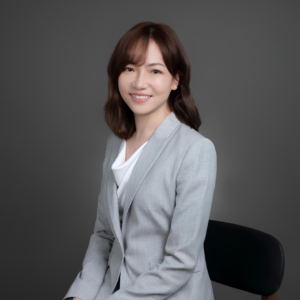
Andrea Lam
Director, Infrastructure & Capital Projects
Alvarez & Marsal

Andrea Lam
Alvarez & Marsal
Director, Infrastructure & Capital Projects
Andrea Lam is a Director in Infrastructure & Capital Projects at Alvarez & Marsal, with over 10 years of experience advising infrastructure owners, investors and Governments across Greater China, Southeast Asia, Australia and the Middle East. Her experience spans across infrastructure classes including power and decarbonisation, healthcare, rail & maritime transport and logistics, and social infrastructure.
With a dual background in Chemical & Process Engineering and Finance, Andrea bridges technical execution with public-private-partnerships (PPPs), commercial structuring, and project finance. She specializes in translating policy and strategic ambitions into bankable, actionable infrastructure projects.
She has led high-impact initiatives, including green infrastructure transition analyses across multiple jurisdictions, strategic projects for the Hong Kong Development Bureau, Health Bureau, and Home & Youth Affairs Bureau, as well as supported the ASEAN Secretariat under the Australian Government’s Partnerships for Infrastructure Programme.
My Sustainability Goals for 2026:
1. Promoting Sustainable Infrastructure & Procurement Best Practices for the Northern Metropolis:
Promote capacity-building initiatives, modern methods of construction, and develop procurement frameworks that drive long-term operational resilience and minimize lifecycle carbon footprints across future infrastructure developments in Hong Kong’s Northern Metropolis.
2. Supporting Cross-Border Climate Finance & PPPs across Asia:
Leverage Hong Kong’s role as a regional financial and professional hub to bring private capital to infrastructure projects across Southeast Asia through efficient risk allocation and PPPs.
Speaking at 2026 sessions:
Day 1
Mobilising Hong Kong’s Climate Talent to Deliver: Our Role in Asia’s Climate Transition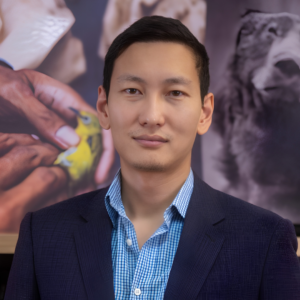
Lionel Mok
Programme Lead
Civic Exchange
Lionel Mok
Civic Exchange
Programme Lead
Lionel Mok is the Sustainable Finance Programme Lead for Civic Exchange. He is responsible for managing the organisation’s efforts to conduct research and engage with stakeholders on the integration of sustainability considerations into financial market practices. Lionel has previously worked for Climate Bonds Initiative and the International Finance Corporation.
Speaking at 2026 sessions:
Day 1
Mobilising Hong Kong’s Climate Talent to Deliver: Our Role in Asia’s Climate Transition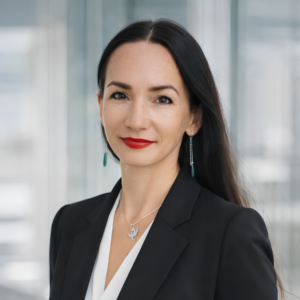
Galina Panina
Business Psychologist and Trainer
Onwire Online
Galina Panina
Onwire Online
Business Psychologist and Trainer
Galina Panina is a Corporate Psychologist, Global Speaker, and Organizational Resilience Expert with over 16 years of experience helping leaders and teams thrive through high‑stakes transformation. With a unique background bridging clinical psychology, political science, and global communications, she works at the intersection of human behavior, leadership performance, and AI‑driven organizational change.
Galina specializes in decoding the psychological dynamics that shape corporate success—how people react under uncertainty, how teams adapt when leadership shifts, and how organizations can reduce “human friction” during transformation. Her work integrates behavioral profiling, cross‑cultural intelligence, and resilience frameworks to help companies navigate rapid change without losing alignment, trust, or performance.
She has trained executives and internal speakers for global organizations including Shell, Nike, Orange, Leroy Merlin, and Workplace Options, and has delivered high‑impact sessions at world‑class stages such as the World Communication Forum in Davos. Her experience spans multinational corporations, diplomatic environments, and large‑scale events such as the Sochi 2014 Olympics and the Gas Exporting Countries Forum.
Currently based in China, Galina provides strategic training and executive coaching in English, Russian, and French, supporting leaders across Asia, Europe, and the Middle East. Her work focuses on preparing organizations for the next era of human‑centric AI, where psychological adaptability becomes a core business competency.
My Sustainability Goals for 2026:
1. Strengthen human adaptability in fast‑changing organizations
Equip leaders and teams with psychological tools to remain stable, collaborative, and high‑performing during leadership transitions, restructuring, and rapid strategic shifts.
2. Reduce human friction in transformation processes
Implement profiling‑based communication frameworks that help organizations minimize resistance, misunderstandings, and emotional overload during change.
3. Advance human‑centric AI integration
Support companies in building psychologically safe environments where employees can adopt AI without fear, burnout, or loss of identity.
4. Build resilient cross‑cultural teams in APAC
Provide Asia‑focused insights that help multinational teams navigate cultural complexity and maintain cohesion under pressure.
5. Promote sustainable people‑strategy alignment
Ensure that wellbeing, performance, and transformation goals remain connected, even when the organization is evolving at high speed.
Speaking at 2026 sessions:
Day 1
Mobilising Hong Kong’s Climate Talent to Deliver: Our Role in Asia’s Climate TransitionSupported by
Hong Kong 2050 is Now
Hong Kong 2050 is Now is a Hong Kong-based platform for education, collaboration, and action on the climate crisis. We seek to inspire ambitious target setting, induce behavior change, and mobilise collective action towards a carbon-neutral Hong Kong.
We believe a decarbonised city is people-centric, more liveable, healthier, and economically successful.
Our sustainability goals for 2026:
- Educate and engage the public on the risks and opportunities facing Hong Kong in an age of climate crisis, based on rigorous scientific and policy research.
- Encourage personal, corporate and government action to be undertaken now in combating the climate crisis, including personal lifestyle, business best practice, and regulatory change.
- Aggregate the efforts of stakeholders working towards the vision of a Net-Zero carbon Hong Kong, leveraging existing grassroot and community movements to further catalyse their impact.
Institution of Civil Engineers, Hong Kong Association
Institution of Civil Engineers (ICE) is one of the world’s most respected professional engineering associations. Established in 1818, it has 95,000 members across the globe. ICE’s vision is to place civil engineering at the heart of society, delivering sustainable development through knowledge, skills and professional expertise.
Our sustainability goals for 2026:
- Place the decarbonisation of our industry at the heart of our agenda (UNSDG 9.4)
- Working with others, both in the UK and overseas, to build resilience and mitigate the significant effects of climate change (UNSDG 13)
- Transform the availability of potable water and sanitation across the world (UNSDG 6 & 7)
- Transform the productivity of our industry by driving modern methods of procurement and manufacture (UNSDG 8 & 9)
- Enhance the knowledge, insight and ethical understanding of engineers wherever they work across the world
Products, Services & Solutions:
Education/Training/Certification
General Enquiry Email Address: icehk@ice.org.uk
General Enquiry Phone Number: 3153 4181