Energy Theatre
Scaling Low‑ and Zero‑Carbon Vessels and Green Fuels: Advancing a Net‑Zero Fleet in Hong Kong and the GBA
11 Sep (Fri) Day 2 : 14:45 – 15:35
Hong Kong and the GBA are entering a crucial phase where low‑ and zero‑carbon vessels and green fuels must move from trials to consistent, day‑to‑day operations. This session focuses on how shipping lines, ports, fuel suppliers and regulators are practically implementing vessel retrofits, shore‑side solutions and green fuel deployment to build a net‑zero fleet in and around Hong Kong.
Speakers will share concrete examples of technology choices, operational adjustments and stakeholder coordination, from integrating shore power and alternative fuels at terminals to retrofitting existing vessels and preparing crews and systems for new operating standards. The discussion will highlight what is working on the ground, what needs to change in processes and infrastructure, and how organisations can prepare for upcoming regulatory and market requirements.
Session Learnings:
By the end of this session, participants will be able to:
- Describe practical pathways for decarbonising existing fleets, including retrofits, operational efficiency measures and integration of low‑carbon fuels.
- Understand the infrastructure, digital systems and operational changes required at ports and terminals to support shore power, green bunkering and new vessel technologies.
- Identify key implementation challenges (technical, operational, regulatory and stakeholder coordination) and proven approaches to overcoming them.
- Recognise the role of standards, certification, crew training and monitoring in ensuring reliable, safe and compliant deployment of new fuels and technologies.
- Outline immediate steps their organisations can take in the next 12–24 months to plan and execute pilots or scale up existing decarbonisation initiatives in Hong Kong and the GBA.
Post-Event Actions:
- Review internal fleet and port operations to identify high‑impact, near‑term decarbonisation measures that can be implemented with existing technologies.
- Engage technical and operational teams to co‑design pilots for retrofits, shore‑side solutions and green fuel use across key routes and terminals.
- Strengthen cross‑functional collaboration among operations, safety, sustainability and regulatory teams to ensure smooth roll‑out of new practices.
- Connect with peers and solution providers from the session to benchmark progress and share implementation playbooks for Hong Kong and the GBA.
Speakers
Moderator
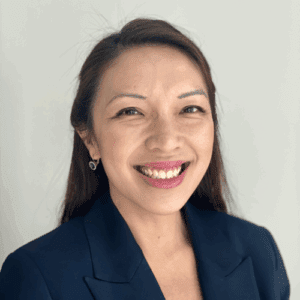
Junice Yeo
Managing Partner
Eco-Business

Junice Yeo
Eco-Business
Managing Partner
Junice Yeo is Managing Partner at Eco-Business, where she leads research, advisory and executive training engagements across Asia Pacific focused on energy transition, decarbonisation, climate risk, carbon markets and sustainable finance. She oversees the organisation’s engagements in Greater China and ASEAN, working with corporates, financial institutions, policymakers and industry stakeholders on transition readiness, disclosure standards and low-carbon development pathways.
With over 20 years of experience across China and Southeast Asia, Junice brings a cross-sector perspective spanning sustainability strategy, market development, public policy and stakeholder engagement. She previously established the Southeast Asia practice of UK-based ESG consultancy Corporate Citizenship, advising listed companies and multinationals on ESG strategy and reporting.
Junice was previously part of the Sino-Singapore Tianjin Eco-City (SSTEC) project — one of China’s earliest flagship sustainable urban development initiatives — where she worked at the intersection of urban sustainability, investment promotion and public engagement.
Her work today frequently intersects with transition finance, clean energy systems, industrial decarbonisation, climate technologies and carbon market developments across Asia. She regularly convenes and moderates executive and multi-stakeholder dialogues on regional energy transition trends, regulatory developments and implementation challenges shaping Asia’s pathway to net zero.
Junice holds the CFA Institute Certificate in ESG Investing, and is an FSA Level II Candidate. She also serves as an external advisory member to the Airbus Executive Committee.
Speaking at 2026 sessions:
Day 2
Scaling Low‑ and Zero‑Carbon Vessels and Green Fuels: Advancing a Net‑Zero Fleet in Hong Kong and the GBA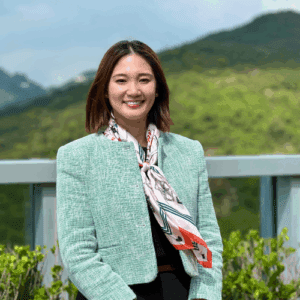
Eleanor Cunningham
General Manager, Sustainability
The Caravel Group
Eleanor Cunningham
The Caravel Group
General Manager, Sustainability
Eleanor is Head of Sustainability at The Caravel Group, where she leads the Group’s global sustainability strategy and decarbonisation performance across a fleet of more than 580 vessels under management via Fleet Management Limited, the Group’s shipping subsidiary. She has led fleet-wide climate and nature risk assessments and decarbonisation roadmaps, working across operations, technical and safety teams to move low-carbon technologies and green fuels from pilot to scaled deployment, using AI-supported analytics to strengthen carbon-risk forecasting and disclosure accuracy.
With over 15 years across consulting, maritime and hospitality, she builds the governance and data infrastructure that underpins credible disclosure and advises C-suite leadership on translating climate transition planning into operational roadmaps that address the regulatory and commercial realities of the maritime sector’s net-zero transition.
Speaking at 2026 sessions:
Day 2
Scaling Low‑ and Zero‑Carbon Vessels and Green Fuels: Advancing a Net‑Zero Fleet in Hong Kong and the GBA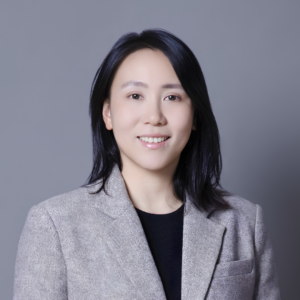
Li Fan
ESG Manager
COSCO SHIPPING Ports Limited
Li Fan
COSCO SHIPPING Ports Limited
ESG Manager
Ms. Li Fan is an ESG practitioner with over 14 years of experience in developing and managing comprehensive corporate ESG initiatives. In her current role, she is responsible for formulating strategic ESG frameworks, addressing climate change challenges, establishing decarbonisation targets, and creating pathways to carbon neutrality. Ms. Fan is also dedicated to enhancing corporate governance and promoting equality and diversity while actively engaging stakeholders and investors through ESG roadshows.
Her career began as an environmental consultant, where she provided expertise to multinational clients across various sectors, such as real estate, energy, automotive, mining, and pharmaceuticals. Her experience with a leading Hong Kong property firm and a prominent energy company has significantly deepened her understanding of ESG best practices and the complexities inherent in these sectors.
Ms. Fan holds a Master’s degree in Environmental Technology and a Bachelor’s degree in Chemistry from Imperial College London. She is a Certified Environmental, Social, and Governance Analyst and a Certified Carbon Auditor Professional. Having lived in the UK and Germany for over a decade, Ms. Fan brings a valuable global perspective to her work, enriching discussions on sustainable development and corporate responsibility.
Speaking at 2026 sessions:
Day 2
Scaling Low‑ and Zero‑Carbon Vessels and Green Fuels: Advancing a Net‑Zero Fleet in Hong Kong and the GBA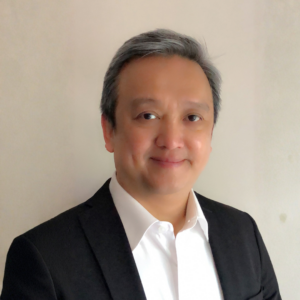
Chester Lee
Deputy Chief Operating Officer – Commercial, Green Fuels and Chemicals
The Hong Kong and China Gas Company Limited (Towngas)
Chester Lee
The Hong Kong and China Gas Company Limited (Towngas)
Deputy Chief Operating Officer – Commercial, Green Fuels and Chemicals
Chester Lee is the Deputy Chief Operating Officer – Commercial, Green Fuels and Chemicals at The Hong Kong and China Gas Company Limited (Towngas), where he is responsible for the commercial strategy and market development of the company’s VENEX green methanol business. He leads the development of global commercial partnerships and projects that support the growth of Towngas’ green methanol portfolio and the transition to sustainable marine fuels.
With more than 25 years of experience in the energy, petrochemical, and logistics sectors, Chester is focused on accelerating renewable energy growth across the Asia-Pacific region. He began his career as a mechanical engineer before relocating to China, where he spent over 15 years in the chemical storage and logistics industry with leading international companies including Royal Vopak, Helm AG, and Odfjell SE. He later returned to Singapore to serve as President, Asia of Odfjell Terminals, overseeing the company’s regional operations and strategic growth initiatives.
Prior to joining Towngas, Chester was with MOL Chemical Tankers, where he played a leading role in the successful US$1.8 billion acquisition of LBC Tank Terminals. The transaction strengthened the integration of land-based and maritime logistics capabilities, creating long-term synergies while supporting sustainability objectives and the pathway toward carbon neutrality. Across these positions, he spearheaded regional storage transformations, strategic M&A execution, and new energy investments.
Chester holds a Bachelor of Engineering (Honours) in Mechanical Engineering and a Master of Business Administration (MBA). With deep expertise in cross-border supply chains and state-owned enterprise (SOE) engagement, Chester bridges commercial strategy and operational execution across China, the Asia-Pacific region, and global energy markets.
Speaking at 2026 sessions:
Day 2
Scaling Low‑ and Zero‑Carbon Vessels and Green Fuels: Advancing a Net‑Zero Fleet in Hong Kong and the GBA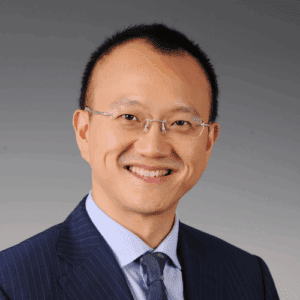
Mark Teng
Chief Financial Officer
SeaKapital Limited
Mark Teng
SeaKapital Limited
Chief Financial Officer
Mark Teng is the Chief Financial Officer at SeaKapital, a Hong Kong-based maritime leasing and investment company, and the former Managing Director in the Shipping and Offshore department of Credit Agricole Corporate and Investment Bank.
Throughout his 25+ year career, Mark has originated and executed extensive maritime transactions across Asia-Pacific, Europe, and the Middle East, with recent experience in financing alternative fuel vessels using use-of-proceed as well as sustainability-linked loans, green bonds, and other ESG-compliant structures specifically designed for the maritime sector’s transition to net-zero emissions. Mark’s combination of practical transaction experience and attention to prevailing trends in sustainable finance continues to bridge global capital with Asia’s shipbuilding ecosystem to accelerate the sector’s transition to net-zero operations.
Mark has a long track record as a keynote speaker, moderator, and panelist at international maritime finance conferences across Asia. His speaking portfolio demonstrates expertise across sustainable finance, decarbonization, and maritime banking, including the recent keynote presentation “Sustainable Finance in Shipping” at the 17th World Ocean Forum 2023 in Busan, Korea. He also serves as a regular panelist at annual Marine Money conferences in Singapore, Hong Kong, and Shanghai, where he has addressed topics ranging from bank finance evolution to ESG best practices in shipping. His presentations consistently focus on bridging the technological and financial challenges of maritime decarbonization, emphasizing the critical role of governments and financial institutions in supporting the industry’s ambitious IMO 2050 net-zero targets.
Mark holds a B.S. in Economics from The Wharton School and a B.A. in International Studies from the University of Pennsylvania.
My Sustainability Goals for 2026:
One way Hong Kong can elevate its port competitiveness is by promoting alternative fuel bunkering availability, in line with its “green and smart port” strategy. In parallel, wider adoption of innovative green financing solutions such as use-of-proceeds financing for green fuel, supply chain infrastructure, or decarbonizing retrofitting equipment would further expand the supply of green funding to the address the rising demand under IMO 2050.
Speaking at 2026 sessions:
Day 2
Scaling Low‑ and Zero‑Carbon Vessels and Green Fuels: Advancing a Net‑Zero Fleet in Hong Kong and the GBA