Innovation Stage
Sweden Re:Designs the Future
11 Sep (Fri) Day 2 : 11:30 – 12:00
Swedish design has long been recognised for combining functionality, simplicity, and sustainability. Today, that same mindset is helping organisations address some of society’s most pressing challenges.
This session explores how Swedish companies are using design thinking to turn sustainability commitments into action through products, materials, public spaces, and everyday experiences.
Bringing together perspectives from Bolon (Flooring), Green Furniture Concept (Soon to have a new name, it will have shifted to Circalle by September) and Ikea the discussion will highlight practical examples of how design can influence behaviour, extend product lifecycles, reduce environmental impact, and create long-term value.
Participants will gain insights into how thoughtful design can help shape more sustainable communities while balancing the needs of people, business, and the environment.
Session Learnings:
- Assess how design can be used as a strategic tool to advance sustainability goals within their organisations.
- Identify opportunities to incorporate circularity, longevity, resource efficiency, and Scandinavian simplicity earlier in the design and decision-making process.
- Consider how products, spaces, and services can be designed to better meet both environmental and human needs.
- Explore how design thinking can support behavioural change and encourage more sustainable choices.
- Apply practical insights from Swedish companies and design principles rooted in functionality and simplicity to create solutions that deliver long-term value for people, business, and society.
Post-Event Actions:
- Assess how design can be used as a strategic tool to advance sustainability goals within their organisations.
- Identify opportunities to incorporate circularity, longevity, and resource efficiency earlier in the design and decision-making process.
- Consider how products, spaces, and services can be designed to better meet both environmental and human needs.
- Explore how design thinking can support behavioural change and encourage more sustainable choices.
- Apply practical insights from Swedish companies to create solutions that deliver long-term value for people, business, and society.
Speakers
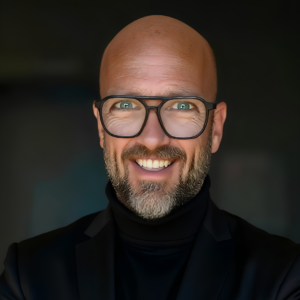
Moderator
Christian Bergenstraahle
General Manager
Swedish Chamber of Commerce in Hong Kong
Christian Bergenstraahle
Swedish Chamber of Commerce in Hong Kong
General Manager
Christian Bergenstråhle (包傑仁)
Christian Bergenstråhle is a business connector, community builder and marketing strategist with nearly 20 years of entrepreneurial experience. As a representative of the Swedish Chamber of Commerce in Hong Kong, he is dedicated to creating tangible membership value by connecting people, companies, and ideas across borders – particularly between Sweden and Hong Kong.
With a background as Owner and CEO of his own marketing and communications businesses, Christian combines strategic thinking with hands-on execution. He is known for transforming networks into real business opportunities, frequently facilitating introductions that lead to new partnerships, clients, and long-term collaborations. For Christian, business is ultimately about people – and strong relationships are the foundation of sustainable growth.
He is actively engaged in promoting innovation, sustainability, and cross-border collaboration, including initiatives within life sciences, green transition, AI-driven visibility, and international expansion. Through events, delegations, and strategic partnerships, he works to strengthen ties between Sweden, Hong Kong, and the broader Greater Bay Area.
Fluent in Swedish and English, with additional proficiency in Spanish, Christian brings an international mindset shaped by experience across Europe, Asia and beyond. He is recognized for his positive energy, strategic clarity, and ability to turn connections into meaningful, long-term impact.
My Sustainability Goals for 2026:
1. Increase awareness and understanding of sustainability among all of us
I want to contribute to a broader and deeper awareness in Hong Kong of why sustainability matters – not only from an environmental perspective, but also from a long-term business, competitiveness and societal standpoint. Sustainability should be seen as a strategic opportunity, not just a compliance requirement.
2. Elevate sustainability as a clear government priority
I hope to see sustainability become a stronger and more visible priority in Hong Kong’s public policy agenda, with clearer targets, stronger incentives and long-term frameworks that support green innovation, responsible investment,and sustainable infrastructure development.
3. Strengthen collaboration between business and government
Sustainable transition requires partnership. One of my goals is to help create closer collaboration between the private sector and policymakers, ensuring that regulation, innovation, and market development move in the same direction – enabling Hong Kong to remain competitive while accelerating its green transformation.

Hugo Asplund
Group Sustainability and Food Transformation Manager
IKEA

Hugo Asplund
IKEA
Group Sustainability and Food Transformation Manager
More than 20 years of retail experience from various commercial roles at IKEA, ie as Sales manager Poland and Commercial Director for Hong Kong and Taiwan.
Since 2021 leading the food transformation and sustainability functions at the IKEA franchisee in Hong Kong, Taiwan and Indonesia.
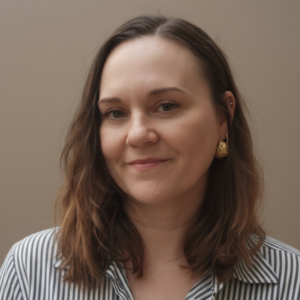
Michelle Brits
Area Sales Manager – HK, Macau, Philippines
The Andrews Group | BOLON

Michelle Brits
The Andrews Group | BOLON
Area Sales Manager – HK, Macau, Philippines
Michelle Brits represents Bolon in Hong Kong, bringing Swedish design and circular thinking to the region’s built environment.
With a background in retail buying and a deep appreciation for design, she combines commercial insight with a passion for materials that last. She works closely with architects, designers, and developers to specify flooring that performs, looks beautiful, and contributes to green building certifications like BEAM Plus, LEED, and WELL.
Bolon’s floors are made from 68% recycled content and are 100% recyclable – designed for longevity in high-traffic commercial spaces. Michelle is committed to showing that sustainability and great design aren’t trade-offs. They’re the same thing.
My Sustainability Goals for 2026:
- My fantasy goal is for the HK government to legislate sustainability within the construction industry/ built environment.
- I’d love to see more electric commercial vehicles on the roads.
- And a personal goal is to reduce food waste. As a single person, I waste a lot of foods that go off since i can’t eat 10 carrots fast enough
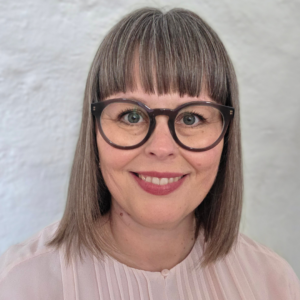
Lisa Jakobsson
Global Sales & Marketing Manager
Circalle

Lisa Jakobsson
Circalle
Global Sales & Marketing Manager
Lisa Jakobsson is Global Sales and Marketing Manager at Circalle, the Swedish design company formerly known as Green Furniture Concept. She works with architects, designers and partners worldwide to create more human, sustainable and long-lasting public spaces.
At ReThink Hong Kong, Lisa will share how Scandinavian design principles can support a more circular built environment. Drawing on experience from airports, transport hubs, retail environments and other high-traffic spaces, she will explore how modularity, repairability, material efficiency and long product lifecycles can reduce environmental impact while improving the experience of a place. Her focus is on turning circular ambitions into practical, commercially viable action.
My Sustainability Goals for 2026:
The changes I hope to see in Hong Kong are:
- Circularity becoming standard practice: More projects designed for longevity, repair, reuse and future adaptation, rather than short-term replacement.
- More human-centred public spaces: Airports, transport hubs, retail environments and other shared spaces that support wellbeing, comfort and a stronger sense of place.
- Stronger collaboration across the value chain: Closer cooperation between architects, designers, developers, operators and manufacturers to turn sustainability ambitions into practical and commercially viable solutions.
With thanks to

DFI Retail Group
Booth E40
DFI Retail Group is a leading Asian retailer, driven by its purpose to “Sustainably Serve Asia for Generations with Everyday Moments”. DFI and its associates operate over 7,500 outlets across 12 markets, with a portfolio of well-known brands across five formats: health and beauty, convenience, food, home furnishings, and restaurants.
Our sustainability goals for 2026:
- Accelerate decarbonisation across our operations and value chain to support the transition to a low-carbon future.
- Expand access to affordable, healthier and more sustainable choices that empower customers to live more sustainably.
- Advance circularity by reducing waste, improving diversion, and increasing resource efficiency.
- Strengthen sustainability awareness and capabilities across DFI and our ecosystem of partners and stakeholders.
- Create lasting positive impacts in the communities we serve through responsible business practices and community support.
Solutions Showcase:
- Brand Owner
- Circular Solutions
- F&B Products/Food Supply
- Sustainable Products
- Technology & Innovation
Legal Name: The Dairy Farm Company, Limited
Meet our 2026 speakers:

Team Sweden
Booth F45
The Consulate General of Sweden is the official representation of Sweden and the Swedish Government in Hong Kong and Macau.
The Consulate engages with exchanges between Sweden and Hong Kong, as well as with promoting the Swedish image abroad. The Consulate also prioritise the contribution to Hong Kong’s green and digital transition.
Solutions Showcase:
Government Agency
Legal Name: Consulate General of Sweden in Hong Kong
General Enquiry Email Address: generalkonsulat.hongkong@gov.se
General Enquiry Phone Number: 2512 1212
General Business Address: Room 2501, 25/F, BEA Harbour View Centre, 56 Gloucester Road, Wan Chai, Hong Kong