Prof. Haiwei Luo
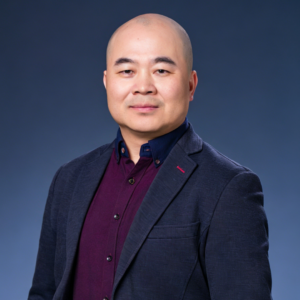
Prof. Haiwei Luo
PersistBio / The Chinese University of Hong Kong
Professor
Professor Haiwei Luo is a marine microbiologist and evolutionary biologist at The Chinese University of Hong Kong. He has over a decade of research experience in microbial evolutionary biology and host-microbe interactions, and has published more than 70 research articles in leading journals including Proceedings of the National Academy of Sciences USA, Nature Ecology & Evolution, Nature Microbiology, Nature Communications, The ISME Journal and Molecular Biology and Evolution. He has developed a patented probiotic that persists in marine invertebrates for the entire monitoring period (8 months) in a natural marine environment after a single application, conferring enhanced thermal tolerance to marine invertebrate during natural thermal events. The same probiotic technology improves growth and immune function in commercially valuable species including oysters and mussels, supporting both food security and sustainable aquaculture. Professor Luo is a co-founder of PersistBio Ltd., a Hong Kong company commercialising persistent probiotic solutions for marine conservation and aquaculture. His work demonstrates how marine microbiology and evolutionary biology can deliver tangible tools for climate resilience, biodiversity protection, and sustainable food production.
My Sustainability Goals for 2026:
- Greater awareness and openness to marine probiotics: I hope to see Hong Kong’s conservation and aquaculture sectors become more receptive to innovative, science-based solutions that protect marine life and support sustainable food production.
- Stronger bridge between research and commercial application: I want to see more university research products translated into real-world solutions through Hong Kong startups, supported by government schemes and industry partnerships, so that scientific breakthroughs reach the people and ecosystems that need them.
- Recognition of aquaculture as a climate solution: I hope Hong Kong positions sustainable shellfish aquaculture as part of the city’s climate resilience and food security agenda, creating regulatory and financial pathways for innovation that reduces the sector’s environmental footprint while protecting livelihoods.
Speaking at 2026 sessions:
Day 1
Scaling Climate Innovation: From University Breakthroughs to Market-Ready Solutions