Energy Theatre
Scaling ASEAN Renewables through Integrated Climate Finance & Value Chain Partnerships
11 Sep (Fri) Day 2 : 11:35 – 12:25
As the global energy transition deepens, ASEAN is emerging as one of the most dynamic growth regions for renewable energy deployment. Rapid demand expansion, evolving regulatory frameworks, and increasing cross border capital flows are reshaping the region’s clean energy landscape. At the same time, project compliance standards are rising, localisation requirements are intensifying, and financial structures are becoming more sophisticated. Traditional equipment export models are proving insufficient in this new environment. Sustainable growth increasingly depends on integrated approaches that combine capital structuring, project development and value chain coordination. This session will examine how climate finance can unlock scalable renewable investment across ASEAN — strengthening bankability, enabling cross regional capital partnerships, and accelerating the transition from transactional market entry to long term, system level energy transformation.
Session Learnings:
- Navigating the ASEAN Renewable Energy Landscape: Discover the surge in demand, shifting regulations, and increased cross-border investments that are transforming clean energy deployment in the region.
- Mastering Financial and Compliance Standards: Understand the rising compliance demands, strict localization requirements, and the move towards complex financial frameworks in ASEAN renewable projects.
- From Conventional to Integrated Growth Models: Learn why traditional equipment export strategies are inadequate and how to adopt integrated approaches that combine capital, project development, and value chain management.
- Leveraging Climate Finance for Investment: Explore how climate finance can boost project viability and promote regional collaborations to enhance renewable energy investments across ASEAN.
- Driving Long-Term Energy Transformation: Examine strategies to achieve sustainable growth through comprehensive energy transformation beyond simple market entry.
Post-Event Actions:
- Transforming Project Engagement: From Transactional to Integrated Models: It’s time to rethink our market-entry strategy beyond simple equipment exports. We should create integrated business models that include capital structuring, project development, and local value chain coordination.
- Strengthening Compliance and Localization Initiatives: We must update our internal standards to meet the rising regulatory and localization demands in ASEAN, ensuring our projects are bankable and socially accepted.
- Cultivating Regional Capital Collaborations: We should actively seek partnerships with regional financial institutions and climate finance providers to develop innovative financial structures that manage risk and attract significant investment for renewable energy.
- Adopting Comprehensive Energy Transformation Strategies: Let’s focus on long-term contributions rather than isolated project wins, aligning our growth with the energy transition goals of ASEAN member states.
- Utilizing Climate Finance for Project Stability: Integrating climate finance mechanisms in early project planning will enhance financial viability and attract a broader range of investors, ensuring sustainable growth.
Speakers
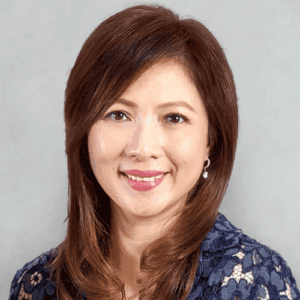
Moderator
Plato Yip
Chairperson and Advisor
Friends of the Earth (HK), ESG Development Association
Plato Yip
Friends of the Earth (HK), ESG Development Association
Chairperson and Advisor
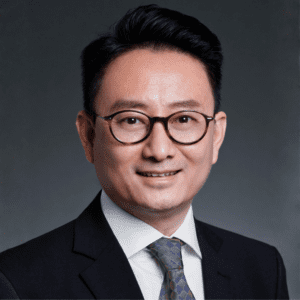
Mr. Plato Yip is an investment professional with over 20 years of experience in private equity, mergers and acquisitions, and strategic planning across the Asia-Pacific, MENA, and ASEAN regions. Specializing in green finance, fintech, renewable energy, and environmental technology, he leverages cross-border networks and innovative structuring to drive energy transition and sustainable development.
He has held senior roles at a U.S. private equity firm, global corporations, and entrepreneurial ventures, leading fundraising, private equity transactions, and complex M&A in renewable energy and environmental projects. Recognized for strategic vision and operational expertise, he crafts financing solutions that align policy, technology, and capital to deliver sustainable value.
Current Public Services:
- Policy Research Committee Member, Financial Services Development Council, HKSAR
- Middle East Advisory Group Member, Financial Services Development Council, HKSAR
- Investment Committee Member, HKSAR Government Scholarship Fund
- Investment Committee Member, HKSAR Government Self-financing Post-secondary Education Fund
- Member, HKSAR Government Advisory Committee on Built Heritage Conservation
- Member, HKSAR Government Sir David Trench Fund for Recreation Investment Advisory Committee
- Chairman of the Board of Governors, Friends of the Earth (Hong Kong)
- Chairman of Green Finance, Greater Bay Area Economic and Trade Association
- Inaugurate Catto Fellow, The Aspen Institute cum Member of the Global Leadership Network
- Advisor, AWF (African Wildlife Foundation)
Previously:
- Member, Quality Education Fund Investment Committee of HKSAR
- Member, Environment and Conservation Fund Investment Committee of HKSAR
- Member, Small and Medium Enterprises Committee (SMEC) of HKSAR
- Member, Advisory Council on the Environment of the HKSAR Government
- Member, Education and Publicity Sub-committee, Council for Sustainable Development of HKSAR
- Member, Advisory Committee of the Sustainable Fisheries Development Fund of HKSAR
- Specialist Advisor, Hong Kong 2030 Planning Vision and Strategy of HKSAR
- Founding Director, Centre for Environmental Management Education and Development of
- The Hong Kong Polytechnic University
Speaking at 2026 sessions:
Day 2
Scaling ASEAN Renewables through Integrated Climate Finance & Value Chain Partnerships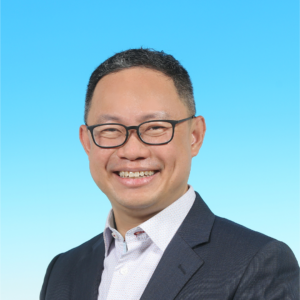
Dr. Laurence Delina
Associate Professor
Division of Environment and Sustainability, Academy of Interdisciplinary Studies, The Hong Kong University of Science and Technology
Dr. Laurence Delina
Division of Environment and Sustainability, Academy of Interdisciplinary Studies, The Hong Kong University of Science and Technology
Associate Professor
Laurence Delina is an Associate Professor of Environment and Sustainability at the Hong Kong University of Science and Technology. His work focuses on climate finance, resilience, and just energy transitions, with a particular emphasis on Southeast Asia and the role of financial centres in mobilising capital for sustainable development. He has authored over 100 peer‑reviewed publications and four books. Laurence has held fellowships including a Visiting Fellowship at Harvard Kennedy School and was previously a Rachel Carson Fellow. He received his PhD from the University of New South Wales Sydney.
My Sustainability Goals for 2026:
Laurence’s sustainability goals for 2026 are anchored in advancing transformative solutions for climate action across Asia. He aims to catalyse the flow of capital into resilient and low‑carbon infrastructure, particularly in vulnerable communities, while elevating Hong Kong’s role as a hub for sustainable finance. Through deeper collaboration with policymakers, industry, and civil society, he seeks to turn cutting‑edge research into scalable, real‑world impact that accelerates a more just and enduring energy transition.
Speaking at 2026 sessions:
Day 2
Scaling ASEAN Renewables through Integrated Climate Finance & Value Chain Partnerships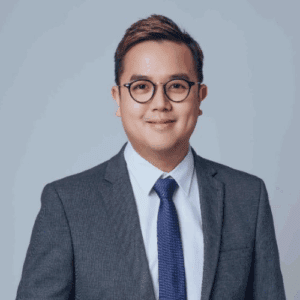
Bien Wong
Assistant General Manager – Group ESG
The Hong Kong and China Gas Company Limited (Towngas)
Bien Wong
The Hong Kong and China Gas Company Limited (Towngas)
Assistant General Manager – Group ESG
Bien Wong is a dedicated professional with extensive experience in sustainability strategy development, corporate communications, and investor relations. As the department head of Group ESG, he oversees the integration of sustainability concepts into business strategies, ensuring compliance with stringent international sustainability standards. He has a proven track record at global firms and companies listed on The Stock Exchange of Hong Kong, specializing in corporate compliance and the disclosure of environmental, social, and governance (ESG) policies.
He holds a master’s degree from The University of Hong Kong and a bachelor’s degree from the University of York in the United Kingdom. Bien is recognized as one of the first EFFAS scholars in the Asia Pacific region to complete the Certified ESG Analyst (CESGA) program and has been invited by EFFAS to serve as one of the few examiners for this prestigious program in the region.
In addition to his professional responsibilities, Bien is actively engaged in public service, focusing on sustainable finance, social impact investment, and corporate governance. He serves on multiple advisory committees for the HKSAR Government, including the Environmental Campaign Committee Publicity Working Group and the Housing Appeal Panel. Furthermore, he is a Board Governor for Friends of the Earth Hong Kong, where he advocates for sustainable practices and environmental stewardship.
Speaking at 2026 sessions:
Day 2
Scaling ASEAN Renewables through Integrated Climate Finance & Value Chain Partnerships
Vina Cheung
Global Head of RMB Internationalisation Global Payments Solutions, Asia-Pacific
Vina Cheung
HSBC
Global Head of RMB Internationalisation Global Payments Solutions, Asia-Pacific
Vina Cheung is responsible for global RMB business development and connecting international business to opportunities arising from China internationalisation and One Belt One Road Initiative.
She is the subject matter expert on the latest development for both corporates and institutions, in the changing landscape of global treasury and cash management involving RMB, China and China’s integration with the global financial systems in the new era. In 2021 & 2014, Vina was the Chairperson for RMB Service Committee at Hong Kong Association of Banks.
She has been with HSBC Global Payments Solutions team for over twenty years and worked in various roles spanning from sales to product management in Singapore and Hong Kong. She was with Bank of New York Mellon specialised in liquidity and investment management supporting a wide range of business and clientele in Global Corporate Trust, Asset Servicing, and Broker-Dealer Service in the Asia-Pacific region. Her cash management profession was first started in Vancouver working in Royal Bank of Canada.
Vina holds a bachelor degree in Business Administration from Simon Fraser University, Canada; a diploma in International Trade from British Columbia Institute of Technology, Canada; and a certificate in International Cash Management from the Association of Corporate Treasurers.
My Sustainability Goals for 2026:
- HSBC’s overarching sustainability ambition is to become a net zero bank by 2050. To drive this, our Net Zero Transition Plan aims to mobilize US$750bn-US$1tn in sustainable finance and investment by 2030. As at mid-2025, progress stands at US$447.7bn mobilized since 2020 (Net Zero Transition Plan 2026 is not out yet).
Speaking at 2026 sessions:
Day 2
Scaling ASEAN Renewables through Integrated Climate Finance & Value Chain PartnershipsSupported by
Friends of the Earth (HK)
Friends of the Earth (HK) (“FoE (HK)”) is a leading environmental advocate that actively engages with the government, businesses, and the community to foster equitable and sustainable policymaking, business practices, and community lifestyles in protection of the local and regional environment.
Our sustainability goals for 2026:
We are dedicated to promoting green finance and cultivating ESG talents. By partnering closely with government and research institutes, professional bodies, SME associations, and international organisations, we strive to build a sustainable society and environment for all.
Products, Services and Solutions:
- Charity/NGO
- Education/Training/Certification
- Green Finance & Investments
- Sustainability Services
General Enquiry Email Address: foehk@foe.org.hk
General Enquiry Phone Number: 2528 5588