Energy Theatre
Investing in Asia’s Fossil‑Fuel‑to‑Renewables Transition: Capital, Competitiveness and a Just Energy Shift
11 Sep (Fri) Day 2 : 12:25 – 13:15
As the world shifts towards net zero, Asia’s energy transition remains one of the most complex landscapes to navigate. The region’s energy mix is still heavily reliant on fossil fuels, while rising demand from industrial growth and AI boom, combined with geopolitically driven energy price volatility and emerging cross‑border emission‑reduction measures, intensifies the challenge of balancing decarbonisation with economic resilience. At the same time, dense populations and concentrated industrial clusters put pressure on how to manage the social and economic impacts on workers and local communities and ensure a genuinely just energy transition.
This session examines how investors are navigating these tensions in practice. It will address the on‑the‑ground realities of reducing fossil‑fuel dependence, closing the capital gap for scaling up renewable energy and enabling infrastructure, and aligning these priorities with industrial competitiveness and just transition considerations. Panellists will explore how investors can support this transition through stewardship, strategic asset allocation, de‑risking instruments and more explicit expectations of companies and policymakers.
Session Learnings:
- Learn how the evolving global energy, industrial and climate policy landscape in Asia is reshaping investors’ expectations on fossil‑fuel‑to‑renewables portfolios.
- Identify how investments help accelerate Asia’s transition from fossil fuel dependency to a clean energy-driven model
- Understand how investor stewardship could help shift capital towards unlocking opportunities in the energy transition.
Post-Event Actions:
- Identify investment and stewardship opportunities to deepen engagement efforts on just and economic-resilient energy transition
- Strengthen capital alignment mindset as part of an integrated business strategy that considers energy transition
- Develop a clear, time‑bound fossil‑fuel‑to‑renewables transition roadmap
Speakers
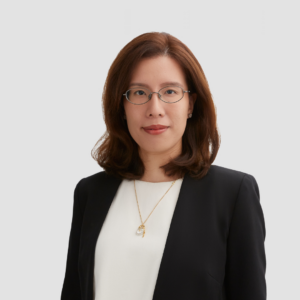
Moderator
Valerie Kwan
Director – Stewardship and Corporate Engagement
Asia Investor Group on Climate Change
Valerie Kwan
Asia Investor Group on Climate Change
Director – Stewardship and Corporate Engagement
Valerie is the director overseeing Climate Action 100+, an investor-led initiative to ensure the world’s largest corporate greenhouse gas emitters take necessary action on climate change. She co-leads the Asia workstream from within Climate Action 100+, and oversees the team’s co-ordination of corporate engagement activities for Asian focus companies. This includes convening sector roundtables to support corporate transition to net zero. Valerie is part of the strategic projects working group and convenes Asia Advisory Group discussions to build investor capacity on stewardship. Outside of CA100+, she is also involved in capacity building for investors in strengthening corporate engagement outcomes through considering various tools and approaches of engagement.
Prior to joining AIGCC, she worked for two sustainability advisory firms and advised clients’ sustainability and risk management strategies. She also conducted environmental and social due diligence for private equity clients. Her career started in public affairs with a Hong Kong-based consultancy. Valerie holds a MSSc in Business and Community from the University of Bath in the United Kingdom.
My Sustainability Goals for 2024:
It would be great to see Hong Kong introduce medium term goals in renewable energy development to meet its net zero goals, and better response with stronger resilience and readiness for physical risks.
Speaking at 2026 sessions:
Day 2
Investing in Asia’s Fossil‑Fuel‑to‑Renewables Transition: Capital, Competitiveness and a Just Energy Shift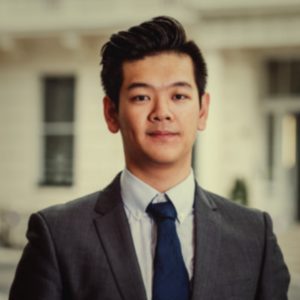
Yi Jin Guo
Sustainable Investment Analyst
Manulife Investment Management
Yi Jin Guo
Manulife Investment Management
Sustainable Investment Analyst
Based in Hong Kong, Yi Jin supports the Asia based investment teams with ESG integration research and process, company engagement, and thematic research.
Prior to joining Manulife Investment Management, Yi Jin works as an ESG Analyst at Legal & General Investment Management (LGIM) in London, focusing on Private Debt, Infrastructure and Real Estate ESG research.
Yi Jin graduated from Imperial College London with MSc Climate Change, Management & Finance degree
Speaking at 2026 sessions:
Day 2
Investing in Asia’s Fossil‑Fuel‑to‑Renewables Transition: Capital, Competitiveness and a Just Energy Shift
Jane Ho
Head of Stewardship Asia Pacific
BNP Paribas Asset Management
Jane Ho
BNP Paribas Asset Management
Head of Stewardship Asia Pacific
Jane is the Head of Stewardship, APAC at BNP Paribas Asset Management and leads the firm’s stewardship activities in the region. This includes direct corporate engagement, proxy voting and working with policymakers on key issues relating to sustainable finance and investment. She represents BNPP AM in key investor networks, including as a member of Climate Action 100+’s global Steering Committee, co-chairing the Asia Investor Group on Climate Change’s (AIGCC) Engagement & Policy Working group, and as a member of Asia Securities Industry & Financial Markets Association (ASIFMA)’s ESG Committee.
She joined from the Asia Investor Group on Climate Change (AIGCC), where she was the Director of Investor Practice. During her time at AIGCC, she spearheaded and led global initiatives where AIGCC is a network partner, and she launched AIGCC’s Asia Utilities Engagement Program, a collaborative engagement program that runs in parallel to Climate Action 100+. Prior to AIGCC, Jane was an equities portfolio manager at JPMorgan Asset Management for more than ten years.
Jane was also recognised as the Sustainability Champion of the year for Asian Investor’s Asset Management Awards 2026 for her leadership in advancing high impact stewardship and systemic sustainability outcomes across Asia Pacific.
Jane holds a B.A. in Philosophy, Politics and Economics from the University of Oxford, St. John’s College; and an MSc. in Sociology from the London School of Economics and Political Science.
Jane is based in Singapore.
My Sustainability Goals for 2026:
- A city wide adaptation plan for HK
- An updated fit for purpose HK Climate Action Plan
Speaking at 2026 sessions:
Day 2
Investing in Asia’s Fossil‑Fuel‑to‑Renewables Transition: Capital, Competitiveness and a Just Energy Shift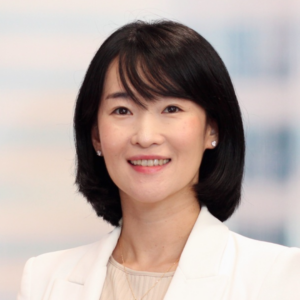
Tomomi Shimada
Head of Investment Stewardship (Asia Pacific ex-Japan); Executive Director
JPMorgan Asset Management
Tomomi Shimada
JPMorgan Asset Management
Head of Investment Stewardship (Asia Pacific ex-Japan); Executive Director
Tomomi Shimada, Executive Director, is the Head of Investment Stewardship for Asia Pacific ex-Japan, based in Hong Kong. She is responsible for engaging with corporate board directors and management on key investment material issues, including climate risk, human capital management, and corporate governance across the Asia Pacific ex-Japan region. Tomomi also advises analysts and portfolio managers on the sustainability and governance practices of portfolio companies and coordinates proxy voting activities. An employee since 2010, she previously served as the Head of Sustainable Investment Specialists for Asia Pacific, where she was responsible for client engagement and the implementation of the firm’s sustainable investment strategy, solutions, and product innovation. Before relocating to Asia in 2021, she was a Sustainable Investing Specialist for EMEA, based in London. Tomomi has also worked as an Investment Stewardship Specialist covering European and Japanese companies in both London and Tokyo. Tomomi began her career as a Client Adviser at JPMorgan Asset Management’s Tokyo office, covering securities companies and major retail banks. She later moved to London as a Business Liaison Manager, managing Japanese institutional and funds clients. Tomomi holds a B.A. in Law from Keio University, Japan.
Speaking at 2026 sessions:
Day 2
Investing in Asia’s Fossil‑Fuel‑to‑Renewables Transition: Capital, Competitiveness and a Just Energy Shift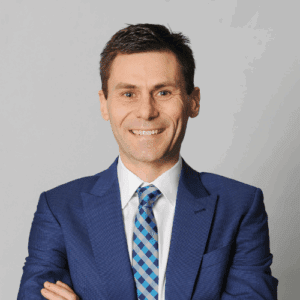
Piers Touzel
Head of ESG Advisory, Partner
ERM-Hong Kong Limited

Piers Touzel
ERM-Hong Kong Limited
Head of ESG Advisory, Partner
Piers is the head of ESG advisory services in Greater China and has over 25 years of ESG advisory experience. He has advised multinational investors on ESG risk management in relation to their investments in China, and Hong Kong-listed Chinese companies on ESG services of capital market transactions. He has served virtually all industry sectors, the major project experience includes climate risk assessments (TCFD) for various assets, ESG disclosure for listed companies etc.
Piers has advised multinational investors on managing ESG risks associated with inbound investments into Asia and listed corporates on the ESG aspects of capital market transactions, outbound M&A and investor relations. He has worked with the safeguard policies of major financial institutions including the World Bank/IFC, AIIB, ADB, EBRD, ECAs and Equator Principles Financial Institutions. He has acted as Lenders’ IESC on close to 100transactions across various industry sectors.
Speaking at 2026 sessions:
Day 2
Investing in Asia’s Fossil‑Fuel‑to‑Renewables Transition: Capital, Competitiveness and a Just Energy ShiftSupported by
Asia Investor Group on Climate Change (AIGCC)
AIGCC is the leading network of investors in Asia focussing on risks and opportunities in climate and nature – which are key to investors’ fiduciary duty. Our 80+ members have a combined AUM of more than US$30 trillion and have headquarters in 11 markets across the region. We are a not-for-profit, and our work across finance, business and policy making is underpinned by science, economics, and a deep knowledge of Asian markets and dynamics.
Our sustainability goals for 2026:
- Strengthen our role in mobilising institutional investors to fulfil their fiduciary duties on climate, so more capital is directed toward climate- and nature-positive outcomes.
- Deepen corporate engagement to encourage companies to adopt science-based, net-zero-aligned strategies and stronger climate and nature disclosure.
- Advance policy engagement to influence regulators and policymakers toward policy frameworks that support climate-resilient, nature-positive economies and sustainable returns.
General Enquiry Email Address: info@aigcc.net
With thanks to
ERM-Hong Kong Limited
Booth G30
Sustainability is our business.
As the world’s largest sustainability consultancy, ERM partners with clients to operationalize sustainability at pace and scale, deploying a unique combination of strategic transformation and technical delivery capabilities. This approach helps clients to accelerate the integration of sustainability at every level of their business.
With more than 50 years of experience, ERM’s diverse team of 8000+ experts in 40 countries and territories helps clients create innovative solutions to their sustainability challenges, unlocking commercial opportunities that meet the needs of today while preserving opportunity for future generations.
Our sustainability goals for 2026:
- Advance climate action and decarbonization by delivering on ERM’s science-based net-zero commitments and helping accelerate the global transition to a low-carbon economy.
- Maximize positive impact across Climate, Nature & Water, and social priorities, supporting the UN Sustainable Development Goals (SDGs) through both client work and ERM’s own operations.
- Embed sustainability into business operations and governance, ensuring ethics, compliance, human rights, responsible supply chains, and accountability remain at the core of how ERM operates.
- Reduce ERM’s environmental footprint through ongoing efforts to lower carbon emissions, improve resource efficiency, and implement sustainability initiatives across its global operations.
- Drive meaningful change through collaboration and innovation, partnering with clients, employees, industry organizations, and communities to scale sustainable solutions and deliver measurable environmental and social outcomes.
Legal Name: ERM-Hong Kong Limited
General Enquiry Email Address: parishrut.tripathi@erm.com
General Enquiry Phone Number: 22713000
Meet our 2026 speakers:

Yulia Dobrolyubova
Partner & Regional Service Leader, Corporate Sustainability & Climate Change
ERM-Hong Kong Limited
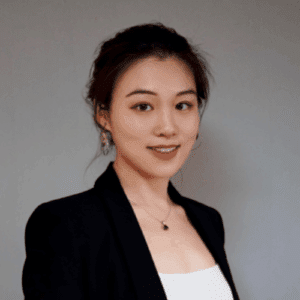
Summer Chen
Associate Partner, Corporate Sustainability & Climate Change.
ERM-Hong Kong Limited
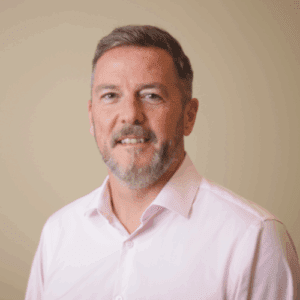
Dr. Robin Kennish
Business Unit Managing Partner, East Asia
ERM-Hong Kong Limited
Piers Touzel
Head of ESG Advisory, Partner
ERM-Hong Kong Limited