ReThink Forum
From Mission to Policy to Action: Aligning Hong Kong’s First Five-Year Plan with National Goals
11 Sep (Fri) Day 2 : 11:30 – 12:10
With the national 15th Five-Year Plan setting direction on energy transition, carbon reduction, and industrial transformation, and Hong Kong preparing its first Five-Year Plan, the key question is how ambition translates into delivery. This session explores how Hong Kong can align with national priorities while leveraging its strengths as an international financial, trade, maritime and aviation hub and to mobilise capital, support transition investments, and accelerate implementation across the Greater Bay Area and beyond.
Session Learnings:
How national priorities can inform Hong Kong’s emerging Five-Year Plan in practical, actionable ways
Post-Event Actions:
- Where Hong Kong can play a distinctive role in supporting national transition goals
- How public and private sectors can better align to enable implementation
- Identify the conditions needed to mobilise capital at scale
Speakers
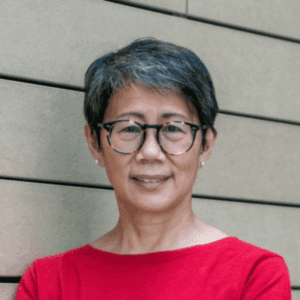
Moderator
Prof. Christine Loh
Chief Development Strategist, Institute for the Environment
Division of Environment and Sustainability, HKUST
Prof. Christine Loh
Division of Environment and Sustainability, HKUST
Chief Development Strategist, Institute for the Environment
Professor Christine Loh is Chief Development Strategist at the Institute for the Environment, Hong Kong University of Science and Technology. She is a leading voice on public policy, climate governance and sustainable development in Hong Kong, with experience spanning government, the legislature, think tanks, business and academia. Loh was Under Secretary for the Environment in the HKSAR Government from 2012 to 2017, where she worked on air quality, climate change, energy, nature conservation and stakeholder engagement. She also served as Special Consultant to the Chief Executive’s Office on ecological civilization and the Greater Bay Area from 2019 to 2020. Earlier in her career, she was a Member of the Hong Kong Legislative Council. At HKUST, Professor Loh focuses on climate policy, sustainability transitions, green finance, governance and regional cooperation. She is also a published author and frequent commentator on environmental policy, climate risk, China and Hong Kong affairs. She currently serves on the board of Towngas Smart Energy, and is Scholar in Residence at Asia Society Hong Kong from 2023 to 2026.
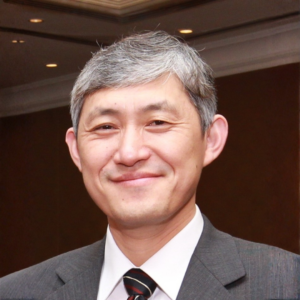
Prof. Kejun Jiang
Professor
The Hong Kong University of Science and Technology (Guangzhou)
Prof. Kejun Jiang
The Hong Kong University of Science and Technology (Guangzhou)
Professor
Professor, Head, Carbon Neutrality and Climate Change Thrust, Society Hub, The Hong Kong University of Science and Technology (Guangzhou).
Kejun Jiang’s research focus is energy, climate change mitigation and air pollution prevention policy assessment by using IPAC modeling, to support national five-year plans, and long-term planning. He began his research in ERI from 1990 and led the development of Integrated Policy Assessment Model for China (IPAC). IPAC modeling team is now a leading research team on China’s 2050 energy transition studies by providing benchmark research results. Major research focus includes energy and emission scenarios, energy policy, energy system, energy market analysis, and climate change, local environment policies and international negotiation. He also was authors of IPCC for Special Report on Emission Scenario from 1997, and Working Group III Third Assessment Report, leader author for IPCC WGIII AR4 Chapter 3, and leader author for GEO-4 Chapter 2, CLA in WGIII of IPCC AR5, LA for IPCC AR5 Synthesis Report, CLA of IPCC Special Report on 1.5℃ Warning, Lead Author of IPCC AR6WGIII Chapter 3 and SPM, Vice Co-Chair of GEO6, lead author of GEO7. From 2010, he is author for UNEP Emission Gaps. Now he is lead author of IPCC AR6 WGIII. He also joined international research collaboration projects such as EMF, FP6, FP7 and H2020 research projects. He is member of Scientific Panel of UNEP CCAC, and Scientific Committee of IAMC. He got his PHD in Social Engineering Department of Tokyo Institute of Technology.
My Sustainability Goals for 2026:
- Move more towards CO2 emission reduction
- More electric vehicle fleet
- More renewable energy utilization

Adam Weiss
Chief Programmes and Impact Officer
ClientEarth

Adam Weiss
ClientEarth
Chief Programmes and Impact Officer
As Chief Programmes and Impact Officer, Adam ensures ClientEarth projects deliver the greatest impact and spearheads critical fundraising efforts to align resources with ClientEarth’s goals.
Adam previously managed the legal practice at two NGOs: the European Roma Rights Centre and, before that, the AIRE Centre.
He has litigated before the European Court of Human Rights, UN treaty bodies, and national courts in twenty countries across Europe. Adam is currently on the board of two NGOs: the Platform for International Cooperation on Undocumented Migrants (Belgium) and Focus on Labour Exploitation (UK).
Adam holds an LLM from King’s College (University of London) and a JD from Columbia Law School (New York). He is a member of the New York State bar.
Before studying law, he received a diplôme d’études approfondies (Master of Advanced Study) from the University of Paris-IV (La Sorbonne), specialising in 18th-century French literature. He received his undergraduate degree from Harvard University in history and literature. He speaks English, French, Spanish, Hungarian, and some Dutch.
My Sustainability Goals for 2026:
- Increased recognition of the role of the law in the environmental transition.
- Increased support for lawyers and organisations using the law to combat climate change and protect nature and health.
Supported by
ClientEarth
ClientEarth is a non-profit organisation that uses the law to create systemic change that protects the Earth for – and with – its inhabitants. We are tackling climate change, protecting nature and stopping pollution, with partners and citizens around the globe. In Asia, we work with the private sector, civil society and government regulators to support the net zero transition.
Meet our 2026 speakers:

Division of Environment and Sustainability, HKUST
Established in 2010, ENVR is a global leader in interdisciplinary education & research in environment and sustainability, fostering sustainability professionals to address complex environmental challenges across scientific, societal, regulatory, & business issues. ENVR also serves as an intellectual hub linking academia, government, business & community leaders to advance sustainability solutions.
Our sustainability goals for 2026:
UN SDG goals that we align with:
- SDG 1 No Poverty
- SDG 3 Good Health and Well-being
- SDG 4 Quality Education
- SDG 7 Affordable and Clean Energy
- SDG 8 Decent Work and Economic Growth
- SDG 11 Sustainable Cities and Communities
- SDG 12 Responsible Consumption and Production
- SDG 13 Climate Action
General Enquiry Email Address: envr@ust.hk
General Enquiry Phone Number: 23588363
Meet our 2026 speakers:
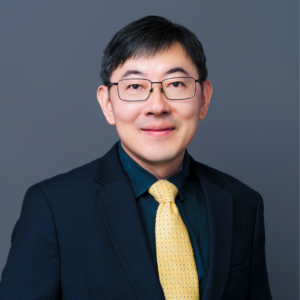
Prof. Dan Wang
Professor
Division of Environment and Sustainability, HKUST

Dr. Jay Joan Minuti
Marine Ecologist & Lecturer
Division of Environment and Sustainability, HKUST
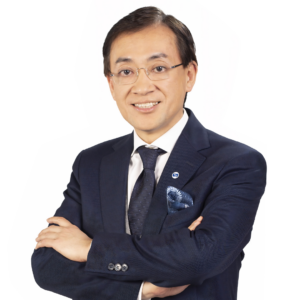
Prof. Chi Ming Shun
Adjunct and Visiting Professor
Division of Environment and Sustainability, HKUST
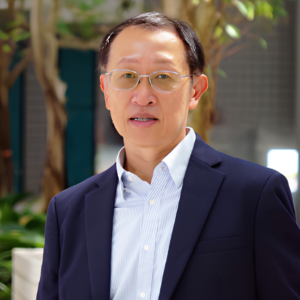
Prof. Fei Chen
Associate Head and Professor
Division of Environment and Sustainability, HKUST
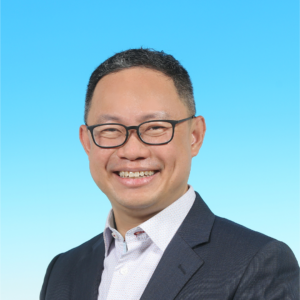
Dr. Laurence Delina
Associate Professor
Division of Environment and Sustainability, HKUST
Prof. Christine Loh
Chief Development Strategist, Institute for the Environment
Division of Environment and Sustainability, HKUST