ReThink Forum
From Targets to Delivery: Can Hong Kong Accelerate Progress Toward its 2035 and 2050 Climate Commitments?
10 Sep (Thur) Day 1 : 11:20 – 12:10
Hong Kong enters a decisive phase of its climate transition as 2026–2030 becomes the period where long-announced targets must translate into demonstrable progress. This session examines how government, utilities, developers, transport operators and financial institutions can accelerate practical decarbonisation across buildings, mobility and energy systems. With interim 2035 milestones approaching, participants will explore the structural barriers slowing implementation, the influence of regional GBA alignment, and the evolving regulatory expectations shaping investment and operational decisions. The discussion focuses on moving from pledges toward coordinated, system-level execution that meaningfully reduces emissions across the real economy.
Session Learnings:
- Understand key enablers for achieving Hong Kong’s 2035 and 2050 climate commitments.
- Identify where implementation gaps persist across buildings, transport and energy systems.
- Explore regional and regulatory drivers influencing transition investment.
Post-Event Actions:
- Conduct internal readiness assessments against 2035 milestones.
- Align decarbonisation workstreams with forthcoming regulatory and reporting changes.
- Initiate cross-departmental planning to integrate transition actions into core operations.
Speakers
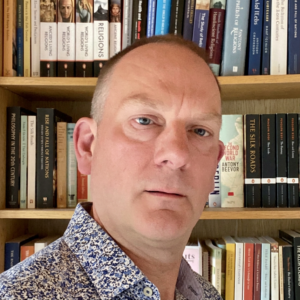
Moderator
Dr. Mark Hinnells
Director
Susenco Consulting
Dr. Mark Hinnells
Susenco Consulting
Director
Dr Mark Hinnells has been working in sustainability for 34 years. He has helped the UK and the European Union introduce a range of policy to reduce carbon emissions, including energy labels and minimum standards for household appliances, since copied worldwide; he helped design a UK carbon tax and audit regime; and has managed major investment programmes in energy efficiency. He has helped large sites like airports target net zero. He has developed and sold solar and wind farms to major investment funds. He has taught business, energy and climate change, at Master’s Degree level, at three universities including Chinese University of Hong Kong. He has drafted a white Paper for Civic Exchange on the Hong Kong Climate Action Plan, in advance of its revision in 2026. He has written a book, ‘How Green is your Pension?’ and runs a podcast called ‘How green is your money?’. He now consults for customers in the UK, the Middle East and across Asia.
My Sustainability Goals for 2026:
- Influence the Hong Kong Climate Action Plan to deliver on Paris
- Enable Hong Kong to be part of an international carbon market
- Work with pension providers to refocus the 65 trillion USD invested in pensions globally towards Paris compliance
Speaking at 2026 sessions:
Day 1
From Targets to Delivery: Can Hong Kong Accelerate Progress Toward its 2035 and 2050 Climate Commitments?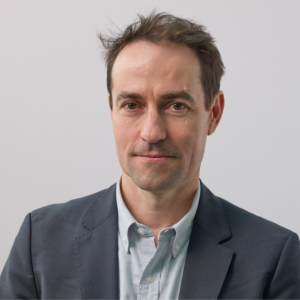
Nate Aden
Head of Asia; Head of Financial Standards
Science Based Targets initiative (SBTi)
Nate Aden
Science Based Targets initiative (SBTi)
Head of Asia; Head of Financial Standards
Nate Aden is Head of Asia and Head of Financial Institutions at the Science Based Targets initiative (SBTi). As a staff member with the World Resources Institute, Nate co-founded the SBTi in 2015. Over the years, he has contributed to the technical development of the initiative including leading standard development for financial institutions and the chemicals sector development. Nate has over 20 years of experience in industry, energy, trade, and climate across China, the U.S., and Europe, and holds a PhD from UC Berkeley, with degrees from Stanford and Cornell.
My Sustainability Goals for 2026:
- Doubling the number of Hong Kong entities with validated SBTs from the current 90 to 180.
- Linking targets with Hong Kong policies and regulations.
- Defining new business models whereby companies reduce GHG emissions while thriving economically.
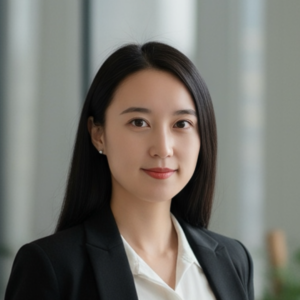
Dr. Peipei Chen
Assistant Professor
City University of Hong Kong
Dr. Peipei Chen
City University of Hong Kong
Assistant Professor
Peipei Chen is an Assistant Professor in the School of Energy and Environment at City University of Hong Kong. She is an interdisciplinary researcher in energy transition policy whose work focuses on low-carbon technology deployment, industrial decarbonisation pathways and the social impacts of energy transitions. She evaluates the feasibility and adoption potential of key low-carbon technologies and develops decarbonisation strategies for hard-to-abate industries, supported by integrated assessments of technology evolution and capacity-expansion pathways. She has published in journals such Nature Energy, Nature Climate Change and Nature Communications, with several of her findings cited in United Nations reports.
Speaking at 2026 sessions:
Day 1
From Targets to Delivery: Can Hong Kong Accelerate Progress Toward its 2035 and 2050 Climate Commitments?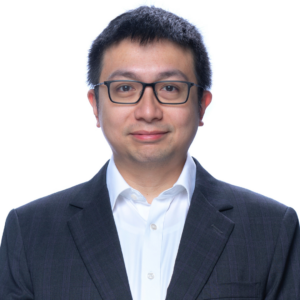
Ken Chiu
Head of Carbon and ESG Products, Sustainability Division
Hong Kong Exchanges and Clearing Limited (HKEX)
Ken Chiu
Hong Kong Exchanges and Clearing Limited (HKEX)
Head of Carbon and ESG Products, Sustainability Division
Ken Chiu has served as Head of Carbon & ESG Products at Hong Kong Exchanges and Clearing Limited (HKEX) since 2022, where he is responsible for driving the growth of HKEX’s Carbon & ESG business. He has led the development and launch of HKEX’s environmental marketplace, helping to expand sustainable finance and carbon market opportunities in the region.
Ken joined HKEX in 2018. Prior to his current role, he served as Senior Vice President, Fixed Income and Currency (FIC) Development, where he was responsible for HKEX’s FIC derivatives and bond listing businesses.
Ken holds a Master of Science in Mathematics for Finance and Actuarial Science from Université Paris-Dauphine and a Bachelor of Business Administration in Finance from the Hong Kong University of Science and Technology.
Speaking at 2026 sessions:
Day 1
From Targets to Delivery: Can Hong Kong Accelerate Progress Toward its 2035 and 2050 Climate Commitments?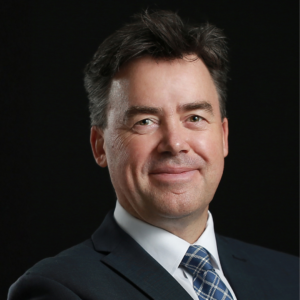
Martin Murray
Finance Director
Swire Pacific

Martin Murray
Swire Pacific
Finance Director
Martin Murray OBE is the Finance Director of Swire Pacific Limited, as well as a Non-Executive Director of Cathay Pacific. He is also the Director responsible for Swire Pacific’s ESG strategy and its Sustainable Development Office.
Martin was previously the Chief Financial Officer of Cathay Pacific. Prior to joining Cathay Pacific in November 2011, he was the Deputy Finance Director of Swire Pacific Limited – a post he took up in August 2009. Martin is also a former Non-Executive Director of Swire Properties.
Formerly with Ernst & Young in Scotland and Hong Kong, he joined the Swire Group in January 1995 and has worked for the Group in the Hong Kong SAR, the USA, Singapore and Australia. His roles have included Manager Treasury, Finance Director Trading Division, Finance Director of the Shipping Division and Finance Director of John Swire & Sons Pty Ltd.
Martin graduated from the University of Glasgow in 1988 with a Bachelor of Accountancy degree. He is a member of the Institute of Chartered Accountants of Scotland and the Hong Kong Institute of Certified Public Accountants, a Council member of the World Business Council for Sustainable Development and an Executive Committee member of The Hong Kong Management Association. He is also the former Director of Finance for Hong Kong China Rugby.
Martin is the Chairman of ISF Cambodia and My Name’5 Doddie Foundation in Hong Kong. He was awarded an OBE in January 2025 for his services to charity.
He was presented with the Climate Leadership Award at the 2025 Finance for the Future Awards. The award recognises his work in connecting sustainability initiatives with tangible business outcomes.
Martin is married with two children.
My Sustainability Goals for 2026:
- Embed sustainability factors into capital allocation, risk management and business planning.
- Strengthen the integration of sustainability and financial reporting.
- Equip leaders and employees with the skills needed for a changing business environment.
- Harness data, technology and AI to improve reporting and decision-making.
- Direct resources towards initiatives that create long-term business value and resilience.
Speaking in 2026 sessions:
Delivering Sustainable Value to Accelerate the Transition: CFO Priorities (Breakfast Roundtable)
Speaking at 2026 sessions:
Day 1
From Targets to Delivery: Can Hong Kong Accelerate Progress Toward its 2035 and 2050 Climate Commitments?With thanks to
Swire Pacific
Swire Pacific is a Hong Kong-listed international conglomerate with a diversified portfolio of market leading businesses. The company has a long history in Greater China, where the name Swire or Taikoo (太古) has been established for over 150 years. Swire has a longstanding commitment to sustainable development. The company invests in sustainable development because it supports the creation of long-term shareholder value.
The Swire Pacific SD 2050 sustainable development strategy provides a group-level framework that facilitates collaboration among our operating companies with a view to achieving common goals. It covers four priority areas: Climate, Nature, People and Communities.
Read more: https://www.swirepacific.com/en/sd/sd_overview.php
Our sustainability commitments under SD 2050:
(1) Climate
- 50% reduction in scope 1 and 2 emissions by 2030 from a 2018 baseline, and Net Zero Carbon by 2050;
(2) Nature
- 65% waste diversion from landfill by 2030 (non-hazardous waste), and Zero Waste to Landfill by 2050;
- 30% reduction in water withdrawal by 2030 from a 2018 frozen efficiency baseline, and Water Neutrality by 2050;
(3) People
- 30% female representation on our Board on average over any 3-year cycle;
- Zero harm
(4) Communities
- Create positive impact and build stronger communities
Legal Name: Swire Pacific Limited
General Enquiry Email Address: sd@swirepacific.com
General Enquiry Phone Number: 2840 0888