Impact Stage
Impact Safari: Brand New Approach to Impact Ecology
11 Sep (Fri) Day 2 : 12:25 – 13:15
Impact Safari reimagines how innovators collaborate by replacing siloed sectors with a living ecosystem of innovation partnerships. Taking references from Hong Kong’s emerging Northern Metropolis, we see the catalytic power of innovation partnerships with diverse actors (including but not limited to intermediaries, community organisations, ventures, academia, and the government) coming together to tackle real neighbourhood challenges. This panel will bring us to an open sharing of impact journeys grounded in the neighbourhood that unlocks new business value. Whether you are a corporate looking to diversify your impact strategy or a startup seeking meaningful go-to-market pathways, this panel maps a replicable blueprint for building impact ecology across the Asia Pacific region.
Session Learnings:
- Understand how an innovation ecosystem that embodies cross-sector collaboration between corporates, startups, NGOs and government bodies can address shared community challenges and opportunities
- Learn how regional and local innovators interact to spark knowledge exchange and scalable solutions
- See how anchoring innovation in a specific place (e.g. Northern Metropolis) creates focus, cross-sectoral synergy and unlock new urban development momentum
Post-Event Actions:
- Map your organisation’s existing partnerships across sectors (corporate, NGO, government, academia, startup) and identify where siloed relationships could be rewired into an interconnected innovation ecosystem
- Connect with local and regional peers with shared thematic interest to explore impact synergies
- Evaluate how your organisation support internal and external innovation efforts
Speakers
Moderator
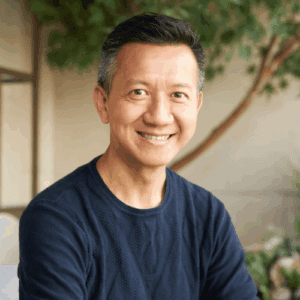
Francis Ngai
Founder and CEO
Social Ventures Hong Kong
Francis Ngai
Social Ventures Hong Kong
Founder and CEO
Francis Ngai is the Founder and CEO of Social Ventures Hong Kong. Since 2007, he’s been dedicated to impact design for the future urban city. His social innovation portfolio includes Hong Kong’s first venture philanthropy fund, Community Resilience Fund, Green Monday, Bottless, RunOurCity, LightBe affordable housing, Playtao Education, HATCH women empowerment initiative, COMM-ON co-caring space, Institute of Community Making, and COMSMOS impact consultancy, among others. Through impact strategy consulting and building collective platforms for corporates, family foundations, and government departments—including Airport Authority HK, Urban Renewal Authority HK, Swire Trust, Rosewood Hotel, Cathay Pacific, Standard Chartered, HK Management Association and Energizing Kowloon East Office—SVhk is committed to creating integrated impact solutions across all sectors in the city.
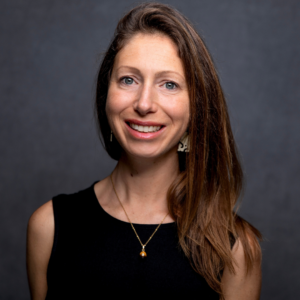
Anna Iles
Managing Director
Flux Compass

Anna Iles
Flux Compass
Managing Director
Anna Iles is a strategic foresight practitioner and organisational transformation specialist who designs trauma‑aware, participatory processes to help organisations, youth platforms and communities navigate disruption and complexity with confidence. As Founder-Director of Flux Compass, she has led major transition and impact strategies with partners such as UNICEF Iraq, UNDP City Experiment Fund, World YMCA and the Global Green Growth Institute. She previously led foresight teams at BSR and Forum for the Future, facilitating multistakeholder dialogues for cross-sector collaborations in sectors ranging from food and retail to shipping and financial services, crystallising visions for holistic systems change. Anna is the author of The Innovation‑Friendly Organization (Palgrave Macmillan, 2017), among other works on thriving in uncertainty, and a Professional Certified Coach (PCC, ICF). She holds a first‑class BA from Oxford and an MA in Gender Studies (Distinction) from SOAS, complemented by advanced training in conflict sensitivity, community‑based dialogue, positive peace and decolonial perspectives.
My Sustainability Goals for 2026:
- Goal 1: Community-led sustainability decisions
I hope to see sustainability and resilience decisions in Hong Kong shaped by communities themselves, with residents, NGOs and local actors co‑designing plans for mobility, housing, public spaces and climate adaptation. Through my facilitation work with neighbourhoods and civil society, I contribute by designing trauma‑aware, participatory dialogues and futures workshops that surface lived experience and local knowledge as a foundation for policy and planning.
- Goal 2: Youth shaping just and regenerative futures
I hope to see young people recognised as key architects of Hong Kong’s sustainability transition, actively shaping strategies on climate justice, wellbeing and inclusive economic change. By building foresight capacity with university partners such as HKU and HKBU, and collaborating with youth platforms, I help equip young leaders with futures tools, narrative skills and intergenerational dialogue spaces that enable them to contribute with confidence and creativity.
- Goal 3: Long-term, systemic thinking across sectors
I hope to see long‑term, systemic thinking embedded in decisions across business, government and civil society, with multi‑decade pathways guiding climate action, social cohesion and economic resilience. Through my strategic foresight practice with organisations and alliances, I support this shift by co‑creating scenarios, vision roadmaps and governance frameworks that help stakeholders move beyond short‑term metrics toward holistic impact ecologies for Hong Kong and the wider region.
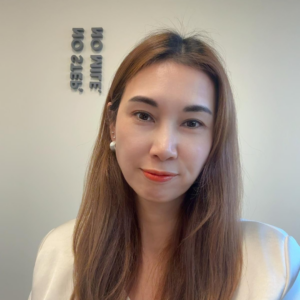
Sam Lam
Interim Director
Jockey Club Design Institute for Social Innovation (J.C.DISI), The Hong Kong Polytechnic University
Sam Lam
Jockey Club Design Institute for Social Innovation (J.C.DISI), The Hong Kong Polytechnic University
Interim Director
Sam, currently Interim Director of Jockey Club Design Institute for Social Innovation at The Hong Kong Polytechnic University, specialises in strategic systems design thinking and innovation, shared value creation, public-private partnerships, branding and business development for public and non-profit organisations. Her career spans media, public affairs, investment, marketing, Art Tech, cultural tourism planning, social innovation, and design. She previously served as Business Development and Project Director at Hong Kong Design Centre and as a news reporter at Asia Television.
As an advisor in design thinking for multiple government innovation projects, she is committed to advancing community well‑being, cultural conservation, public space, placemaking, and creative tourism. Her collaborations include Housing Bureau, Sustainable Lantau Office, Architectural Services Department, Cultural and Creative Industries Development Agency, Tourism Commission and more.
My Sustainability Goals for 2026:
- Data-Driven Governance — Embedding Community-Level Evidence into Urban Planning and Policy Decision-Making
- Nature Base and Culture -Informed Urban-rural Integration — Integrating Cultural and Nature DNA and Community Ownership into the Northern Metropolis Development Framework
- Regenerative Economy as a Sustainability Pillar
Speaking at 2026 sessions:
Day 1
Capital with Purpose Initiative — Scaling Innovation, Transforming Systems & Advancing Inclusive GrowthDay 2
Impact Safari: Brand New Approach to Impact Ecology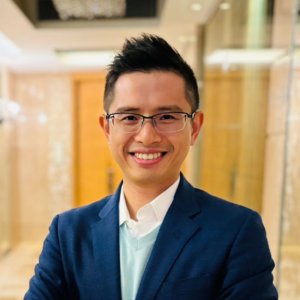
Bosco Leung
Social Responsibility Lead
MTR Corporation
Bosco Leung
MTR Corporation
Social Responsibility Lead
Bosco Leung is the Social Responsibility Lead at MTR Corporation, bringing over 18 years of cross-regional leadership spanning Hong Kong, Mainland China, and the UK.
He began his career as a Management Trainee at MTR and distinguished himself by driving digital transformation and mobility innovations, including spearheading the award-winning MTR Mobile app suite, which earned over 20 regional and local ICT and accessibility accolades.
Building on a multifaceted background in corporate strategy, innovation, and venture ecosystems, Bosco joined MTR’s ESG team in 2022. He has been instrumental in shaping the Corporation’s social responsibility framework and leading transformative initiatives that integrate long-term business resilience with measurable community impact.
Key programmes under his stewardship include Social Inclusion Week, the EmpowerZ Youth Placement Pilot Scheme for diverse talents, Train for Life’s Journeys 2.0 featuring the Social Innovation Challenge, the ESG Project Allies Programme in partnership with NGOs and social enterprises, and the cross-sector Inter-Company Volunteer Week. He also established MTR’s internal Gender Equity Network to foster an inclusive workplace culture, and oversees the Internal ESG Fund, which has catalysed over 30 high-impact projects over the past three years.
Beyond his corporate capacity, Bosco contributes to the broader impact ecosystem as a guest lecturer at HKU and CUHK, a mentor for social innovation and youth development initiatives, and a seasoned adjudicator for prestigious platform including the Hong Kong ICT Awards and HKSEC. His unique synthesis of digital innovation, strategic management, and ESG leadership enables him to deliver a forward-looking perspective on shared value creation and sustainable corporate excellence
My Sustainability Goals for 2026:
Mainstreaming Shared Value Creation (Business Impact = Social Impact):
Moving beyond traditional CSR and philanthropy toward sustainable business models where social returns and commercial success are mutually reinforcing—proving that community investment is a core driver of business resilience.
Calyzing Multi-Stakeholder & Cross-Sector Co-Creation
Fostering deeper, active collaboration across corporations, social enterprises, NGOs, and academia to pool expertise, unlock non-traditional resources, and build scalable, systemic solutions for complex urban and social challenges.
Institutionalizing Inclusive & Empowering Pathways for Talent:
Establishing structured, scalable workplace frameworks across the city that broaden access for underrepresented groups, neurodiverse individuals, and young talents—embedding diversity, equity, and inclusion directly into corporate growth strategies.
Jeff Rotmeyer
Founder and CEO
ImpactHK Limited
Jeff Rotmeyer
ImpactHK Limited
Founder and CEO
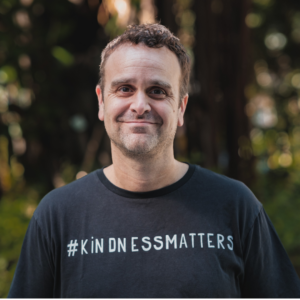
Jeff Rotmeyer is originally from Vancouver Canada and has spent his last 20 years in Hong Kong. He founded two different charities on the same day.
He started the charity ImpactHK which supports individuals experiencing homelessness with a fully holistic approach that has helped over 800 individuals off the streets into shelter and have distributed over 1 million meals to the community.
Jeff is also the Founder and CEO of Love 21 Foundation, a charity supporting the Down syndrome and autistic community with sport, nutrition and holistic family care programmes.
Love 21 supports more than 700 families with a holistic programme that strives to give the neurodiverse community the best opportunity to reach their full potential.
Jeff is dedicated to living a meaningful life through social work and is passionate about making positive impact for those in need.
My Sustainability Goals for 2026:
As a charity that prioritise caring for those experiencing homelessness, we also have a responsibility to make sure that we are not leaving too big of an environmental footprint. This is why we always try to our best to reuse, recycle and repurpose whenever possible.
The only way you can end homelessness is through greater community care. We want to live in a city where we care for our neighbours and for their well-being, which is very linked with care for our environment and nature.
Our charity want to make sure that we do the right thing with our decision-making when it comes to environmental protection and responsible purchasing, and also through improved recycling and finding ways to donate good items to other charity partners throughout Hong Kong, instead of carelessly throwing good materials and products into the landfill.
Supported by
Social Ventures Hong Kong
Founded in 2007, Social Ventures Hong Kong (SVhk) is an Impact Purpose Organisation that innovates social change by re-imagining the city. We focus on inventing and incubating pioneering sustainable business solutions to urban challenges, and partners with communities and businesses alike to design and build cross-sector partnerships towards realising our dreams for NewUrban in 2030
General Enquiry Email Address: enquiry@sv-hk.org
General Enquiry Phone Number: 62634152