BEC Climate & Nature Theatre
Transition to Carbon Negative and Nature Positive
10 Sep (Thur) Day 1 : 16:15 – 17:05
Incremental emissions reductions are no longer enough. Leading companies across sectors are now pursuing carbon-negative and nature-positive strategies that require fundamental shifts in how they operate, invest, and compete. This session brings together corporates at the forefront of this transition to share how they are setting credible science-aligned targets, decarbonising operations and value chains, and investing in nature restoration. Panellists will confront the real barriers businesses face, including technology gaps, cost pressures, supply chain complexity, and the challenge of maintaining competitiveness while pursuing ambitious environmental commitments. The discussion will draw on practical case studies to illustrate what is working, what still needs to be solved, and how Hong Kong companies can align transition strategies with the city’s evolving policy direction.
Session Learnings:
- Understand what it means in practice to pursue carbon-negative and nature-positive targets, including the science-based frameworks that underpin credible corporate commitments.
- Learn from real-world case studies how leading Hong Kong and regional companies across property, retail, and environmental services are decarbonising operations, greening supply chains, and investing in nature restoration.
- Identify the most significant barriers to business model transition and explore strategies to overcome them.
- Explore how collaboration across industry peers, value chain partners, and innovation ecosystems can accelerate the transition beyond what any single company can achieve alone.
- Understand how corporate transition strategies can align with Hong Kong’s policy direction, including the Five-Year Plan and the pathway to CAP 2050.
Post-Event Actions:
- Assess your organisation’s current emissions profile and nature impacts to identify the most material areas requiring business model transformation.
- Set or strengthen science-aligned targets for climate and nature, ensuring targets are backed by credible transition plans.
- Develop or refine a transition roadmap with clear milestones, investment requirements, and accountability mechanisms for decarbonising operations and supply chains.
- Explore investment in nature-based solutions, circular economy approaches, and low-carbon technologies relevant to their sector.
- Initiate or deepen engagement with value chain partners and industry peers to drive collective action on shared transition challenges
Speakers

Moderator
Suki Han
Assistant Manager
Business Environment Council
Suki Han
Business Environment Council
Assistant Manager
Suki has 10 years of experience in sustainability consulting, stakeholder engagement, and policy research. Currently at BEC, Suki leads research initiatives related to climate change and energy transition, including BEC’s Climate Change Business Forum, Net-zero Carbon Charter and sectoral energy transition research projects.
Previously, Suki worked with a range of clients across different sectors on sustainability issues in the US and Hong Kong. Her responsibilities included researching international renewable energy policies and developing ESG strategies. She also worked in private equity and venture capital. She has actively participated in international climate change negotiations and policy development, such as COP21.
Suki holds a Bachelor of Science degree from the Georgia Institute of Technology, a Master of Environmental Management degree from Duke University, and an MBA degree from the University of Chicago Booth School of Business
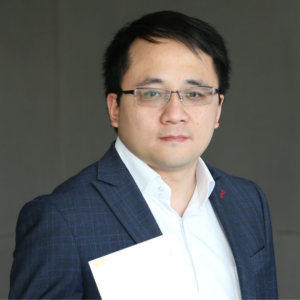
Wilson Huo
Director
JINGDONG Logistics

Wilson Huo
JINGDONG Logistics
Director
Wilson HuoDirector at JINGDONG Logistics, HK & Macao RegionWilson Huo is an accomplished logistics executive with over 15 years of deep industry expertise spanning end-to-end supply chain management, solution design, and large-scale system implementations. Known for his strategic leadership, Wilson currently serves as the Director for the Hong Kong & Macao Region at JINGDONG Logistics. In this role, he spearheads advanced solution design, project execution, and cross-functional system integration to optimize high-density regional logistics corridors.
Prior to joining JINGDONG Logistics in April 2026, Wilson built a highly distinguished, 15-and-a-half-year tenure at Kerry Logistics, one of Asia’s premier logistics providers. Entering the company as a Management Trainee in 2010, his career trajectory reflects a steady, merit-based ascension through critical operational and executive roles:
Executive Leadership (2020 – 2026): He served as General Manager and Deputy General Manager of General Services, directing comprehensive corporate service frameworks and regional logistics networks.
Niche Sector Expertise (2012 – 2019): As Senior Manager and Manager of Logistics Solutions, Wilson mastered specialized warehousing, cold chain dynamics, and customized distribution networks tailored to the demanding Food & Beverage sector.
Operational Foundations (2011 – 2012): He honed his ground-level expertise through various pivotal roles, including Corporate Services Officer and Assistant Officer.
Wilson’s professional footprint is characterized by a unique blend of technical logistics acumen and high-level performance management. He specializes in engineering technology-driven warehousing workflows, aligning complex operations with stringent KPIs, and maximizing regional supply chain efficiency. He holds a degree from Hong Kong Baptist University, combining strong academic foundations with decades of practical, executive-level triumphs in the field.
My Sustainability Goals for 2026:
- Incremental emissions reductions are no longer enough. Representing the logistics and supply chain sector on this panel, Wilson Huo will address how JINGDONG Logistics is moving beyond standard mitigation toward carbon-negative and nature-positive blueprints. He will discuss how regional logistics networks can decarbonize complex value chains and leverage circular economy models to relieve pressure on natural ecosystems, all while overcoming major corporate barriers like technology gaps, cost constraints, and supply chain complexity.
- To provide delegates with practical, real-world case studies that align with Hong Kong’s Climate Action Plan 2050 (CAP 2050).
Wilson highlights JINGDONG Logistics’ concrete sustainability goals and commitments for 2026:
- Science-Aligned Targets (SBTi Framework): In line with the panel’s focus on credible commitments, JINGDONG Logistics actively advances its net-zero pledge under the Science Based Targets initiative (SBTi). We are implementing validated roadmaps to decouple business growth from environmental impact across the region.
- Decarbonizing Value Chains via Full-Scenario Green Packaging (Green Stream Initiative): To foster a nature-positive ecosystem, we are scaling our flagship circular economy initiative by implementing a comprehensive green packaging framework focused on “circularity, reduction, and recyclability.” Through the promotion of original-packaging shipping (direct delivery in original manufacturer packaging), secondary carton recycling and reuse, the large-scale deployment of reusable thermal containers, and the innovative R&D of the “X-Series” eco-cartons, we aim to drastically eliminate the use of single-use packaging. This strategy directly reduces the upstream and downstream plastic and paper footprint across our regional networks, minimizing the impact on natural habitats.
- Optimizing Logistics Infrastructure & Scaling Zero-Emission Transport: Leveraging our advanced digital capabilities, JINGDONG Logistics continuously optimizes its transport structures to build a highly efficient, low-carbon national network. We are steadily increasing the deployment of new-energy vehicles across our operations, while pioneering innovative low-carbon multimodal solutions—such as shifting freight from road to rail, and air to rail—to comprehensively drive down carbon emissions. As the first Chinese enterprise to join the World Economic Forum’s First Movers Coalition
(FMC), this dual strategy empowers us to actively transform our heavy and medium-duty freight fleets. For the HK & Macao region, this means navigating local infrastructure barriers to increase the ratio of green vehicles, directly supporting Hong Kong’s localized transition to zero-emission transport. - Data-Driven Carbon Governance via the “Jing Tan Hui” (京碳惠) Platform: To effectively measure the synergy between carbon reduction and cost optimization, JINGDONG Logistics has independently developed the “Jing Tan Hui” platform. Integrating advanced AI with MRV-T (Measurement, Reporting, Verification, and Tracking) technologies, the platform aggregates carbon emission factor data for over 140 types of road transport vehicles. By calculating carbon footprints at the smallest possible granularity based on real-time vehicle trajectories, it precisely identifies critical carbon emission nodes to build a scientific and highly efficient carbon management system. Furthermore, based on these systematic calculation results, the platform delivers actionable logistics and transport optimization strategies that simultaneously drive down costs and carbon emissions, empowering retail and value chain partners to tangibly manage their Scope 3 profiles.
- Navigating the climate-nature nexus requires us to fundamentally rethink logistics infrastructure. Driven by technological innovation, JINGDONG Logistics systematically builds a sustainable operational framework spanning warehousing, transportation, packaging, and technology coordination. Rather than viewing the transition toward net-zero carbon operations and eco-friendly supply chains as a regulatory burden, we see it as a powerful catalyst for cross-industry ecosystem collaboration and long-term competitiveness in Hong Kong and beyond.

Ellen Jackowski
Chief Sustainability Officer
Mastercard

Ellen Jackowski
Mastercard
Chief Sustainability Officer
Ellen Jackowski is Chief Sustainability Officer at Mastercard, where she spearheads the integration of the company’s impact strategy into the organization.
As part of this work, she oversees internal and external environmental-focused strategy, as well as stakeholder engagement, governance and reporting for environmental and social impact. Ellen drives climate leadership for Mastercard-wide programs and commitments, such as reaching net-zero emissions by 2040 and helping accelerate the company’s impact in climate action initiatives like Priceless Planet Coalition. Mastercard’s efforts, established more than a decade ago, are rooted in a belief of doing well by doing good in order to enable both people and the planet to thrive.
Previously, Ellen served as Chief Impact Officer and Head of Sustainable Impact at HP. Her global team developed and delivered a wide range of programs focused on climate action, human rights and digital equity. Earlier in her career, she served in several management and consulting roles.
Ellen has been named to TIME100 2024 Climate Leaders List. She serves on the board of The Abrams Climate Academy at Northwestern University, serves on the advisory board of the Ocean Plastics Leadership Network, is a deputy advisor on the World Economic Forum’s Champions for Nature community and has served as a faculty member of The Prince of Wales’s Business & Sustainability Programme at the University of Cambridge.

Tin Lee
Senior Director, Owner Relations & Sustainability, Greater China
Marriott International

Tin Lee
Marriott International
Senior Director, Owner Relations & Sustainability, Greater China
Tin leads Sustainability for Greater China at Marriott International and plays a key role in the region’s ESG efforts, partnering closely with key stakeholders across the organization to identify opportunities, drive awareness and implement sustainability initiatives. In her Owner Relations role, Tin is responsible for building loyalty with Marriott’s owner franchise community through pro-active and effective communication, engagement and account management on behalf of leadership.
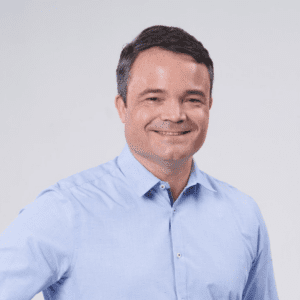
Sébastien Pivet
Chief Sustainability Officer and QA Director
AS Watson Group
Sébastien Pivet
AS Watson Group
Chief Sustainability Officer and QA Director
Sebastien Pivet is a senior sustainability leader with over 26 years of international retail experience driving sustainability strategy, governance and transformation in large, complex retail and consumer goods organisations.
As Chief Sustainability Officer at AS Watson Group, the world’s largest international health and beauty retailer, he leads the Group’s sustainability ambition across 12 retail Brands in 31 markets, and across global supply chains spanning Asia and Europe.
Sebastien has been instrumental in embedding sustainability into corporate strategy, strengthening governance and advancing data-driven ESG management. He is leading large-scale sustainability reporting and transformation programmes aligned with various reporting frameworks such as CSRD and ISSB, enhanced climate transition planning and risk assessment, and driven responsible sourcing and supplier due diligence across diverse markets. His work focuses on translating regulatory and scientific complexity into pragmatic, business-relevant action.
Passionate about using sustainability as a driver of long-term value creation, resilience and trust, Sebastien regularly engages with regulators, investors, industry peers and NGOs. He is a frequent contributor to sustainability conferences and industry forums, where he shares practical insights on scaling sustainability in global retail, navigating regulatory change and accelerating corporate climate and nature action.
Supported by
Business Environment Council
Booth E45
Business Environment Council Limited (BEC) is an independent, charitable corporate membership organisation, established by the business sector in Hong Kong.
Since its establishment in 1992, BEC has been at the forefront of promoting environmental excellence by advocating the uptake of clean technologies and practices which reduce waste, conserve resources, prevent pollution and improve corporate environmental and social responsibility.
BEC offers sustainable solutions and professional services covering advisory, research, assessment, training and award programmes for government, business and the community, thus enabling environmental protection and contributing to the transition to a net-zero carbon economy.
Meet our 2026 speakers:
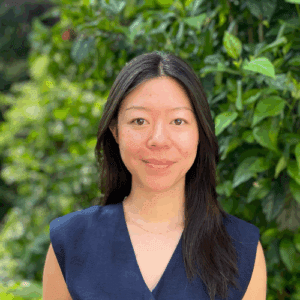
Katie Chan
Specialist – Policy & Research
Business Environment Council
Suki Han
Assistant Manager
Business Environment Council
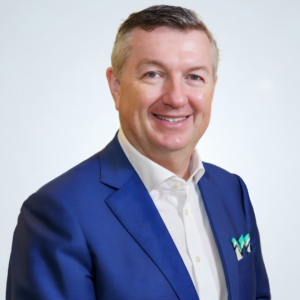
Kevin O’Brien
Chairman
Business Environment Council
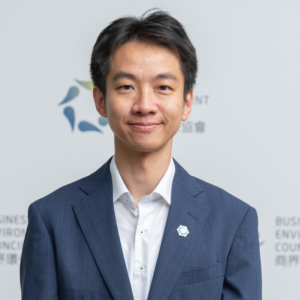
Merlin Lao
Head – Policy and Research
Business Environment Council
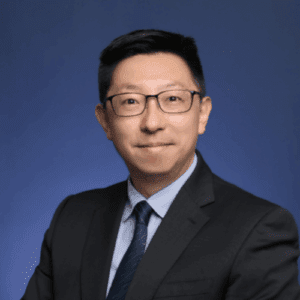
Simon Ng
Chief Executive Officer
Business Environment Council
With thanks to
Marriott International
Booth D40
Marriott International is based in Bethesda, Maryland, USA, and encompasses a portfolio of compelling brands across luxury, premium, select, midscale, extended stay, and all-inclusive, with approximately 10,000 properties in 146 countries and territories, as of June 11, 2026. The company offers Marriott Bonvoy, its highly awarded travel platform.
Read More:
https://www.marriott.com/default.mi
https://serve360.marriott.com/sustainable-goals/
Rooted in our core value Serve Our World, we recognize our responsibility to address some of the world’s most pressing social, environmental and economic issues with our size and scale. Serve 360 remains our guiding framework, ensuring that positive, sustainable impact is embedded wherever we do business.
Our Sustainability and Social Impact Goals 2030:
NURTURE OUR WORLD
By volunteering our time, caring for the natural environment, supporting the well- being of children, and providing essential help in times of need, we’re working to strengthen our local communities around the world.
GOALS
- Contribute 15 million hours of volunteer service globally
- Positively impact the lives of 5 million children via Marriott philanthropic
partner programs - Conduct 35,000 activities to protect, restore, or enhance nature in the
regions where we operate
SUSTAIN RESPONSIBLE OPERATIONS
We take a steadfast approach to designing, renovating, sourcing, and operating responsibly and efficiently — integrating sustainable practices into what we do to meet today’s performance expectations and enable long-term resilience for the company and the environment we all depend on.
GOALS
- Achieve Near-Term Science-Based Targets
Read More: https://news.marriott.com/news/2024/04/22/marriott-international-celebrates-milestone-on-journey-towards-net-zero - Reduce water intensity by 10
- Reduce single-use products intensity by 10%
EMPOWER THROUGH OPPORTUNITY
By prioritizing associate well-being, creating career pathways, and fostering an inclusive, supportive environment, we empower people to thrive. To shape the future of hospitality, we work with organizations to prepare individuals for meaningful careers, strengthening both our industry and the communities we serve.
GOALS
- Educate 300,000 people in hospitality through Marriott-developed programs and community partnerships
- Support growth through 200 million completed learning development experiences
WELCOME ALL AND ADVANCE HUMAN RIGHTS
We strive to advance respect for human rights within our business, combat human trafficking in our industry, and make travel more accessible.
GOALS
- Complete 7.5 million training courses on welcoming all
- Support 1,000 survivors of human trafficking through Marriott-developed
programs
Legal Name: Luxury Hotels International of Hong Kong Limited